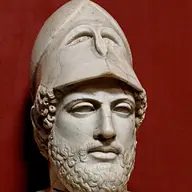
Ephialtes strips the old Areopagus council of power
Ephialtes, with Pericles' party behind him, takes most of the old Council of the Areopagus's powers away. He is murdered soon after.
Not only was the Council robbed of most of its jurisdiction by Ephialtes, but Cimon also, on the charge of being a lover of Sparta and a hater of the people, was ostracized
Under Pericles, Athens starts building a new temple of Athena on the Acropolis, with Ictinus and Callicrates as architects and Pheidias overseeing the work.
Of the Parthenon, for instance, with its cella of a hundred feet in length, Callicrates and Ictinus were the architects
What was going on: As Plutarch tells it, centuries later, Pericles was known as a cautious general. Tolmides was about to raid Boeotia with a thousand volunteers. A few days after Pericles warned him, news came that Tolmides was dead after a defeat near Coroneia.
Why it matters: The raid Pericles warned against ended in defeat at Coronea, after which Pericles was forced to concede the loss of Boeotia to recover the prisoners.
If you won't listen to me, at least wait for the wisest adviser of all: time.
…he tried to restrain and dissuade him in the popular assembly, uttering then that well remembered saying, to wit, that if he would not listen to Pericles, he would yet do full well to wait for that wisest of all counsellors, Time.
As Plutarch tells it, centuries later. Plutarch, Life of Pericles 18.2, translated by Bernadotte Perrin (1916)
, Athens and Sparta
Athens and Sparta agree a Thirty Years' Peace
Athens and Sparta make a truce meant to last thirty years, and Athens gives up the places it held in the Peloponnese.
Not long after their return from Euboea, they made a truce with the Lacedaemonians and their allies for thirty years, giving up the posts which they occupied in Peloponnese, Nisaea Pegae, Troezen, and Achaia.
What was going on: In a Sophocles play, Creon has just stormed out, threatening a guard unless the culprits of a crime are found, and the guard leaves glad to be alive. The Chorus then sings of human power: crossing the stormy sea, plowing the earth, trapping birds and beasts.
The world is full of amazing things, and nothing is more amazing than human beings.
Wonders are many, and none is more wonderful than man.
The Chorus speaking, in Sophocles’ play. Sophocles, Antigone line 332, translated by Richard Jebb (1891)
What was going on: In Sophocles' play, Antigone has been caught giving her dead brother burial against a public order from Creon. Creon asks if she knew of the ban; she says yes, and that the order did not come from Zeus.
I didn't think your orders were strong enough for a human to override the gods' unwritten laws. Those laws are forever, and nobody knows where they began.
Nor did I think that your decrees were of such force, that a mortal could override the unwritten and unfailing statutes given us by the gods. For their life is not of today or yesterday, but for all time, and no man knows when they were first put forth.
Antigone speaking, in Sophocles’ play. Sophocles, Antigone lines 450–455, translated by Richard Jebb (1891)
What was going on: In Sophocles' play, Antigone faces Creon, ruler of Thebes, over her burial rites for her dead brother. Creon says that brother died attacking the land, while their other brother died defending it.
I was not made to share in hating, but in loving.
It is not my nature to join in hate, but in love.
Antigone speaking, in Sophocles’ play. Sophocles, Antigone line 523, translated by Richard Jebb (1891)
What was going on: In Sophocles' play Antigone, King Creon is arguing with his son Haemon. Haemon says the people of Thebes deny the woman is wicked, and Creon asks whether Thebes should tell him how to rule.
A city that belongs to just one man is not really a city.
That is no city, which belongs to one man.
Haemon speaking, in Sophocles’ play. Sophocles, Antigone line 737, translated by Richard Jebb (1891)
What was going on: In Sophocles' play, Haemon tells his father that the city quietly mourns a girl condemned to die for refusing to leave her fallen brother unburied. He begs his father not to think that his own word alone must be right.
Even a wise person loses nothing by learning and bending a little. Trees that bend in a flood survive; stiff ones are torn out by the roots.
No, even when a man is wise, it brings him no shame to learn many things, and not to be too rigid. You see how the trees that stand beside the torrential streams created by a winter storm yield to it and save their branches, while the stiff and rigid perish root and all?
Haemon speaking, in Sophocles’ play. Sophocles, Antigone line 710, translated by Richard Jebb (1891)
What was going on: In Sophocles' play, Creon has caught Antigone, a member of his own family, openly defying him, and says he will kill her. He argues that whoever the city puts in charge must be obeyed, in just and unjust things alike. His son Haemon then answers him.
Why it matters: Creon's view here is one side of the play's contrast over civil disobedience: he demands obedience to the law above all else, right or wrong, while Antigone holds that state law is not absolute and can be broken in extreme cases.
Nothing is worse than disobedience. It wrecks cities, ruins homes and makes armies break and run.
But there is no evil worse than disobedience. This destroys cities; this overturns homes; this breaks the ranks of allied spears into headlong rout.
Creon speaking, in Sophocles’ play. Sophocles, Antigone lines 670–675, translated by Richard Jebb (1891)
What was going on: In Sophocles' play, the seer Teiresias warns Creon that the city's altars are tainted and the gods refuse its sacrifices, because birds and dogs have fed on the body of Oedipus's fallen son.
Everyone makes mistakes. The one who fixes his mistake instead of digging in is not a fool; stubbornness is what looks foolish.
All men are liable to err. But when an error is made, that man is no longer unwise or unblessed who heals the evil into which he has fallen and does not remain stubborn. Self-will, we know, invites the charge of foolishness.
Teiresias speaking, in Sophocles’ play. Sophocles, Antigone lines 1020–1025, translated by Richard Jebb (1891)
What was going on: As Plato tells it, Socrates is in a discussion at the house of Callias in Athens with Protagoras, Prodicus and Hippias. He has got them all to agree that giving in to yourself is ignorance and mastering yourself is wisdom.
Why it matters: The idea that no one does wrong willingly, which Socrates draws out in the Protagoras, became the hallmark of Socratic virtue intellectualism.
Nobody chooses what they think is bad over the good, it seems. Forced to pick between two bad things, nobody takes the worse one.
Then surely, I went on, no one willingly goes after evil or what he thinks to be evil; it is not in human nature, apparently, to do so—to wish to go after what one thinks to be evil in preference to the good; and when compelled to choose one of two evils, nobody will choose the greater when he may the lesser.
As Plato tells it. Plato, Protagoras 358c–d, translated by W. R. M. Lamb (1924)
What was going on: As Thucydides tells it, Pericles is addressing the Athenians in 432 BCE, arguing that their strength is ruling the sea and that they should think of themselves as islanders. A year later the war between Athens and Sparta began.
Why it matters: Pericles set a defensive strategy for the war, aiming to exhaust the enemy and preserve the status quo; its critics have been just as numerous as its supporters.
Forget our farms and houses. Guard the sea and the city, and don't let anger over our land drag us into a battle against bigger armies.
Dismissing all thought of our land and houses, we must vigilantly guard the sea and the city. No irritation that we may feel for the former must provoke us to a battle with the numerical superiority of the Peloponnesians.
As Thucydides tells it. Thucydides, History of the Peloponnesian War 1.143.5, translated by Richard Crawley (1874)
What was going on: As Thucydides tells it, Pericles is speaking to the Athenians in 432 BCE, before war with Sparta begins. He urges them to give up their land and houses, guard the sea and the city, and not fight the larger Peloponnesian army in open battle.
Why it matters: Avoiding overextension was one of the two basic principles of his war strategy; some scholars argue Athens kept to it until the Sicilian Expedition.
I have good reason to hope we'll come through, if we don't chase new conquests or extra risks during the war. I fear our own mistakes more than the enemy's plans.
I have many other reasons to hope for a favorable issue, if you can consent not to combine schemes of fresh conquest with the conduct of the war, and will abstain from willfully involving yourselves in other dangers; indeed, I am more afraid of our own blunders than of the enemy's devices.
As Thucydides tells it. Thucydides, History of the Peloponnesian War 1.144.1, translated by Richard Crawley (1874)
What was going on: In Euripides' play, first staged in 431 BCE, the year war broke out between Athens and Sparta, Medea tells her friends she is ruined and longs to die, because her husband, once all the world to her, has turned out a villain.
Why it matters: Euripides' sympathy for women and the difficulties they faced has drawn particular interest in modern times, especially in Medea, which the feminist movement of the late 20th century often read as Medea's struggle to take charge of her own life in a male-dominated world.
Of every living, feeling thing, women have it worst. First we pay a huge price for a husband, then we have to accept him as our master.
Of all things that have life and sense we women are the most hapless creatures; first must we buy a husband at an exorbitant price, and o’er ourselves a tyrant set which is an evil worse than the first;
Medea speaking, in Euripides’ play. Euripides, Medea line 230, translated by E. P. Coleridge (1906)
What was going on: In Euripides' play, Medea is speaking about the hard lot of a wife. A foreigner with no city or family, scorned by her husband, she will ask her listeners to keep silent while she plots revenge on him.
People say women live safe at home while men go to war. That is a poor argument: I would rather stand in battle three times than give birth once.
And yet they say we live secure at home, while they are at the wars, with their sorry reasoning, for I would gladly take my stand in battle array three times o’er, than once give birth.
Medea speaking, in Euripides’ play. Euripides, Medea lines 249–250, translated by E. P. Coleridge (1906)
What was going on: In Euripides' play, Creon is driving Medea out of the land because he fears she will harm his daughter, the bride. Medea answers that her reputation has hurt her many times before.
Why it matters: Euripides seems to have written this speech of Medea's, about the cost of being thought too clever, in defence of himself as an intellectual ahead of his time.
A sensible parent should not have their children taught to be too clever. People will call them idle, and their fellow citizens will resent them.
Wherefore whoso is wise in his generation ought never to have his children taught to be too clever; for besides the reputation they get for idleness, they purchase bitter odium from the citizens.
Medea speaking, in Euripides’ play. Euripides, Medea lines 292–295, translated by E. P. Coleridge (1906)
What was going on: In Euripides' play, Medea has just sworn by Hecate to make Jason's wedding bitter and to plot against her enemies. The Chorus answers by singing that the world is turning upside down and that honor is dawning for women.
The world is turned upside down, like rivers flowing backwards. Now it is men who scheme and break their sworn promises.
Back to their source the holy rivers turn their tide. Order and the universe are being reversed. ’Tis men whose counsels are treacherous, whose oath by heaven is no longer sure.
The Chorus speaking, in Euripides’ play. Euripides, Medea line 410, translated by E. P. Coleridge (1906)
What was going on: In Euripides' play, Medea has decided that her children must die and that she will kill them herself. A royal bride is already dying in a crown and robe. Medea says goodbye to the children, then sends them away because she cannot bear to look at them.
I finally see how terrible the thing I am about to do is. But passion, the source of the worst human misery, has beaten my better judgement.
At last I understand the awful deed I am to do; but passion, that cause of direst woes to mortal man, hath triumphed o’er my sober thoughts.
Medea speaking, in Euripides’ play. Euripides, Medea lines 1075–1080, translated by E. P. Coleridge (1906)
What was going on: In Euripides' play, Medea is heard weeping inside and cursing her own children. Her old Nurse grieves outside and fears for the boys, since Jason has taken a royal bride.
Moderation is the best thing to talk about and the best way to live. Greatness that overreaches brings people no good.
Moderation wins the day first as a better word for men to use, and likewise it is far the best course for them to pursue; but greatness that doth o’erreach itself, brings no blessing to mortal men;
The Nurse speaking, in Euripides’ play. Euripides, Medea line 125, translated by E. P. Coleridge (1906)
What was going on: Thucydides opens his history here. The war began in 431 BCE when a Theban force slipped into Plataea, an ally of Athens, at night, and soon a Spartan army invaded the farmland around Athens.
Why it matters: These are the opening words of a history widely considered a classic and one of the earliest scholarly works of history, which has been enormously influential in ancient and modern historiography.
I started writing about this war the moment it began, because I thought it would be a great war, more worth telling than any before it.
Thucydides, an Athenian, wrote the history of the war between the Peloponnesians and the Athenians, beginning at the moment that it broke out, and believing that it would be a great war, and more worthy of relation than any that had preceded it.
His own words. Thucydides, History of the Peloponnesian War 1.1.1, translated by Richard Crawley (1874)
, Athens
Athens holds a public funeral for its first war dead
In the winter after the war began, Athens gives a funeral at public cost to those who first fell. Pericles is chosen to speak.
In the same winter the Athenians gave a funeral at the public cost to those who had first fallen in this war.
Soon after the Spartans invade again, a deadly epidemic strikes the crowded city. Thucydides, who caught it himself, says no one remembered one so deadly.
Not many days after their arrival in Attica the plague first began to show itself among the Athenians.
What was going on: Thucydides is describing the plague that hit Athens in 430 BCE, soon after the Spartans invaded the land around the city again. No one remembered a disease that killed so many, and it struck Piraeus first.
Why it matters: The plague killed an estimated 75,000 to 100,000 people, around a quarter of Athens, and dealt the city massive damage from which it never recovered.
At first doctors didn't know how to treat it, and they died in the greatest numbers, because they saw the sick most. Prayers and oracles were no use either, until people gave them up.
Neither were the physicians at first of any service, ignorant as they were of the proper way to treat it, but they died themselves the most thickly, as they visited the sick most often; nor did any human art succeed any better. Supplications in the temples, divinations, and so forth were found equally futile, till the overwhelming nature of the disaster at last put a stop to them altogether.
His own words. Thucydides, History of the Peloponnesian War 2.47.4, translated by Richard Crawley (1874)
What was going on: In 430 BCE a deadly plague struck Athens, soon after the Spartans invaded again. Thucydides says it hit Piraeus first, where people claimed the enemy had poisoned the water, then spread into the upper city.
Why it matters: His detailed account of the symptoms has been used, together with analysis of victims' remains, to try to identify what caused the epidemic.
I'll just describe the symptoms, so it might be recognized if it ever comes back. I can, because I caught it myself and watched it in others.
…for myself, I shall simply set down its nature, and explain the symptoms by which perhaps it may be recognized by the student, if it should ever break out again. This I can the better do, as I had the disease myself, and watched its operation in the case of others.
His own words. Thucydides, History of the Peloponnesian War 2.48.3, translated by Richard Crawley (1874)
What was going on: Thucydides is describing how people behaved as the plague spread through Athens. Burial customs had collapsed, and some people threw their own dead onto strangers' funeral fires.
Why it matters: The plague killed an estimated quarter of the city's people. In the long run it redistributed wealth within Athenian society and weakened Athens politically.
Rich people dropped dead and the poor inherited overnight. So people openly did what they used to hide, and spent fast, as if life and money could vanish tomorrow.
Men now coolly ventured on what they had formerly done in a corner, and not just as they pleased, seeing the rapid transitions produced by persons in prosperity suddenly dying and those who before had nothing succeeding to their property. So they resolved to spend quickly and enjoy themselves, regarding their lives and riches as alike things of a day.
His own words. Thucydides, History of the Peloponnesian War 2.53.1–2, translated by Richard Crawley (1874)
What was going on: As Thucydides tells it, Athens is holding a public funeral for those who first fell in the war, and Pericles has been chosen to speak. Before praising the dead, he describes the kind of government under which Athens grew great.
Why it matters: The funeral oration is the most famous speech in Thucydides' History, and it is nowadays synonymous with the struggle for participatory democracy and civic pride.
We don't copy other states; they copy us. Our government serves the many, not the few. That's why it's called a democracy.
Our constitution does not copy the laws of neighboring states; we are rather a pattern to others than imitators ourselves. Its administration favors the many instead of the few; this is why it is called a democracy.
As Thucydides tells it. Thucydides, History of the Peloponnesian War 2.37.1, translated by Richard Crawley (1874)
What was going on: As Thucydides tells it, Pericles is praising Athens in a speech early in the war with Sparta. He has just described its democracy, where laws give equal justice and poverty does not stop a capable man from serving.
Why it matters: The lines these words come from, on equal justice under the laws and freedom in private life, form the roots of the famous phrase equal justice under law.
Our freedom reaches daily life too. We don't spy on each other or get angry at a neighbor for living as he likes, not even with dirty looks.
The freedom which we enjoy in our government extends also to our ordinary life. There, far from exercising a jealous surveillance over each other, we do not feel called upon to be angry with our neighbor for doing what he likes, or even to indulge in those injurious looks which cannot fail to be offensive, although they inflict no positive penalty.
As Thucydides tells it. Thucydides, History of the Peloponnesian War 2.37.2, translated by Richard Crawley (1874)
What was going on: As Thucydides tells it, Pericles is praising Athens and its way of life to his fellow citizens, early in the war with Sparta. He says ordinary Athenians, busy with work, still judge public matters, and see discussion as needed before any wise action.
Why it matters: The Theban attack on Plataea was the first attack of the war, in which Athens lost its Aegean empire and its maritime dominance and Sparta became the leading power of Greece.
We love beauty without waste and learning without going soft. Money is for using, not showing off. Being poor isn't shameful; not trying to escape it is.
We cultivate refinement without extravagance and knowledge without effeminacy; wealth we employ more for use than for show, and place the real disgrace of poverty not in owning to the fact but in declining the struggle against it.
As Thucydides tells it. Thucydides, History of the Peloponnesian War 2.40.1, translated by Richard Crawley (1874)
What was going on: In a speech Thucydides writes for Pericles, set in Athens in 431/430 BCE, early in the war with Sparta, Pericles praises the Athenian way of life, its courage and its generosity to friends. He goes on to say Athens alone proves greater than its reputation.
Why it matters: The Theban attack on Plataea was the first attack of the war, in which Athens lost its Aegean empire and its maritime dominance and Sparta became the leading power of Greece.
Our city is the school of Greece. I doubt anyone anywhere can handle as much on their own, and as gracefully, as an Athenian.
In short, I say that as a city we are the school of Hellas; while I doubt if the world can produce a man, who where he has only himself to depend upon, is equal to so many emergencies, and graced by so happy a versatility as the Athenian.
As Thucydides tells it. Thucydides, History of the Peloponnesian War 2.41.1, translated by Richard Crawley (1874)
What was going on: As Thucydides tells it, Pericles is speaking at the public funeral for those who first fell in the war. He is praising men who gave their lives together and urging the living to take them as their model.
Why it matters: Scholars have drawn parallels between this funeral oration and Lincoln's Gettysburg Address, though it is uncertain whether Lincoln was directly influenced by it.
Heroes are buried everywhere. Even far from home, with no stone to mark them, people remember them in their hearts.
For heroes have the whole earth for their tomb; and in lands far from their own, where the column with its epitaph declares it, there is enshrined in every breast a record unwritten with no tablet to preserve it, except that of the heart.
As Thucydides tells it. Thucydides, History of the Peloponnesian War 2.43.3, translated by Richard Crawley (1874)
What was going on: As Thucydides tells it, Pericles speaks to the Athenians in 430 BCE, the year plague broke out in the city. He tells them they cannot refuse the burdens of their empire and still share its honors.
Why it matters: Pericles's emotional final speech, given amid uproar over the plague, is considered a monumental oration, revealing his virtues but also his bitterness at his compatriots' ingratitude.
We can't back out now. To be blunt, what you hold is a tyranny. Taking it may have been wrong, but letting it go is dangerous.
Besides, to recede is no longer possible, if indeed any of you in the alarm of the moment has become enamored of the honesty of such an unambitious part. For what you hold is, to speak somewhat plainly, a tyranny; to take it perhaps was wrong, but to let it go is unsafe.
As Thucydides tells it. Thucydides, History of the Peloponnesian War 2.63.2, translated by Richard Crawley (1874)
What was going on: Thucydides is comparing Pericles with the Athenian leaders who came after his death. He says the later leaders chased their own ambitions and handed state affairs to the whims of the crowd.
Why it matters: The historian Donald Kagan argues that Pericles's war strategy depended on Pericles himself to carry it out, and so was bound to be abandoned after his death.
When the people got cocky, he could scare them with a word; when they panicked, he calmed them. It was called a democracy, but really one man led it.
Whenever he saw them unseasonably and insolently elated, he would with a word reduce them to alarm; on the other hand, if they fell victims to a panic, he could at once restore them to confidence. In short, what was nominally a democracy became in his hands government by the first citizen.
His own words. Thucydides, History of the Peloponnesian War 2.65.9, translated by Richard Crawley (1874)
What was going on: In Sophocles' play, Oedipus rules a city in trouble, and its people have come begging him to save it. He says he has already sent Creon to Apollo's oracle to learn how to protect the city.
You are all suffering, but none of you as much as I am. You each feel your own pain; I feel the city’s, my own and yours at once.
I know well that you all are sick, and though you are sick I know well that there is not one of you who is as sick as I. Your pain comes on each of you for himself alone, and for no other, but my soul is in pain at once for the city, for myself, and for you.
Oedipus speaking, in Sophocles’ play. Sophocles, Oedipus Tyrannus lines 58–60, translated by Richard Jebb (1887)
What was going on: In Sophocles' play, Oedipus is searching out the secret of his birth. Iocasta begs him to stop, then rushes into the palace in grief; Oedipus calls for the herdsman and guesses she is ashamed his origins may be lowly.
Let whatever happens happen. Even if I come from nothing, I need to know where I come from.
Break forth what will! Be my race ever so lowly, I crave to learn it.
Oedipus speaking, in Sophocles’ play. Sophocles, Oedipus Tyrannus line 1076, translated by Richard Jebb (1887)
What was going on: In Sophocles' play, a messenger brings news that Polybus, the father an oracle said Oedipus would kill, has died of sickness and old age. Oedipus is relieved but still fears the part of the oracle about his mother, and his wife Iocasta answers him.
Why should a person be afraid, if luck rules everything and nobody can see what is coming? Better to just live as it comes.
What should a mortal man fear, for whom the decrees of Fortune are supreme, and who has clear foresight of nothing? It is best to live at random, as one may.
Iocasta speaking, in Sophocles’ play. Sophocles, Oedipus Tyrannus line 977, translated by Richard Jebb (1887)
What was going on: In Sophocles' play Oedipus Tyrannus, the Chorus speaks as Creon leads Oedipus, once envied by all of Thebes, into the house. Oedipus has asked to be sent out of the land and begged not to lose his children.
Look how far he has fallen. So until someone’s last day has come and gone without disaster, do not call them happy.
See into what a stormy sea of troubles he has come! Therefore, while our eyes wait to see the final destined day, we must call no mortal happy until he has crossed life’s border free from pain.
The Chorus speaking, in Sophocles’ play. Sophocles, Oedipus Tyrannus lines 1525–1530, translated by Richard Jebb (1887)
What was going on: As Plutarch tells it, centuries later, Pericles is dying in 429 BCE. The leading citizens and his surviving friends sit around his bed listing his achievements, including nine victory trophies, thinking he can no longer hear them.
Why it matters: The historian Donald Kagan argues that Pericles's war strategy depended on Pericles himself to carry it out, and so was bound to be abandoned after his death.
Why praise what I owe as much to luck as to myself, and what other generals did too? My best claim is this: no Athenian alive ever had to mourn because of me.
He had been attending to it all, however, and speaking out among them said he was amazed at their praising and commemorating that in him which was due as much to fortune as to himself, and which had fallen to the lot of many generals besides, instead of mentioning his fairest and greatest title to their admiration; for, said he, no living Athenian ever put on mourning because of me.
As Plutarch tells it, centuries later. Plutarch, Life of Pericles 38.4, translated by Bernadotte Perrin (1916)
, Athens
Athens votes to kill Mytilene's men, then relents
After Mytilene's revolt fails, the Athenian assembly orders all its men killed. The next day it debates again and sends a second ship to stop the order.
The morrow brought repentance with it and reflection on the horrid cruelty of a decree, which condemned a whole city to the fate merited only by the guilty.
What was going on: In Aristophanes' comedy the Clouds, Strepsiades comes looking for Socrates and finds him hanging overhead in a basket. Asked what he is doing, this stage Socrates answers, then says thought must be suspended in the air to discover things above.
Why it matters: The basket-borne Socrates is part of the play's notorious caricature of him, and Plato cites the play in the Apology as a contributing factor to Socrates' trial and execution.
I am up here in the air, thinking about the sun.
I am walking in the air, and speculating about the sun.
Aristophanes’ Socrates, in the Clouds. Aristophanes, Clouds line 225, translated by William James Hickie (1853)
What was going on: In Aristophanes' play, the old countryman Strepsiades knocks at the door of Socrates' thinking-shop, hoping to be taught. A student inside scolds him for making an idea miscarry, then shares one of the school's secrets.
Socrates recently asked Chaerephon how many of its own feet a flea can jump, after one bit Chaerephon and leapt onto Socrates’ head.
Socrates lately asked Chaerephon about a flea, how many of its own feet it jumped; for after having bit the eyebrow of Chaerephon, it leaped away onto the head of Socrates.
A disciple of Socrates speaking, in Aristophanes’ play. Aristophanes, Clouds line 143, translated by William James Hickie (1853)
What was going on: In Aristophanes' comedy Clouds, a student of Socrates is telling Strepsiades about his teacher's discoveries, like measuring a flea with tiny wax slippers. Next comes the question of how gnats buzz.
So a gnat's backside is a trumpet! What insight. Surely anyone who understands gnat guts could easily get off in court.
The rump of the gnats then is a trumpet! Oh, thrice happy he for his sharp-sightedness! Surely a defendant might easily get acquitted who understands the intestine of the gnat.
Strepsiades speaking, in Aristophanes’ play. Aristophanes, Clouds line 165, translated by William James Hickie (1853)
What was going on: In Aristophanes' comedy Clouds, Strepsiades, plundered by his creditors, has come to the play's Socrates to learn how to speak. He offers to swear by the gods that he will pay any fee.
Which gods will you swear by? Gods are not the currency we use around here.
By what gods will you swear? For, in the first place, gods are not a current coin with us.
Aristophanes’ Socrates, in the Clouds. Aristophanes, Clouds line 247, translated by William James Hickie (1853)
What was going on: In Aristophanes' play the Clouds, the Chorus of Clouds has just greeted Strepsiades and the stage Socrates. Socrates then tells Strepsiades there is no Jupiter, and that the Clouds make the rain.
These are the only real goddesses. Everything else is nonsense.
For, in fact, these alone are goddesses; and all the rest is nonsense.
Aristophanes’ Socrates, in the Clouds. Aristophanes, Clouds line 365, translated by William James Hickie (1853)
What was going on: In Aristophanes' play, Socrates is teaching Strepsiades about the weather. He tells him there is no Jupiter, that clouds make the rain, and that clouds crashing together make the thunder.
Vortex? I somehow missed that Zeus does not exist and Vortex rules in his place.
Vortex? It had escaped my notice that Jupiter did not exist, and that Vortex now reigned in his stead.
Strepsiades speaking, in Aristophanes’ play. Aristophanes, Clouds line 380, translated by William James Hickie (1853)
What was going on: In Aristophanes' comedy Clouds, Strepsiades, in debt on his son's account, urges him to join a thinking-shop whose men teach anyone who pays to win arguments, right or wrong. His son Phidippides refuses.
They say these people have two arguments, the better and the worse, and that the worse one wins even though it argues for what is unjust.
They say that among them are both the two causes—the better cause, whichever that is, and the worse: they say that the one of these two causes, the worse, prevails, though it speaks on the unjust side.
Strepsiades speaking, in Aristophanes’ play. Aristophanes, Clouds lines 112–115, translated by William James Hickie (1853)
What was going on: In Aristophanes' comedy Clouds, two characters, the Just Cause and the Unjust Cause, argue in front of the Chorus. The Unjust Cause, known as the worse cause, now sets out to beat his rival.
I was the first to argue against law and justice. Being able to take the worse side and still win is worth a fortune.
I first contrived how to speak against both law and justice; and this art is worth more than ten thousand staters, that one should choose the worse cause, and nevertheless be victorious.
The Unjust Cause speaking, in Aristophanes’ play. Aristophanes, Clouds lines 1036–1040, translated by William James Hickie (1853)
What was going on: In Aristophanes' Clouds, Phidippides is arguing with his father Strepsiades, who admits beating him as a boy out of goodwill. Strepsiades objects that no law says a father should suffer that. Phidippides then points to roosters, who punish their fathers.
Wasn’t that law first proposed by a man like you or me? So why can’t I propose a new law that sons get to beat their fathers?
Was it not then a man like you and me, who first proposed this law, and by speaking persuaded the ancients? Why then is it less lawful for me also in turn to propose henceforth a new law for the sons, that they should beat their fathers in turn?
Phidippides speaking, in Aristophanes’ play. Aristophanes, Clouds line 1421, translated by William James Hickie (1853)
What was going on: This comes at the very end of Aristophanes' play. Strepsiades has climbed onto the roof of Socrates' thinking-shop and set it on fire, while Socrates and his students cry out from inside.
What got into you, insulting the gods and snooping around the moon?
For what has come into your heads that you acted insolently toward the gods, and pried into the seat of the moon?
Strepsiades speaking, in Aristophanes’ play. Aristophanes, Clouds line 1506, translated by William James Hickie (1853)
, Athens and Sparta
The Peace of Nicias
Athens and Sparta sign a peace in spring, about ten years after the war began.
This treaty was made in the spring, just at the end of winter, directly after the city festival of Dionysus, just ten years, with the difference of a few days, from the first invasion of Attica and the commencement of this war.
What was going on: In a dialogue by Plato, Socrates is arguing with Polus about a man who can put others to death as he likes. Socrates says doing wrong is the greatest of evils. Polus next asks if he would turn down a despot's power.
I'd want neither. But if I had to choose between doing wrong and being wronged, I'd rather be wronged.
I should wish neither, for my own part; but if it were necessary either to do wrong or to suffer it, I should choose to suffer rather than do it.
As Plato tells it. Plato, Gorgias 469c, translated by W. R. M. Lamb (1925)
What was going on: In Euripides' play Electra, Orestes has come to the house of the poor peasant who is called Electra's husband. The peasant has just welcomed him in, saying that even if he is poor his manners are not.
You cannot measure a person’s worth exactly. I have seen worthless sons of great fathers, good children of bad parents, poor souls in the rich and great souls in the poor.
Ah! There is no exact way to test a man’s worth; for human nature has confusion in it. For instance, I have seen before now the son of a noble father worth nothing, and good children from evil parents; famine in a rich man’s spirit, and a mighty soul in a poor man’s body.
Orestes speaking, in Euripides’ play. Euripides, Electra lines 367–370, translated by E. P. Coleridge (1891)
What was going on: In Euripides' play, Orestes meets the poor peasant who is Electra's husband in name only, and who welcomes him in as a guest. Struck by the man, Orestes wonders aloud how anyone can judge a man's worth, and decides it is by company and habits.
So how do you judge these things properly? By money? That's a poor test.
How then does one rightly distinguish and judge these things? By wealth? A sorry test to use.
Orestes speaking, in Euripides’ play. Euripides, Electra line 370, translated by E. P. Coleridge (1891)
What was going on: In Euripides' play, a peasant explains why Aegisthus married Electra off to him. Aegisthus feared she might bear a noble son who would avenge Agamemnon, so he gave her to a powerless man. The peasant says he has never touched her, as he is not her equal in rank.
My family had good blood but no money, and lack of money ruins good birth.
My family was noble in race but poor in money—which is the ruin of good birth.
The Peasant speaking, in Euripides’ play. Euripides, Electra line 35, translated by E. P. Coleridge (1891)
What was going on: In Euripides' play, guests have come to Electra's humble home. She sends a peasant to fetch food from her father's old servant, because she can get nothing from her mother, who must not learn that Orestes is alive.
Money matters for hosting guests and paying for the sick. But for everyday food it counts for little: a full stomach is the same for rich and poor.
It is in such cases, whenever I fail in my intentions, that I see how wealth has great power, to give to strangers, and to expend in curing the body when it falls sick; but money for our daily food comes to little; for every man when full, rich or poor, gets an equal amount.
The Peasant speaking, in Euripides’ play. Euripides, Electra lines 425–430, translated by E. P. Coleridge (1891)
What was going on: In Euripides' play Electra, Clytemnestra is defending herself for killing her husband. She says he killed their daughter Iphigenia on a pyre at Aulis, then came home with a girl and put her in his bed.
Women can be foolish, granted. But when a husband cheats, his wife may do the same, and then she gets all the blame while the man who started it does not.
A woman is a foolish thing, I don’t deny it; but, this granted, whenever a husband goes astray and rejects his own bed, the woman is likely to imitate her husband and find another love. And then in us the blame shines clearly, while the men, who caused this, are not badly spoken of.
Clytemnestra speaking, in Euripides’ play. Euripides, Electra lines 1035–1040, translated by E. P. Coleridge (1891)
What was going on: As Plato tells it, Socrates is at a gathering at Agathon's house. He is ending his speech in honor of Love, retelling what Diotima told him about seeing beauty itself.
Why it matters: Diotima's teaching on love, which Socrates sums up here, was taken up by Plotinus, the founder of Neoplatonism, and Proclus later wrote a commentary on her remarks.
Diotima told me this, and I believe it: to win this prize, the best helper human nature can find is Love.
This, Phaedrus and you others, is what Diotima told me, and I am persuaded of it; in which persuasion I pursue my neighbors, to persuade them in turn that towards this acquisition the best helper that our human nature can hope to find is Love.
As Plato tells it. Plato, Symposium 212b, translated by W. R. M. Lamb (1925)
, Athens
Statues of Hermes are smashed across Athens
In one night, most of the stone Hermes figures at Athens' doorways have their faces mutilated, just as the fleet for Sicily is being prepared.
In the midst of these preparations all the stone Hermae in the city of Athens, that is to say the customary square figures so common in the doorways of private houses and temples, had in one night most of them their faces mutilated.
What was going on: As Plato tells it, Phaedrus has led Socrates outside the walls of Athens to a grassy spot by the Ilissus, full of cicadas. Phaedrus teases him for acting like a stranger who never leaves the city, and wants to read him a speech from a book.
Why it matters: The Phaedrus is Plato's only dialogue that shows Socrates outside the city of Athens, out in the country.
Sorry, I love learning. Trees and fields don't teach me anything. People in the city do.
Forgive me, my dear friend. You see, I am fond of learning. Now the country places and the trees won’t teach me anything, and the people in the city do.
As Plato tells it. Plato, Phaedrus 230d, translated by Harold North Fowler (1914)
, Athens
An oligarchy of Four Hundred seizes Athens
A group of four hundred takes over the council chamber and rules Athens by force, ending the democracy for a few months.
but afterwards departed widely from the democratic system of government, and except that on account of Alcibiades they did not recall the exiles, ruled the city by force;
Athens wins at Arginusae, then condemns its generals
Athens wins a sea battle off the Arginusae islands. The assembly then condemns eight of the generals in a single vote, and the six in Athens are executed.
After this they condemned the generals who took part in the battle, eight in all; and the six who were in Athens were put to death.
What was going on: Xenophon is describing the Athenian assembly in 406 BCE, after the sea victory at Arginusae, as it decides the fate of the generals. A survivor has just said the generals failed to rescue the bravest men. In the end, six of the generals were executed.
Why it matters: The Athenians soon came to regret executing the generals, and charges were brought against those who had pushed for the executions.
Some challenged the proposal as illegal. A few cheered, but most shouted that it was outrageous to stop the people doing whatever they wanted.
Now Euryptolemus, the son of Peisianax, and some others served a summons upon Callixeinus, alleging that he had made an unconstitutional proposal. And some of the people applauded this act, but the greater number cried out that it was monstrous if the people were to be prevented from doing whatever they wished.
Xenophon's own narration. Xenophon, Hellenica 1.7.12, translated by Carleton L. Brownson (1918)
What was going on: After the sea battle of Arginusae in 406 BCE, Athens put its generals on trial. As Xenophon tells it, the crowd in the assembly shouted down objections to judging them in one vote and threatened officials who refused to call it.
Why it matters: The Athenians soon came to regret executing the generals, and charges were brought against those who had pushed for the executions.
Scared, the presiding officials agreed to put it to a vote. All but Socrates, who said he would only act within the law.
Then the Prytanes, stricken with fear, agreed to put the question,—all of them except Socrates, the son of Sophroniscus; and he said that in no case would he act except in accordance with the law.
Xenophon's own narration. Xenophon, Hellenica 1.7.15, translated by Carleton L. Brownson (1918)
, Macedonia and Athens
Euripides and Sophocles die
Athens loses two of its three great tragic poets within about a year: Euripides, traditionally said to have died in Macedonia, and Sophocles in Athens.
What was going on: Lysander had just captured almost the whole Athenian fleet at Aegospotami, and had been sending Athenians home so the crowded city would run short of food. The next day the Assembly began preparing for a siege.
Why it matters: Without a fleet Athens could not import grain or reach its empire, so the defeat effectively ended the war. It left Sparta dominant across the Greek world, in an order that lasted more than thirty years.
The bad news came at night. Wailing spread from the harbour up into the city, and no one slept, grieving for the dead and even more for themselves.
It was at night that the Paralus arrived at Athens with tidings of the disaster, and a sound of wailing ran from Piraeus through the long walls to the city, one man passing on the news to another; and during that night no one slept, all mourning, not for the lost alone, but far more for their own selves
Xenophon's own narration. Xenophon, Hellenica 2.2.3, translated by Carleton L. Brownson (1918)
, Athens
Athens surrenders and its walls come down
Starved by siege, Athens accepts Sparta's terms. Lysander sails into Piraeus and the Peloponnesians begin tearing down the walls to flute music.
After this Lysander sailed into Piraeus, the exiles returned, and the Peloponnesians with great enthusiasm began to tear down the walls to the music of flute-girls, thinking that that day was the beginning of freedom for Greece.
What was going on: Xenophon is narrating Athens' surrender in 404 BCE. With people dying of famine, the Assembly has just voted, on Theramenes' advice, to accept Sparta's peace terms and tear down the walls.
Why it matters: The surrender ended the Peloponnesian War. Athens lost its Aegean empire and its dominance at sea, and Sparta became established as the leading power of Greece.
Lysander sailed into the harbour, the exiles came home, and the Peloponnesians happily tore down the walls to flute music, thinking Greece's freedom began that day.
After this Lysander sailed into Piraeus, the exiles returned, and the Peloponnesians with great enthusiasm began to tear down the walls to the music of flute-girls, thinking that that day was the beginning of freedom for Greece.
Xenophon's own narration. Xenophon, Hellenica 2.2.23, translated by Carleton L. Brownson (1918)
What was going on: Xenophon describes the death of Theramenes under the Thirty, who ruled Athens after its surrender. Critias handed him over to be executed, and Satyrus dragged him from the altar while the council kept quiet, with armed men waiting outside.
Why it matters: Though they held power for only eight months, their rule saw 5% of the Athenian population killed, citizens' property confiscated and other democrats exiled.
Led through the market, he shouted about the wrongs done to him. Told to keep quiet or suffer, he reportedly asked: and if I keep quiet, won't I suffer?
So they led the man away through the market-place, while he proclaimed in a very loud voice the wrongs he was suffering. One saying of his that is reported was this: when Satyrus told him that if he did not keep quiet, he would suffer for it, he asked: Then if I do keep quiet, shall I not suffer?
Xenophon's own narration, passing on a reported saying of Theramenes. Xenophon, Hellenica 2.3.56, translated by Carleton L. Brownson (1918)
What was going on: After Athens surrendered in 404 BCE, the Thirty ruled the city with Sparta's backing. Xenophon has just described a man led through the market-place to drink hemlock, playful to the end. Soon Thrasybulus seized the fortress of Phyle.
Why it matters: The more violent the Thirty's regime became, the more opposition it faced, and that opposition ultimately led to its overthrow by Thrasybulus' rebel forces.
With Theramenes dead, the Thirty thought they could rule as tyrants without fear. They barred people from the city and took their land for themselves and their friends.
So, then, Theramenes died; but the Thirty, thinking that now they could play the tyrant without fear, issued a proclamation forbidding those who were outside the roll to enter the city and evicted them from their estates, in order that they themselves and their friends might have these people’s lands.
Xenophon's own narration. Xenophon, Hellenica 2.4.1, translated by Carleton L. Brownson (1918)
, Athens
Democracy returns to Athens, with an amnesty
Exiles led by Thrasybulus overthrow the Thirty. The two sides swear not to remember past wrongs and live together again as citizens.
And, pledged as they were under oath, that in very truth they would not remember past grievances, the two parties even to this day live together as fellow-citizens and the commons abide by their oaths.
What was going on: As Plato tells it, Meno has just complained that talking with Socrates leaves his mind and tongue numb, so he can no longer say what virtue is, and has made a teasing comparison. Socrates answers, then offers to keep searching for what virtue is together.
If that numbing fish is numb itself, then I'm like it. I don't confuse people because I'm sure. I confuse them because I'm the most unsure of all.
As for me, if the torpedo is torpid itself while causing others to be torpid, I am like it, but not otherwise. For it is not from any sureness in myself that I cause others to doubt: it is from being in more doubt than anyone else that I cause doubt in others.
As Plato tells it. Plato, Meno 80c–d, translated by W. R. M. Lamb (1924)
What was going on: In Sophocles' play Oedipus at Colonus, staged after his death, Theseus has just promised an old man his life is safe. The Chorus then sings that long life brings more pain than joy, and that death comes to all.
Best of all is never to be born. Second best, once you are born, is to go back where you came from as fast as you can.
Not to be born is, beyond all estimation, best; but when a man has seen the light of day, this is next best by far, that with utmost speed he should go back from where he came.
The Chorus speaking, in Sophocles’ play. Sophocles, Oedipus at Colonus line 1225, translated by Richard Jebb (1889)
What was going on: In Sophocles' play, Oedipus, driven from his country by his own sons, speaks to Theseus. He goes on to warn that time turns friendship to hostility, between people and between cities, even between Thebes and Theseus.
Only the gods never grow old or die. Everything else is worn down into ruin by time, which beats everything.
Dearest son of Aegeus, to the gods alone old age and death never come, but everything else sinks into chaos from time which overpowers all.
Oedipus speaking, in Sophocles’ play. Sophocles, Oedipus at Colonus line 607, translated by Richard Jebb (1889)
399 BCE: The trial of Socrates
, Athens
Socrates is tried, condemned and put to death
Socrates is charged with not recognising the city's gods and corrupting the young. A jury condemns him, and he dies in prison by drinking poison.
Socrates is guilty of refusing to recognize the gods recognized by the state, and of introducing other new divinities. He is also guilty of corrupting the youth. The penalty demanded is death.
Such was the end, Echecrates, of our friend, who was, as we may say, of all those of his time whom we have known, the best and wisest and most righteous man.
What was going on: As Plato tells it, Socrates is talking with Cebes in 399 BCE, the year Athens condemned him to death. He is trying to explain what causes things to be as they are, and to prove that the soul is immortal.
Why it matters:Plato's account of the trial and death inspired writers, artists and philosophers to return to it. Some saw the execution as showing the defects of democracy; others as a justifiable defence of a newly restored democracy.
If someone says a thing is beautiful because of its color or shape, I ignore it. I hold, perhaps foolishly, that only beauty itself makes it beautiful.
If anyone tells me that what makes a thing beautiful is its lovely color, or its shape or anything else of the sort, I let all that go, for all those things confuse me, and I hold simply and plainly and perhaps foolishly to this, that nothing else makes it beautiful but the presence or communion (call it which you please) of absolute beauty,
As Plato tells it. Plato, Phaedo 100c–d, translated by Harold North Fowler (1914)
What was going on: As Xenophon tells it, Socrates is talking with Critobulus, who wants help making good friends. Socrates offers to be useful in that search, but cites Aspasia to explain why he will only say true things in his favor.
Matchmaking only works when the good things you say about each side are true. People who were fooled end up hating each other and you.
She once told me that good matchmakers are successful in making marriages only when the good reports they carry to and fro are true; false reports she would not recommend, for the victims of deception hate one another and the matchmaker too.
As Xenophon tells it, through Socrates. Xenophon, Memorabilia 2.6.36, translated by E. C. Marchant (1923)M
What was going on: This is the formal charge that brought Socrates to trial in Athens, as Diogenes Laertius records it centuries later, citing Favorinus. He names three accusers: Anytus, Lycon and Meletus. A jury went on to condemn Socrates to death.
Why it matters: On these charges most of the jurors convicted Socrates and then voted for death by hemlock. In 2012 an international panel of ten judges held a mock retrial on the charges brought by Meletus, Anytus and Lycon.
Socrates is charged with not accepting the city's gods, bringing in new ones, and corrupting the young. The penalty asked: death.
This indictment and affidavit is sworn by Meletus, the son of Meletus of Pitthos, against Socrates, the son of Sophroniscus of Alopece: Socrates is guilty of refusing to recognize the gods recognized by the state, and of introducing other new divinities. He is also guilty of corrupting the youth. The penalty demanded is death.
The charge as Diogenes Laertius records it, centuries later, citing Favorinus, who says the affidavit was still preserved. Diogenes Laertius, Lives of Eminent Philosophers 2.40, translated by R. D. Hicks (1925)
What was going on: As Plato tells it, Socrates is defending himself at his trial in Athens, charged with not recognising the city's gods and corrupting the young. He calls the god of Delphi as witness and tells what his late comrade Chaerephon once asked the oracle.
Why it matters: In Plato's account, Socrates says the charge that he corrupts the young began when he set out to obey this oracle.
He went to Delphi and asked the oracle whether anyone was wiser than me. The priestess answered that no one was.
Well, once he went to Delphi and made so bold as to ask the oracle this question; and, gentlemen, don’t make a disturbance at what I say; for he asked if there were anyone wiser than I. Now the Pythia replied that there was no one wiser.
As Plato tells it. Plato, Apology 21a, translated by Harold North Fowler (1914)
What was going on: As Plato tells it, Socrates is speaking to the men of Athens at his trial in 399 BCE. After an oracle called him wisest, he went to question a public man with a name for wisdom, to test the oracle, and became hated for it.
Why it matters: Socrates is known for disavowing knowledge, summed up in the saying I know that I know nothing, which is often traced to a statement in Plato's Apology.
Neither of us knows anything really worth knowing. But he thinks he does, and I know I don't. That makes me a bit wiser.
I am wiser than this man; for neither of us really knows anything fine and good, but this man thinks he knows something when he does not, whereas I, as I do not know anything, do not think I do either.
As Plato tells it. Plato, Apology 21d, translated by Harold North Fowler (1914)
What was going on: As Plato tells it, Socrates is on trial in Athens in 399 BCE, facing a death penalty. He is answering old rumors about him: that he investigated things under the earth and in the sky, and taught people to make the weaker argument win.
Why it matters:Aristophanes' comedy indicates that Athenians linked Socrates with the Sophists, and many blamed the teachings of both for making the young disrespectful of their society.
You've all seen the Socrates in Aristophanes' comedy, floating around claiming to walk on air. I know nothing about any of that.
For you yourselves saw these things in Aristophanes’ comedy, a Socrates being carried about there, proclaiming that he was treading on air and uttering a vast deal of other nonsense, about which I know nothing, either much or little.
As Plato tells it. Plato, Apology 19c, translated by Harold North Fowler (1914)
What was going on: As Plato tells it, Socrates is defending himself at his trial in Athens. Having answered his older accusers, he now turns to the sworn charge brought by Meletus and questions him in front of the jury.
Why it matters:Aristotle believed the dialogue, and especially this scene where Socrates questions Meletus, was a good use of interrogation.
He says I corrupt the young. I say he's the wrongdoer: he drags people to court over things he never cared about.
He says I am a wrongdoer because I corrupt the youth. But I, men of Athens, say Meletus is a wrongdoer, because he jokes in earnest, lightly involving people in a lawsuit, pretending to be zealous and concerned about things or which he never cared at all.
As Plato tells it. Plato, Apology 24c, translated by Harold North Fowler (1914)
What was going on: As Plato tells it, Socrates is speaking at his own trial in Athens. He says that if he disobeyed the oracle out of fear of death, then he really could be charged with not believing in gods.
Why it matters:Plato's account of the trial and death inspired writers, artists and philosophers to return to it. Some saw the execution as showing the defects of democracy; others as a justifiable defence of a newly restored democracy.
Fearing death is pretending to know what you don't. Nobody knows death isn't the best thing of all, yet people fear it as the worst.
For to fear death, gentlemen, is nothing else than to think one is wise when one is not; for it is thinking one knows what one does not know. For no one knows whether death be not even the greatest of all blessings to man, but they fear it as if they knew that it is the greatest of evils.
As Plato tells it. Plato, Apology 29, translated by Harold North Fowler (1914)
What was going on: As Plato tells it, Socrates is speaking to the jury at his trial in 399 BCE, with Meletus and Anytus against him. He says he is defending himself less for his own sake than for theirs, so they do not wrongly condemn a gift from the god.
Why it matters:Plato's account of the trial and death inspired writers, artists and philosophers to return to it. Some saw the execution as showing the defects of democracy; others as a justifiable defence of a newly restored democracy.
Kill me and you won't easily find another like me: a fly stinging a big, lazy horse of a city awake.
For if you put me to death, you will not easily find another, who, to use a rather absurd figure, attaches himself to the city as a gadfly to a horse, which, though large and well bred, is sluggish on account of his size and needs to be aroused by stinging.
As Plato tells it. Plato, Apology 30e, translated by Harold North Fowler (1914)
What was going on: As Plato tells it, Socrates is at his trial in 399 BCE, discussing what penalty he should face. He imagines someone asking why he cannot simply leave Athens and live quietly without talking. Next he offers to pay a small fine.
Why it matters:Plato's account of the trial and death inspired writers, artists and philosophers to return to it. Some saw the execution as showing the defects of democracy; others as a justifiable defence of a newly restored democracy.
Talking every day about how to be good, testing myself and others, is the best thing a person can do. A life without that isn't worth living.
…and if again I say that to talk every day about virtue and the other things about which you hear me talking and examining myself and others is the greatest good to man, and that the unexamined life is not worth living, you will believe me still less.
As Plato tells it. Plato, Apology 38a, translated by Harold North Fowler (1914)
What was going on: As Plato tells it, Socrates is speaking to his judges at the trial that ended in his death sentence. He is setting out the two things death might be, as he sees them.
Why it matters:Plato's account of the trial and death inspired writers, artists and philosophers to return to it. Some saw the execution as showing the defects of democracy; others as a justifiable defence of a newly restored democracy.
If death is like a deep sleep, it's a gain. If it's moving to a place where all the dead are, what could be better?
So if such is the nature of death, I count it a gain; for in that case, all time seems to be no longer than one night. But on the other hand, if death is, as it were, a change of habitation from here to some other place, and if what we are told is true, that all the dead are there, what greater blessing could there be, judges?
As Plato tells it. Plato, Apology 40e, translated by Harold North Fowler (1914)
What was going on: As Plato tells it, these are the closing words of Socrates' speech to the court after it condemned him to death. He has just said he is not angry with those who condemned him, and asked them to rebuke his sons as he rebuked them.
Why it matters:Plato's account of the trial and death inspired writers, artists and philosophers to return to it. Some saw the execution as showing the defects of democracy; others as a justifiable defence of a newly restored democracy.
Time to go. I go to die, you to live. Which of us is better off, only God knows.
But now the time has come to go away. I go to die, and you to live; but which of us goes to the better lot, is known to none but God.
As Plato tells it. Plato, Apology 42a, translated by Harold North Fowler (1914)
What was going on: As Plato tells it, Socrates meets Euthyphro at the King Archon's portico in Athens and presses him to define holiness. Euthyphro has just said that what all the gods love is holy, and Socrates wants to test that before accepting it.
Why it matters: The question is now called the Euthyphro dilemma, and the dialogue's unresolved ending led to one of the longest debates in theology and ethics.
Do the gods love what is holy because it is holy? Or is it holy because the gods love it?
Just consider this question:—Is that which is holy loved by the gods because it is holy, or is it holy because it is loved by the gods?
As Plato tells it. Plato, Euthyphro 10a, translated by Harold North Fowler (1914)
What was going on: As Plato tells it, Socrates is talking with Theaetetus. He compares his way of questioning to a midwife's work, except that he helps young men give birth to ideas and then tests whether each idea is real or fake.
Why it matters: Here Socrates calls his philosophical work midwifery: drawing out knowledge by questions and answers, a method later also called the Socratic method.
Like a midwife, I can't give birth to wisdom myself. People say I only ask questions and never answer. They're right: the god made me a helper, not a maker.
For I have this in common with the midwives: I am sterile in point of wisdom, and the reproach which has often been brought against me, that I question others but make no reply myself about anything, because I have no wisdom in me, is a true reproach; and the reason of it is this: the god compels me to act as midwife, but has never allowed me to bring forth.
As Plato tells it. Plato, Theaetetus 150c, translated by Harold North Fowler (1921)
What was going on: As Plato tells it, Socrates is in prison awaiting execution, talking with his friend Crito. They are weighing whether it would be right for him to escape without the permission of the Athenians.
Why it matters:Plato's account of the trial and death inspired writers, artists and philosophers to return to it. Some saw the execution as showing the defects of democracy; others as a justifiable defence of a newly restored democracy.
Let's check whether we still agree: what matters most is not living, but living well.
But, my friend, the argument we have just finished seems to me still much the same as before; and now see whether we still hold to this, or not, that it is not living, but living well which we ought to consider most important.
As Plato tells it. Plato, Crito 48b, translated by Harold North Fowler (1914)
What was going on: As Plato tells it, Socrates is in prison in Athens after being condemned to death, talking with Crito. Step by step they agree that doing wrong is always evil, even when it pays back a wrong.
Why it matters:Plato's account of the trial and death inspired writers, artists and philosophers to return to it. Some saw the execution as showing the defects of democracy; others as a justifiable defence of a newly restored democracy.
Never pay back a wrong with a wrong, or do harm to anyone, whatever they did to you.
Then we ought neither to requite wrong with wrong nor to do evil to anyone, no matter what he may have done to us.
As Plato tells it. Plato, Crito 49c, translated by Harold North Fowler (1914)
What was going on: As Plato tells it, Socrates is in prison in Athens in 399 BCE, condemned to die, and talking with Simmias. He argues that philosophers spend their lives longing for wisdom and wanting the soul apart from the body.
Why it matters: The Phaedo, where Socrates argues this, is considered a seminal text that gave classic form to pairs like soul and body, which became deeply ingrained in Western thought.
Real philosophers spend their lives practising for death, so it frightens them less than anyone.
In fact, then, Simmias, said he, the true philosophers practice dying, and death is less terrible to them than to any other men.
As Plato tells it. Plato, Phaedo 67e, translated by Harold North Fowler (1914)
What was going on: As Plato tells it, through Phaedo's account, this is the day Socrates is put to death in prison in 399 BCE. He has taken the poison, told his weeping friends to be quiet and brave, and lain down as his body goes cold from the feet up.
Why it matters:Plato's account of the trial and death inspired writers, artists and philosophers to return to it. Some saw the execution as showing the defects of democracy; others as a justifiable defence of a newly restored democracy.
His last words: Crito, we owe a rooster to Asclepius. Pay it, don't forget.
The chill had now reached the region about the groin, and uncovering his face, which had been covered, he said—and these were his last words—Crito, we owe a cock to Aesculapius. Pay it and do not neglect it.
As Plato tells it, through Phaedo's account. Plato, Phaedo 118a, translated by Harold North Fowler (1914)
What was going on: As Xenophon tells it, Socrates is answering a man named Antiphon. He asks who is better placed to help friends or the city, or to hold out under siege: someone who needs costly food, or someone content with what he can get.
Why it matters: The self-control of Xenophon's Socrates fits his role in inspiring ancient Cynicism, and the Memorabilia was particularly influential in Cynic and later Stoic philosophy.
You think happiness is luxury. I think needing nothing is godlike, and needing as little as possible is the next best thing.
You seem, Antiphon, to imagine that happiness consists in luxury and extravagance. But my belief is that to have no wants is divine; to have as few as possible comes next to the divine; and as that which is divine is supreme, so that which approaches nearest to its nature is nearest to the supreme.
As Xenophon tells it. Xenophon, Memorabilia 1.6.10, translated by E. C. Marchant (1923)
What was going on:Athens, 399 BCE: Socrates is on trial for not recognising the city's gods and corrupting the young, as Plato tells it. He has just told the men of Athens to acquit him or not; he will not change his ways even if he must die many times over.
Why it matters:Plato's account of the trial and death inspired writers, artists and philosophers to return to it. Some saw the execution as showing the defects of democracy; others as a justifiable defence of a newly restored democracy.
If you kill me, a man like me, you will harm yourselves more than me. Meletus and Anytus cannot harm me; I believe God does not let a worse man harm a better one.
For know that if you kill me, I being such a man as I say I am, you will not injure me so much as yourselves; for neither Meletus nor Anytus could injure me; that would be impossible, for I believe it is not God’s will that a better man be injured by a worse.
As Plato tells it. Plato, Apology 30c–d, translated by Harold North Fowler (1914)
What was going on: In Plato's Menexenus, which many read as satire, Socrates gives a speech he credits to Aspasia, honoring Athenians who have fallen. It praises the land and the ancestors, and calls Athens' government an aristocracy backed by the people.
A country shapes its people: a good one raises good people, a bad one raises bad people.
For a polity is a thing which nurtures men, good men when it is noble, bad men when it is base.
As Plato tells it, through Socrates; many read the Menexenus as satire. Plato, Menexenus 238c, translated by R. G. Bury (1929)
What was going on: In Plato's Menexenus, which many read as satire, Socrates recites a speech for Athens' fallen soldiers that he credits to Aspasia. At this point the speech praises the city's form of government, which it says some call democracy but is really rule by the best with the people's approval.
The people run most things and give power to whoever seems best. Being poor, weak or of unknown family neither bars you nor lifts you.
And while the most part of civic affairs are in the control of the populace, they hand over the posts of government and the power to those who from time to time are deemed to be the best men; and no man is debarred by his weakness or poverty or by the obscurity of his parentage, or promoted because of the opposite qualities, as is the case in other States. On the contrary, the one principle of selection is this: the man that is deemed to be wise or good rules and governs.
As Plato tells it, through Socrates; many read the Menexenus as satire. Plato, Menexenus 238d, translated by R. G. Bury (1929)
What was going on: In Plato's Menexenus, which many read as satire, Socrates recites a speech given as Aspasia's. In it, men who chose to die bravely rather than live in shame are imagined speaking to their own children.
Money brings a coward no honour. Looks and strength only make a coward easier to notice.
For neither does wealth bring honor to its possessor if combined with cowardice—for such an one is rich for another rather than for himself,—nor do beauty and strength appear comely, but rather uncomely, when they are attached to one that is cowardly and base, since they make their possessor more conspicuous and show up his cowardice;
As Plato tells it, through Socrates; many read the Menexenus as satire. Plato, Menexenus 246e, translated by R. G. Bury (1929)
What was going on: In Plato's Menexenus, which many read as satire, Socrates repeats a speech credited to Aspasia. In it, men who must die speak to their fathers, asking them not to grieve too much.
Someone who relies on himself will not be seen overjoyed or overcome by grief.
…because he puts his trust in himself, he will neither be seen rejoicing nor yet grieving overmuch.
As Plato tells it, through Socrates; many read the Menexenus as satire. Plato, Menexenus 248a, translated by R. G. Bury (1929)
What was going on: In Plato's Menexenus, which many read as satire, Socrates and Menexenus are talking about the funeral speech Athens will soon need. Socrates has just named Aspasia as his teacher of speaking, and Menexenus then begs him to repeat her speech.
Why it matters: Much of the interest in the Menexenus comes from its being one of the few surviving sources on how Athenians gave funeral speeches, even though it parodies the form.
Aspasia rehearsed a funeral speech for me yesterday. I imagine she pieced parts of it together from the one she wrote for Pericles.
…but I was listening only yesterday to Aspasia going through a funeral speech for these very people. For she had heard the report you mention, that the Athenians are going to select the speaker; and thereupon she rehearsed to me the speech in the form it should take, extemporizing in part, while other parts of it she had previously prepared, as I imagine, at the time when she was composing the funeral oration which Pericles delivered; and from this she patched together sundry fragments.
As Plato tells it; many read the Menexenus as satire. Plato, Menexenus 236b, translated by R. G. Bury (1929)
What was going on: Xenophon, writing after Socrates' trial, is explaining how Socrates faced his conviction and death. Just before, he tells of Socrates predicting that the son of a man named Anytus would go bad.
Why it matters: Xenophon's Apology is one of the two surviving primary sources on the trial, besides Plato's; unlike Plato, it explains Socrates' readiness to die as better than facing the pains of old age.
By praising himself in court, Socrates made the jury angrier and his conviction surer. Still, I think he got a fate the gods love: he skipped the hardest part of life.
And as for Socrates, by exalting himself before the court, he brought ill-will upon himself and made his conviction by the jury more certain. Now to me he seems to have met a fate that the gods love; for he escaped the hardest part of life and met the easiest sort of death.
Xenophon's own words, in his account of the trial. Xenophon, Apology 32, translated by O. J. Todd (1923)
What was going on: Xenophon, writing about Socrates' trial, says Socrates exalted himself before the court, which made his conviction surer, and then met death cheerfully. Socrates was condemned and put to death in Athens in 399 BCE.
Why it matters:Plato's account of the trial and death inspired writers, artists and philosophers to return to it. Some saw the execution as showing the defects of democracy; others as a justifiable defence of a newly restored democracy.
When I think about how wise and good he was, I can't forget him, and I can't remember him without praising him.
And so, in contemplating the man’s wisdom and nobility of character, I find it beyond my power to forget him or, in remembering him, to refrain from praising him.
Xenophon's own words, in his account of the trial. Xenophon, Apology 34, translated by O. J. Todd (1923)
, Athens
Aristotle, aged about seventeen, joins Plato's Academy
A young man from Stagira comes to Athens to study with Plato, and stays about twenty years.
He attached himself to Plato and resided with him twenty years, having become his pupil at the age of seventeen.
What was going on: Xenophon opens his defense of Socrates, written years after the trial of 399 BCE in which a jury condemned Socrates to death. He starts with the charge about the gods, noting that Socrates sacrificed openly.
Why it matters: These are the opening words of the Memorabilia, the longest and most famous of Xenophon's writings on Socrates; besides Plato and Aristophanes, he is the only contemporary whose writings on Socrates survive.
I keep wondering how the accusers convinced Athens to put Socrates to death. The charge: rejecting the city's gods, bringing in new ones, and corrupting the young.
I have often wondered by what arguments those who drew up the indictment against Socrates could persuade the Athenians that his life was forfeit to the state. The indictment against him was to this effect: Socrates is guilty of rejecting the gods acknowledged by the state and of bringing in strange deities: he is also guilty of corrupting the youth.
Xenophon's own words, opening his defence of Socrates. Xenophon, Memorabilia 1.1.1, translated by E. C. Marchant (1923)
What was going on: Xenophon, writing years after Socrates was put to death, is describing how Socrates lived. He has just explained Socrates' view of which questions to take to the gods and which to work out by learning.
Why it matters:Plato's account of the trial and death inspired writers, artists and philosophers to return to it. Some saw the execution as showing the defects of democracy; others as a justifiable defence of a newly restored democracy.
Socrates lived in public: gyms in the morning, the market before noon, then wherever the crowds were. Usually talking, and anyone could listen.
Moreover, Socrates lived ever in the open; for early in the morning he went to the public promenades and training-grounds; in the forenoon he was seen in the market; and the rest of the day he passed just where most people were to be met: he was generally talking, and anyone might listen.
Xenophon's own words, remembering Socrates. Xenophon, Memorabilia 1.1.10, translated by E. C. Marchant (1923)
What was going on: Xenophon, remembering Socrates, describes how frugally he lived and how closely he heeded signs from the gods. He adds that Socrates easily avoided overeating at dinners, and joked that Circe turned men into swine with a feast of tempting dishes.
Socrates ate just enough to enjoy it. Hunger was his best sauce, and any drink tasted good because he only drank when thirsty.
He ate just sufficient food to make eating a pleasure, and he was so ready for his food that he found appetite the best sauce: and any kind of drink he found pleasant, because he drank only when he was thirsty.
Xenophon's own words, remembering Socrates. Xenophon, Memorabilia 1.3.5, translated by E. C. Marchant (1923)
What was going on: These are Xenophon's closing words in his book about Socrates, written years after Socrates was put to death in 399 BCE. Xenophon has just summed him up as religious, just, self-controlled and wise, and says those who knew him still miss him.
Why it matters:Plato's account of the trial and death inspired writers, artists and philosophers to return to it. Some saw the execution as showing the defects of democracy; others as a justifiable defence of a newly restored democracy.
To me he was everything a truly good and happy man should be. If you doubt it, compare other people with him, then decide.
To me then he seemed to be all that a truly good and happy man must be. But if there is any doubter, let him set the character of other men beside these things; then let him judge.
Xenophon's own words, closing the Memorabilia. Xenophon, Memorabilia 4.8.11, translated by E. C. Marchant (1923)
What was going on: Xenophon, writing years after Socrates was condemned to death in 399 BCE, is remembering how he died. He argues Socrates was already old and won glory by how calmly and bravely he faced his sentence.
Why it matters:Plato's account of the trial and death inspired writers, artists and philosophers to return to it. Some saw the execution as showing the defects of democracy; others as a justifiable defence of a newly restored democracy.
It's agreed there is no record of anyone facing death more nobly. He had to live thirty days after the verdict, because the law allowed no public execution until the sacred mission came back from Delos.
In fact it is admitted that there is no record of death more nobly borne. For he was forced to live for thirty days after the verdict was given, because it was the month of the Dêlia, and the law did not allow any public execution to take place until the sacred embassy had returned from Delos.
Xenophon's own words, remembering Socrates. Xenophon, Memorabilia 4.8.2, translated by E. C. Marchant (1923)
What was going on: In Plato's Laws, a character called the Athenian Stranger is talking with Clinias and Megillus. He has just described pleasure and pain as two foolish advisers inside each of us, and now offers an image to explain them.
Imagine each of us is a clever puppet made by the gods, maybe as a toy, maybe for something serious. We have no idea which.
Let us suppose that each of us living creatures is an ingenious puppet of the gods, whether contrived by way of a toy of theirs or for some serious purpose—for as to that we know nothing;
The Athenian Stranger speaking, in Plato's Laws. Plato, Laws 644d, translated by R. G. Bury (1926)
What was going on: In Plato's Laws, an Athenian Stranger is talking with Clinias about a new city they are planning, with settlers about to arrive. He argues that office should go not to the rich, strong or well-born, but to whoever best obeys the laws.
Where the law bows to those in power, I see ruin coming. Where officials serve the law, I see a state that will be saved and blessed.
For wherever in a State the law is subservient and impotent, over that State I see ruin impending; but wherever the law is lord over the magistrates, and the magistrates are servants to the law, there I descry salvation and all the blessings that the gods bestow on States.
The Athenian Stranger speaking, in Plato's Laws. Plato, Laws 715d, translated by R. G. Bury (1926)
What was going on: In Plato's Laws, an Athenian visitor is explaining how citizens should be raised to live well under the laws. Having covered how a person should treat parents, friends and the state, he turns to the kind of character that leads to a noble life.
For gods and people alike, truth is the first of all good things. If you want a happy life, start living by it from childhood.
Of all the goods, for gods and men alike, truth stands first. Thereof let every man partake from his earliest days, if he purposes to become blessed and happy, that so he may live his life as a true man so long as possible.
The Athenian Stranger speaking, in Plato's Laws. Plato, Laws 730b–c, translated by R. G. Bury (1926)
What was going on: As Xenophon tells it, Ischomachus is talking to his wife about keeping their house in order. He has just praised how beautiful boots, cloaks and dishes look when each kind is set out in rows.
Why it matters: The Oeconomicus is one of the earliest works on economics in its original sense of household management, and some see it as the source of the word economy.
No serious person will laugh when I say even pots and pans look beautiful lined up neatly, however much a joker might.
Yes, no serious man will smile when I claim that there is beauty in the order even of pots and pans set out in neat array, however much it may move the laughter of a wit.
Ischomachus speaking to his wife, as Xenophon tells it. Xenophon, Oeconomicus 8.19, translated by E. C. Marchant (1923)
What was going on: In a letter said to be Plato's (his authorship is disputed), the writer turns to his own youth. Next he tells of a revolution that put Thirty men in charge with no one to answer to.
Why it matters: Plato's youthful hope of a public life is known from the Seventh Letter, the longest of his letters and considered the most important, though its authenticity has been disputed.
When I was young I felt what many others feel: I thought that as soon as I was my own master, I'd go straight into public life.
In the days of my youth my experience was the same as that of many others. I thought that as soon as I should become my own master I would immediately enter into public life.
Seventh Letter; authorship disputed. Plato, Letters 7.324b–c, translated by R. G. Bury (1929)
What was going on: In a letter credited to Plato, though its authorship is disputed, the writer recalls his youth, when the Thirty took power in Athens. Some of them were people he knew and they invited him to join, so he watched what they did, including trying to force Socrates to help seize a citizen for execution.
Why it matters:Socrates stayed in Athens under the Thirty; the public came to associate him with them, which may have contributed to his eventual death sentence.
In no time these men made people miss the old government, and worst of all was how they treated my old friend Socrates, whom I would readily call the most just man alive.
And indeed I saw how these men within a short time caused men to look back on the former government as a golden age; and above all how they treated my aged friend Socrates, whom I would hardly scruple to call the most just of men then living,
Seventh Letter; authorship disputed. Plato, Letters 7.324d–e, translated by R. G. Bury (1929)
What was going on: In a letter said to be Plato's, though its authorship is disputed, the writer looks back on Athens after the Thirty fell and exiles returned. Men in power then took his friend Socrates to court for impiety, and he was condemned and killed.
Why it matters: The prosecution of Socrates put an end to Plato's plans for a political career.
Then, by bad luck, some powerful men took our friend Socrates to court on an unholy charge, the one he deserved least of anyone.
But, as ill-luck would have it, certain men of authority summoned our comrade Socrates before the law-courts, laying a charge against him which was most unholy, and which Socrates of all men least deserved;
Seventh Letter; authorship disputed. Plato, Letters 7.325b, translated by R. G. Bury (1929)
What was going on: In a letter said to be Plato's (scholars dispute who wrote it), the writer looks back on his early wish to enter politics in Athens. He describes laws and customs being corrupted fast, and trusted friends being hard to find.
At first I badly wanted to go into politics. But watching everything lurch in every direction, I ended up dizzy.
Consequently, although at first I was filled with an ardent desire to engage in public affairs, when I considered all this and saw how things were shifting about anyhow in all directions, I finally became dizzy;
Seventh Letter; authorship disputed. Plato, Letters 7.325d–e, translated by R. G. Bury (1929)
What was going on: In the same disputed letter, the writer says he once longed for a public career but grew dizzy watching things shift in every direction, and came to see every state as badly governed. He says he held this view when he first arrived in Italy and Sicily.
People's troubles won't end until true philosophers take power, or until, by some gift of the gods, the people in power truly become philosophers.
Wherefore the classes of mankind (I said) will have no cessation from evils until either the class of those who are right and true philosophers attains political supremacy, or else the class of those who hold power in the States becomes, by some dispensation of Heaven, really philosophic.
Seventh Letter; authorship disputed. Plato, Letters 7.326a–b, translated by R. G. Bury (1929)
What was going on: In a letter credited to Plato, though its authorship is disputed, the writer says others have written about the subjects he studies most seriously, and that he is told a man he once taught has too. He says such writers cannot understand those subjects at all.
Why it matters: Here the Seventh Letter, which many scholars reject as Plato's, voices his so-called unwritten doctrine, that nothing of importance should be committed to writing.
I have never written a book on this and never will. It can't be put in words; after long work on it, it lights up in the mind all at once, like a spark.
There does not exist, nor will there ever exist, any treatise of mine dealing therewith. For it does not at all admit of verbal expression like other studies, but, as a result of continued application to the subject itself and communion therewith, it is brought to birth in the soul on a sudden, as light that is kindled by a leaping spark, and thereafter it nourishes itself.
Seventh Letter; authorship disputed. Plato, Letters 7.341c–d, translated by R. G. Bury (1929)
What was going on: In a letter said to be Plato's, though many doubt he wrote it, the writer warns that written teachings always get out, so it is safer to learn by heart. Right after, he asks the reader to read the letter over and then burn it.
Why it matters: The Second Letter is the source of this oft-cited remark about Plato's writings, though R. G. Bury argues the letter is almost certainly not by Plato.
I have never written anything on these subjects, and there is no book by Plato. The works under my name belong to a Socrates made handsome and young.
For this reason I myself have never yet written anything on these subjects, and no treatise by Plato exists or will exist, but those which now bear his name belong to a Socrates become fair and young.
Second Letter; authorship disputed, widely thought not by Plato. Plato, Letters 2.314c, translated by R. G. Bury (1929)
What was going on:Diogenes Laertius, writing centuries later, collects stories of Diogenes the Cynic mocking people in Athens. In this one, Diogenes answers Plato's definition by bringing a plucked fowl into the lecture room.
Plato defined a human as an animal with two legs and no feathers, and people applauded.
Plato had defined Man as an animal, biped and featherless, and was applauded.
As Diogenes Laertius tells it, centuries later. Diogenes Laertius, Lives of Eminent Philosophers 6.40, translated by R. D. Hicks (1925)
What was going on: Diogenes Laertius, writing centuries later, collects sayings and jokes of Diogenes the Cynic. Here, Plato had defined man as a two-legged animal without feathers and was applauded for it.
He plucked a chicken, brought it to the lecture and said: here's Plato's human. After that, with broad nails was added to the definition.
Diogenes plucked a fowl and brought it into the lecture-room with the words, Here is Plato’s man. In consequence of which there was added to the definition, having broad nails.
As Diogenes Laertius tells it, centuries later. Diogenes Laertius, Lives of Eminent Philosophers 6.40, translated by R. D. Hicks (1925)
What was going on: Diogenes Laertius, writing centuries later, collects stories of Diogenes the Cynic needling Plato, from mocking his trip to Sicily to a joke about shared figs. In this one, Plato's guests have come from Dionysius, and Plato replies that Diogenes shows pride of another sort.
Plato had friends over who came from Dionysius. Diogenes walked all over his carpets: I'm trampling on Plato's vanity.
And one day when Plato had invited to his house friends coming from Dionysius, Diogenes trampled upon his carpets and said, I trample upon Plato’s vainglory.
As Diogenes Laertius tells it, centuries later. Diogenes Laertius, Lives of Eminent Philosophers 6.26, translated by R. D. Hicks (1925)
What was going on:Diogenes Laertius, writing centuries later, collects stories of Diogenes the Cynic mocking Plato. In this one, Plato had invited friends who came from Dionysius, and Diogenes walked over his carpets, saying he was trampling on Plato's vanity.
You show off a lot of pride, Diogenes, by acting like you have none.
Plato’s reply was, How much pride you expose to view, Diogenes, by seeming not to be proud.
As Diogenes Laertius tells it, centuries later. Diogenes Laertius, Lives of Eminent Philosophers 6.26, translated by R. D. Hicks (1925)
What was going on: Aristotle, teaching at the Lyceum in Athens, is sketching in his Ethics what the good is for a person. He calls this a rough outline, to be filled in with details later.
Why it matters: The Lyceum is best known for the Peripatetic school Aristotle founded there. It carried on under a series of leaders after his lifetime until Sulla destroyed it in 86 BC.
Happiness takes a whole life. One swallow doesn't make spring, and one good day or a short good spell doesn't make you truly happy.
Moreover, to be happy takes a complete lifetime; for one swallow does not make spring, nor does one fine day; and similarly one day or a brief period of happiness does not make a man supremely blessed and happy.
His own words, in the Nicomachean Ethics. Aristotle, Nicomachean Ethics 1.7.16, translated by H. Rackham (1926)
What was going on: In the Nicomachean Ethics, Aristotle is explaining where good character comes from. He argues that nature only gives us the ability, and that we gain virtues by practising them, the same way people learn a craft. Lawgivers, he adds, try to train citizens into good habits.
You become a builder by building and a harpist by playing. In the same way you become fair, self-controlled or brave by acting that way.
…men become builders by building houses, harpers by playing on the harp. Similarly we become just by doing just acts, temperate by doing temperate acts, brave by doing brave acts.
His own words, in the Nicomachean Ethics. Aristotle, Nicomachean Ethics 2.1.4, translated by H. Rackham (1926)
What was going on: In his Nicomachean Ethics, Aristotle has just argued that good character is a middle point between two faults, one of too much and one of too little. That, he says, is why being good is hard, like finding the center of a circle.
Anyone can get angry or spend money. Doing it with the right person, the right amount, at the right time, for the right reason, the right way: that's hard.
So also anybody can become angry—that is easy, and so it is to give and spend money; but to be angry with or give money to the right person, and to the right amount, and at the right time, and for the right purpose, and in the right way—this is not within everybody’s power and is not easy;
His own words, in the Nicomachean Ethics. Aristotle, Nicomachean Ethics 2.9.2, translated by H. Rackham (1926)
What was going on: In the Nicomachean Ethics, Aristotle has just finished discussing pleasure, pain and self-control. This line opens his discussion of friendship, which he goes on to apply to the rich, to rulers and to the poor.
Friendship is a virtue, or comes with one, and life can't do without it. No one would pick a life with every other good thing but no friends.
For friendship is a virtue, or involves virtue; and also it is one of the most indispensable requirements of life. For no one would choose to live without friends, but possessing all other good things.
His own words, in the Nicomachean Ethics. Aristotle, Nicomachean Ethics 8.1.1, translated by H. Rackham (1926)
What was going on: In his Ethics, Aristotle is discussing friendship between good people, which he says is the fullest kind and rare, because such people are few. He adds that you cannot really be friends until each has shown the other he is worthy and won his trust.
They take time and closeness. As the saying goes, you can't know someone until you've eaten a lot of salt together.
Moreover they require time and intimacy: as the saying goes, you cannot get to know a man till you have consumed the proverbial amount of salt in his company;
His own words, in the Nicomachean Ethics. Aristotle, Nicomachean Ethics 8.3.8, translated by H. Rackham (1926)
What was going on: In the Nicomachean Ethics, Aristotle is asking what happiness really is. He has just argued that it is not found in amusements, and goes on to say that play is a kind of rest, which we need only so we can get back to work.
It would be strange if fun were the point of life, if we worked hard our whole lives just so we could be entertained.
Indeed it would be strange that amusement should be our End—that we should toil and moil all our life long in order that we may amuse ourselves.
His own words, in the Nicomachean Ethics. Aristotle, Nicomachean Ethics 10.6.6, translated by H. Rackham (1926)
What was going on: In his Nicomachean Ethics, Aristotle is searching for the highest good. He has set aside the life of money-making, and next takes on the Theory of Ideas, arguing there cannot be one single Idea of Good.
Why it matters: The line comes from a famous digression in which Aristotle appears to question his friends who introduced the forms, meaning Plato and his school.
Questioning this theory feels wrong, because its authors are our friends. But both friends and truth are dear to us, and our duty is to put truth first.
But perhaps it is desirable that we should examine the notion of a Universal Good, and review the difficulties that it involves, although such an inquiry goes against the grain because of our friendship for the authors of the Theory of Ideas. Still perhaps it would appear desirable, and indeed it would seem to be obligatory, especially for a philosopher, to sacrifice even one’s closest personal ties in defense of the truth. Both are dear to us, yet ’tis our duty to prefer the truth.
His own words, in the Nicomachean Ethics. Aristotle, Nicomachean Ethics 1.6.1, translated by H. Rackham (1926)
What was going on: In the Politics, Aristotle explains how villages join together to form a city. He argues a city is first founded so people can live, and continues so they can live happily.
Why it matters: Aristotle's statement that man is by nature a political animal is a famous one, made in the Politics, where he treated the city as a natural community.
The city grows out of nature, and humans are by nature political animals. Someone unfit for society by nature is either less or more than human.
Hence it is evident that a city is a natural production, and that man is naturally a political animal, and that whosoever is naturally and not accidentally unfit for society, must be either inferior or superior to man:
His own words, in the Politics. Aristotle, Politics 1.2, translated by William Ellis (1912)
What was going on: In his Politics, Aristotle is arguing that the city comes before the individual, the way a whole body comes before a hand or a foot. No single person, he says, is enough on their own to make a complete state.
Someone who can't live with others, or needs no one at all, is no part of a city. They're a beast or a god.
…but he that is incapable of society, or so complete in himself as not to want it, makes no part of a city, as a beast or a god.
His own words, in the Politics. Aristotle, Politics 1.2, translated by William Ellis (1912)
What was going on: In the Politics, Aristotle is weighing who should hold supreme power in a state: the many, or the few best people. He argues that even if no single person among the many is fit to rule, together they may do better, just as a shared public supper can beat one paid for by a single host.
When many people come together, each brings some goodness and sense. Together they're like one person with many feet, hands and minds.
…for, as they are many, each person brings in his share of virtue and wisdom; and thus, coming together, they are like one man made up of a multitude, with many feet, many hands, and many intelligences:
His own words, in the Politics. Aristotle, Politics 3.11, translated by William Ellis (1912)
What was going on: In his Politics, Aristotle is arguing against a proposal that citizens should have wives and children in common. He says that if every child were everyone's child, all of them would be neglected.
What belongs to everyone gets looked after least. People care more about what's theirs than what they share, and neglect the shared things.
…for what is common to many is taken least care of; for all men regard more what is their own than what others share with them in, to which they pay less attention than is incumbent on every one:
His own words, in the Politics. Aristotle, Politics 2.3, translated by William Ellis (1912)
What was going on: In the Politics, Aristotle is weighing the plan in Plato's Republic, where Socrates says citizens should hold wives, children and goods in common. Aristotle doubts the plan is reasonable or could work.
I agree with Socrates that a city should be as united as it can be. But squeeze it too far and it stops being a city: it shrinks to a family, then one person.
Now I also am willing to agree with Socrates in the principle which he proceeds upon, and admit that the city ought to be one as much as possible; and yet it is evident that if it is contracted too much, it will be no longer a city, for that necessarily supposes a multitude; so that if we proceed in this manner, we shall reduce a city to a family, and a family to a single person:
His own words, in the Politics. Aristotle, Politics 2.2, translated by William Ellis (1912)
What was going on: In the Poetics, Aristotle compares tragedy with epic poetry: tragedy tries to keep its story within about one day, while epic has no time limit. Here he gives his formal definition of tragedy, then explains its terms, such as song and spectacle.
Why it matters: The definition comes from the Poetics, the earliest surviving work of Greek dramatic theory and the first extant philosophical treatise to focus solely on literary theory.
One common reading: a tragedy acts out a serious, complete story in fine language, and through pity and fear it releases those very feelings.
Tragedy, then, is an imitation of an action that is serious, complete, and of a certain magnitude; in language embellished with each kind of artistic ornament, the several kinds being found in separate parts of the play; in the form of action, not of narrative; through pity and fear effecting the proper purgation of these emotions.
His own words, in the Poetics. Aristotle, Poetics 6, translated by S. H. Butcher (1895)
What was going on: In the Poetics, Aristotle is explaining how a poet differs from a historian. He says the difference is not verse or prose, since the work of Herodotus put into verse would still be history: history tells what has happened, poetry what may happen.
Why it matters: The contrast between poetry and history is a famous distinction of Aristotle's; he concluded that poetry was more philosophical than history in so far as it approximates a knowledge of universals.
Poetry is deeper and higher than history: poetry tends to say what's true in general, history what happened in one case.
Poetry, therefore, is a more philosophical and a higher thing than history: for poetry tends to express the universal, history the particular.
His own words, in the Poetics. Aristotle, Poetics 9, translated by S. H. Butcher (1895)
What was going on: In his Poetics, Aristotle is listing ways a poet can answer critics, for example when a description seems impossible or not true to fact.
If a poem isn't true to life, the poet might say it shows things as they should be. Sophocles said he drew people as they should be; Euripides, as they are.
Further, if it be objected that the description is not true to fact, the poet may perhaps reply,--'But the objects are as they ought to be': just as Sophocles said that he drew men as they ought to be; Euripides, as they are.
His own words, in the Poetics. Aristotle, Poetics 25, translated by S. H. Butcher (1895)
What was going on: In the Poetics, Aristotle is discussing how a poet chooses words: compound words, rare words and metaphors, and which kind suits which type of poetry.
The greatest gift by far is a talent for metaphor. No one can teach it; it marks genius, because good metaphors need an eye for likenesses.
But the greatest thing by far is to have a command of metaphor. This alone cannot be imparted by another; it is the mark of genius, for to make good metaphors implies an eye for resemblances.
His own words, in the Poetics. Aristotle, Poetics 22, translated by S. H. Butcher (1895)
What was going on: Diogenes Laertius, writing centuries later, describes how Diogenes the Cynic lived in Athens: sleeping in his folded cloak, carrying his food in a bag, and using any public place to eat, sleep or talk.
Why it matters: Living in a large jar is one of the unconventional habits Diogenes became famous for, and a family and genus of hermit crabs are named after his jar.
He asked someone to find him a small house. It was taking too long, so he moved into the tub at the Metroön instead.
He had written to some one to try and procure a cottage for him. When this man was a long time about it, he took for his abode the tub in the Metroön, as he himself explains in his letters.
Diogenes Laertius, describing him, centuries later. Diogenes Laertius, Lives of Eminent Philosophers 6.23, translated by R. D. Hicks (1925)