hstry

Medea on the lot of women

431 BCE, Athens (Theatre of Dionysus). Medea speaking, in Euripides’ play.

Where and when

431 BCEAthens (Theatre of Dionysus)

2,456 years ago

Explore
Euripides, c. 480 – c. 406 BCE3000 BCE2900 BCE2800 BCE2700 BCE2600 BCE2500 BCE2400 BCE2300 BCE2200 BCE2100 BCE2000 BCE1900 BCE1800 BCE1700 BCE1600 BCE1500 BCE1400 BCE1300 BCE1200 BCE1100 BCE1000 BCE900 BCE800 BCE700 BCE600 BCE500 BCE400 BCE300 BCE200 BCE100 BCE1 CE100 CE200 CE300 CE400 CE500 CE600 CE700 CE800 CE900 CE1000 CE1100 CE1200 CE1300 CE1400 CE1500 CE1600 CE1700 CE1800 CE1900 CE2000 CEGreat Pyramid of Giza built, c. 2600 BCERome founded (traditional date), 753 BCELast western Roman emperor deposed, 476 CEGutenberg's printing press, c. 1440 CEColumbus reaches the Americas, 1492 CEFirst people on the Moon, 1969 CEToday, 2026

Swipe the line. Bars: entries. Dots: events.

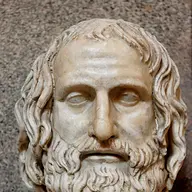
Euripides

, Athens (Theatre of Dionysus)Medea speaking, in Euripides’ play

In plain words, ours

Of every living, feeling thing, women have it worst. First we pay a huge price for a husband, then we have to accept him as our master.

Of all things that have life and sense we women are the most hapless creatures; first must we buy a husband at an exorbitant price, and o’er ourselves a tyrant set which is an evil worse than the first;

Euripides, Medea line 230Translated by E. P. Coleridge (1906)Read the full passage (Euripides, Medea line 230, opens scaife.perseus.org)

What was going on, our summary

In Euripides' play, first staged in 431 BCE, the year war broke out between Athens and Sparta, Medea tells her friends she is ruined and longs to die, because her husband, once all the world to her, has turned out a villain.

Checked claim by claim against: Thebans attack Plataea and the war begins, the passage around the quote.

Why it matters

Euripides' sympathy for women and the difficulties they faced has drawn particular interest in modern times, especially in Medea, which the feminist movement of the late 20th century often read as Medea's struggle to take charge of her own life in a male-dominated world.

Based on Wikipedia: Euripides, Medea (play)

Euripides's portrayal of women has attracted particular interest in modern times, on account of the perceptiveness and sympathy with which Euripides depicts women and the difficulties facing them in Greek society, especially in his Medea.

It experienced renewed interest in the feminist movement of the late 20th century, often being interpreted as a nuanced and sympathetic portrayal of Medea's struggle to take charge of her own life in a male-dominated world.

Wikipedia, Euripides (opens en.wikipedia.org), as of 2026-09-24; Wikipedia, Medea (play) (opens en.wikipedia.org), as of 2026-07-25. Text CC BY-SA 4.0. Our line is checked against these sentences only.

Related moments

In time order, with this one in its place. Each says why it is here.

  1. 431 BCESame year Thebans attack Plataea and the war begins The event behind it
  2. 431 BCEThis momentMedea on the lot of women
  3. 431 BCESame year Medea's Nurse on moderation Same passage
  4. 431 BCESame year The Chorus in Medea on a world reversed More from Euripides
  5. 431 BCESame year Medea on childbirth and battle Same passageMore from Euripides
  6. 431 BCESame year Medea on being too clever More from Euripides
  7. 431 BCE, written laterSame year Thucydides opens his history of the war Also in Athens
  8. 431 BCE0.10000000000002274 years later Spartan army invades Attica Same years
  9. 430 BCE1 year later Plague breaks out in Athens Same years
  10. 431/430 BCEBegins this year Athens holds a public funeral for its first war dead Same years
  11. 430 BCE, written later1 year later Thucydides on the plague he caught Also in Athens
  12. 430 BCE, written later1 year later Thucydides on the plague in Athens Also in Athens
  13. 429 BCE2 years later Pericles dies Same years
  14. c. 430–425 BCEabout 4 years later Herodotus on Egypt's reversed customs Also about women
  15. c. 431–411 BCEBegins this year Socrates on guardians sharing wives and children Also about women

Just before and after

The text around the quote, word for word from the same translation.

Show the passageHide the passage

Medea: For there is no just discernment in the eyes of men, for they, or ever they have surely learnt their neighbour’s heart, loathe him at first sight, though never wronged by him; and so a stranger most of all should adopt a city’s views; nor do I commend that citizen, who, in the stubbornness of his heart, from churlishness resents the city’s will. But on me hath fallen this unforeseen disaster, and sapped my life; ruined I am, and long to resign the boon of existence, kind friends, and die. For he who was all the world to me, as well thou knowest, hath turned out the veriest villain, my own husband.

The quote: Medea: Of all things that have life and sense we women are the most hapless creatures; first must we buy a husband at an exorbitant price, and o’er ourselves a tyrant set which is an evil worse than the first;

Medea: and herein lies the most important issue, whether our choice be good or bad. For divorce is discreditable to women, nor can we disown our lords. Next must the wife, coming as she does to ways and customs new, since she hath not learnt the lesson in her home, have a diviner’s eye to see how best to treat the partner of her life. If haply we perform these tasks with thoroughness and tact, and the husband live with us, without resenting the yoke, our life is a happy one; if not, ’twere best to die.

Euripides, Medea lines 215–240Translated by E. P. Coleridge (1906)Read the full passage (opens scaife.perseus.org)

When, and whose words

Date
431 BCE. Medea was first staged at the City Dionysia in 431 BCE.
Whose words
Medea speaking, in Euripides’ play.
How this post was checked
  • The plain-words line was read against the quote alone by a second, independent pass, which found it adds no claim the quote does not make (2026-10-03).
  • Each claim in the summary was checked by an independent pass against only the material it cites.
  • The quote itself is checked by the build: word for word, once, at the cited section of the stored translation.

See it among its momentsMore from EuripidesSee it in the feed