hstry

Socrates on guardians sharing wives and children

c. 431–411 BCE, Piraeus, Athens. As Plato tells it.

Where and when

c. 431–411 BCEPiraeus, Athens

about 2,446 years ago

Explore
Socrates, c. 470 – 399 BCE3000 BCE2900 BCE2800 BCE2700 BCE2600 BCE2500 BCE2400 BCE2300 BCE2200 BCE2100 BCE2000 BCE1900 BCE1800 BCE1700 BCE1600 BCE1500 BCE1400 BCE1300 BCE1200 BCE1100 BCE1000 BCE900 BCE800 BCE700 BCE600 BCE500 BCE400 BCE300 BCE200 BCE100 BCE1 CE100 CE200 CE300 CE400 CE500 CE600 CE700 CE800 CE900 CE1000 CE1100 CE1200 CE1300 CE1400 CE1500 CE1600 CE1700 CE1800 CE1900 CE2000 CEGreat Pyramid of Giza built, c. 2600 BCERome founded (traditional date), 753 BCELast western Roman emperor deposed, 476 CEGutenberg's printing press, c. 1440 CEColumbus reaches the Americas, 1492 CEFirst people on the Moon, 1969 CEToday, 2026sometime in these 20 years

Swipe the line. Bars: entries. Dots: events.

In plain words, ours

My proposed law: the guardians share their wives and children. No parent knows which child is theirs, and no child knows their parent.

The law, I said, which is the sequel of this and of all that has preceded, is to the following effect,—‘that the wives of our guardians are to be common, and their children are to be common, and no parent is to know his own child, nor any child his parent.’

Plato, Republic Book 5Translated by Benjamin Jowett (1871)Read the full passage (Plato, Republic Book 5, opens gutenberg.org)

Answered by Aristotle, c. 335–322 BCE

What was going on, our summary

As Plato tells it, Socrates is in Piraeus laying out laws for the guardians of a city. He has just argued that women guardians should share all pursuits with men, and warns his listener that an even bigger wave of objections is coming.

Checked claim by claim against: the passage around the quote.

Why it matters

The Republic is one of the world's most influential works of political theory, and Huxley's Brave New World bears a resemblance to it, with state-organized breeding in place of traditional families.

Based on Wikipedia: Republic (Plato)

It is Plato's best-known work, and one of the world's most influential works of philosophy and political theory, both intellectually and historically.

Aldous Huxley's Brave New World has a dystopian government that bears a resemblance to the form of government described in the Republic, featuring the separation of people by professional class, assignment of profession and purpose by the state, and the absence of traditional family units, replaced by state-organized breeding.

Wikipedia, Republic (Plato) (opens en.wikipedia.org), as of 2026-09-27. Text CC BY-SA 4.0. Our line is checked against these sentences only.

Related moments

In time order, with this one in its place. Each says why it is here.

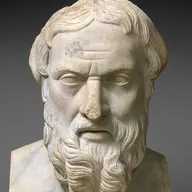
  1. c. 430–425 BCEabout 6 years earlier Herodotus on Egypt's reversed customs Also about women
  2. 424/423 BCEabout 3 years earlier Thucydides fails to save Amphipolis and is exiled Same years
  3. 423 BCEabout 2 years earlier Aristophanes' Socrates walks on air Same years
  4. 422 BCE1 year earlier Cleon and Brasidas both die at Amphipolis Same years
  5. 421 BCEAbout the same year The Peace of Nicias Same years
  6. c. 431–411 BCEThis momentSocrates on guardians sharing wives and children
  7. c. 430–405 BCEDuring it Socrates would rather suffer wrong than do it More from Socrates
  8. c. 420–413 BCEabout 4 years later Clytemnestra defends herself Also about women
  9. set in 416 BCEabout 5 years later Socrates on Love as the best helper More from Socrates
  10. 415 BCEabout 6 years later The great fleet sails for Sicily Also in Piraeus
  11. c. 420–410 BCEabout 6 years later Socrates on why he stays in the city More from Socrates
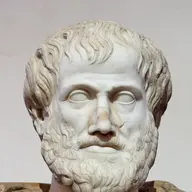
  12. c. 335–322 BCEabout 93 years later Aristotle answers Plato's Republic Answered by Aristotle

Just before and after

The text around the quote, word for word from the same translation.

Show the passageHide the passage

And as for the man who laughs at naked women exercising their bodies from the best of motives, in his laughter he is plucking ‘A fruit of unripe wisdom,’ and he himself is ignorant of what he is laughing at, or what he is about;—for that is, and ever will be, the best of sayings, That the useful is the noble and the hurtful is the base. Very true. Here, then, is one difficulty in our law about women, which we may say that we have now escaped; the wave has not swallowed us up alive for enacting that the guardians of either sex should have all their pursuits in common; to the utility and also to the possibility of this arrangement the consistency of the argument with itself bears witness. Yes, that was a mighty wave which you have escaped. Yes, I said, but a greater is coming; you will not think much of this when you see the next. Go on; let me see.

The quote: The law, I said, which is the sequel of this and of all that has preceded, is to the following effect,—‘that the wives of our guardians are to be common, and their children are to be common, and no parent is to know his own child, nor any child his parent.’

Yes, he said, that is a much greater wave than the other; and the possibility as well as the utility of such a law are far more questionable. I do not think, I said, that there can be any dispute about the very great utility of having wives and children in common; the possibility is quite another matter, and will be very much disputed. I think that a good many doubts may be raised about both. You imply that the two questions must be combined, I replied.

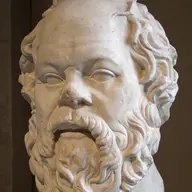
Plato, Republic Book 5Translated by Benjamin Jowett (1871)Read the full passage (opens gutenberg.org)

When, and whose words

Date
c. 431–411 BCE. The Republic's dramatic date is uncertain; proposals run from about 431 to 411 BCE. Plato wrote it decades later, c. 375 BCE.
Whose words
As Plato tells it.
How this post was checked
  • The plain-words line was read against the quote alone by a second, independent pass, which found it adds no claim the quote does not make (2026-10-03).
  • Each claim in the summary was checked by an independent pass against only the material it cites.
  • The quote itself is checked by the build: word for word, once, at the cited section of the stored translation.

See it among its momentsMore from SocratesSee it in the feed