hstry

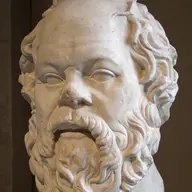
Socrates would rather suffer wrong than do it

c. 430–405 BCE, Athens. As Plato tells it.

Where and when

c. 430–405 BCEAthens

about 2,443 years ago

Explore
Socrates, c. 470 – 399 BCE3000 BCE2900 BCE2800 BCE2700 BCE2600 BCE2500 BCE2400 BCE2300 BCE2200 BCE2100 BCE2000 BCE1900 BCE1800 BCE1700 BCE1600 BCE1500 BCE1400 BCE1300 BCE1200 BCE1100 BCE1000 BCE900 BCE800 BCE700 BCE600 BCE500 BCE400 BCE300 BCE200 BCE100 BCE1 CE100 CE200 CE300 CE400 CE500 CE600 CE700 CE800 CE900 CE1000 CE1100 CE1200 CE1300 CE1400 CE1500 CE1600 CE1700 CE1800 CE1900 CE2000 CEGreat Pyramid of Giza built, c. 2600 BCERome founded (traditional date), 753 BCELast western Roman emperor deposed, 476 CEGutenberg's printing press, c. 1440 CEColumbus reaches the Americas, 1492 CEFirst people on the Moon, 1969 CEToday, 2026sometime in these 25 years

Swipe the line. Bars: entries. Dots: events.

In plain words, ours

I'd want neither. But if I had to choose between doing wrong and being wronged, I'd rather be wronged.

I should wish neither, for my own part; but if it were necessary either to do wrong or to suffer it, I should choose to suffer rather than do it.

Plato, Gorgias 469cTranslated by W. R. M. Lamb (1925)Read the full passage (Plato, Gorgias 469c, opens scaife.perseus.org)

What was going on, our summary

In a dialogue by Plato, Socrates is arguing with Polus about a man who can put others to death as he likes. Socrates says doing wrong is the greatest of evils. Polus next asks if he would turn down a despot's power.

Checked claim by claim against: the passage around the quote.

Related moments

In time order, with this one in its place. Each says why it is here.

  1. c. 441 BCEabout 23 years earlier Haemon begs his father to bend Also about how to live well
  2. 423 BCEabout 5 years earlier The Unjust Cause on making the worse cause win Also about justice and law
  3. 421 BCEabout 3 years earlier The Peace of Nicias Same years
  4. c. 431–411 BCEDuring it Socrates on guardians sharing wives and children More from Socrates
  5. c. 430–405 BCEThis momentSocrates would rather suffer wrong than do it
  6. c. 420–413 BCEDuring it The peasant on noble birth and poverty Also in Athens
  7. c. 420–413 BCEDuring it Orestes on judging a man's worth Also in AthensAlso about how to live well
  8. c. 420–413 BCEDuring it Orestes on judging a man's worth Also in Athens
  9. 416 BCEabout 2 years later Athens takes Melos and kills its men Same years
  10. set in 416 BCEabout 2 years later Socrates on Love as the best helper More from Socrates
  11. 416 BCE, written laterabout 2 years later Athenian envoys to Melos on the strong and weak Also about justice and law
  12. 415 BCEabout 2.8999999999999773 years later Statues of Hermes are smashed across Athens Same years
  13. 415 BCEabout 3 years later The great fleet sails for Sicily Same years
  14. c. 420–410 BCEDuring it Socrates on why he stays in the city More from Socrates

Just before and after

The text around the quote, word for word from the same translation.

Show the passageHide the passage

Soc. Yes, for so I must. Pol. Then do you consider that a man who puts another to death as he thinks fit, and justly puts him to death, is wretched and pitiable? Soc. Not I; but not enviable either. Pol. Did you not say just now that he was wretched? Soc. Only he who unjustly put some one to death, my friend, and I called him pitiable as well: if he acted justly, then he is unenviable. Pol. I suppose, at any rate, the man who is put to death unjustly is both pitiable and wretched. Soc. Less so than he who puts him to death, Polus, and less so than he who is put to death justly. Pol. In what way can that be, Socrates ? Soc. In this, that to do wrong is the greatest of evils. Pol. What, is this the greatest? Is not to suffer wrong a greater? Soc. By no means. Pol. Then would you wish rather to suffer wrong than to do it? Soc.

The quote: I should wish neither, for my own part; but if it were necessary either to do wrong or to suffer it, I should choose to suffer rather than do it.

Pol. Then you would not accept a despot’s power? Soc. No, if you mean by a despot’s power the same as I do. Pol. Why, what I mean is, as I did just now, the liberty of doing anything one thinks fit in one’s city—putting people to death and expelling them and doing everything at one’s own discretion. Soc. My gifted friend, let me speak, and you shall take me to task in your turn.

Plato, Gorgias 469a–cTranslated by W. R. M. Lamb (1925)Read the full passage (opens scaife.perseus.org)

When, and whose words

Date
c. 430–405 BCE. The Gorgias drops hints from different decades, so its dramatic date cannot be fixed; it is set in Socrates' lifetime.
Whose words
As Plato tells it.
How this post was checked
  • The plain-words line was read against the quote alone by a second, independent pass, which found it adds no claim the quote does not make (2026-10-03).
  • Each claim in the summary was checked by an independent pass against only the material it cites.
  • The quote itself is checked by the build: word for word, once, at the cited section of the stored translation.

See it among its momentsMore from SocratesSee it in the feed