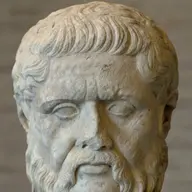
Plato
c. 428 – 348 BCE, Athens
c. 428 – 348 BCEAthens
about 2,413 years ago

Greek philosopher of Classical Athens (c. 428–347 BCE), founder of the Academy, most often seen as the founding thinker of Western philosophy.
Plato ( PLAY-toh; Ancient Greek: Πλάτων, Plátōn; c. 428–347 BC) was an ancient Greek philosopher of Classical Athens who is most commonly considered the foundational thinker of the Western philosophical tradition.
was the founder of the Academy, a philosophical school in Athens
From Wikipedia, Plato (opens en.wikipedia.org), as of 2026-09-28.
Short and sourced: tap any line to see the sentences it rests on.
In short
He was the student of Socrates and the teacher of Aristotle.
Along with his teacher Socrates, and his student Aristotle, Plato is a central figure in the history of Western philosophy.
From Wikipedia, Plato (opens en.wikipedia.org), as of 2026-09-28.
His most famous idea is the Theory of Forms.
Plato's most famous contribution is his Theory of Forms (or Ideas), which aims to solve what is now known as the problem of universals.
From Wikipedia, Plato (opens en.wikipedia.org), as of 2026-09-28.
His complete works are believed to have survived, unlike those of nearly all his contemporaries.
Plato's complete works are believed to have survived—unlike those of nearly all of his contemporaries.
From Wikipedia, Plato (opens en.wikipedia.org), as of 2026-09-28.
Youth and Socrates
Born between 428 and 423 BCE to an aristocratic Athenian family; through his mother, Perictione, he descended from Solon.
Plato was born between 428 and 423 BC into an aristocratic and influential Athenian family; through his mother, Perictione, he was a descendant of Solon, a statesman credited with laying the foundations of Athenian democracy.
From Wikipedia, Plato (opens en.wikipedia.org), as of 2026-09-28.
He met Socrates in his youth and joined his inner circle; Socrates became his teacher and greatest source of inspiration.
In his youth, Plato first encountered Socrates, who would become his teacher and greatest source of inspiration
but he soon would become a member of Socrates' inner circle, meeting with Socrates and his other followers.
From Wikipedia, Plato (opens en.wikipedia.org), as of 2026-09-28.
In 404 BCE, after Sparta defeated Athens, the Thirty Tyrants were elected, including two of his relatives, Critias and Charmides.
In 404, Sparta defeated Athens at the conclusion of the Peloponnesian war, leading to the election of the Thirty Tyrants, which included two of Plato's relatives, Critias and Charmides.
From Wikipedia, Plato (opens en.wikipedia.org), as of 2026-09-28.
He was invited to join the Thirty's administration but declined, and quickly became disillusioned by their atrocities.
Plato himself was invited to join the administration, but declined, and quickly became disillusioned by the atrocities committed by the Thirty
From Wikipedia, Plato (opens en.wikipedia.org), as of 2026-09-28.
The prosecution of Socrates by Anytus put an end to his plans for a political career.
However, the prosecution of Socrates by Anytus put an end to Plato's plans for a political career.
From Wikipedia, Plato (opens en.wikipedia.org), as of 2026-09-28.
The Academy and Syracuse
At about 40, c. 385 BCE, he visited Syracuse under Dionysius; Dion became his disciple, but the tyrant turned against him.
When Plato was about 40 years old, he visited Syracuse.
Plato initially visited Syracuse while it was under the rule of Dionysius, in roughly 385 BC. During this first trip Dionysius's brother-in-law, Dion of Syracuse, became one of Plato's disciples, but the tyrant himself turned against Plato.
From Wikipedia, Plato (opens en.wikipedia.org), as of 2026-09-28.
Back from Syracuse, c. 383 BCE, he founded the Academy, his school, near the sacred olive grove of Hecademus.
After his return from Syracuse, Plato founded his philosophical school, the Academy, near the sacred olive grove of Hecademus, in roughly 383 BC.
From Wikipedia, Plato (opens en.wikipedia.org), as of 2026-09-28.
From 383 to about 366 BCE he spent most of his time at the Academy, writing most of his dialogues then.
From 383 BC until about 366 BC, Plato primarily spent his time at the Academy, writing the majority of the dialogues during this time.
From Wikipedia, Plato (opens en.wikipedia.org), as of 2026-09-28.
Aristotle of Stagira arrived in 367 BCE, shortly before Plato left again for Syracuse.
Aristotle of Stagira, who would go on to become a philosopher as famous as Plato in his own right, arrived in 367 BC, shortly before Plato departed again for Syracuse.
From Wikipedia, Plato (opens en.wikipedia.org), as of 2026-09-28.
Likely in 366 BCE he went back to Syracuse to tutor Dionysius II as a philosopher king, but gave up and returned to Athens.
After Dionysius I's death in 367 BC, Plato returned to Syracuse, likely early in 366 BC, at the request of Dion, in order to tutor Dionysius II and guide him to become a philosopher king.
Dionysius expelled Dion, and Plato, after trying repeatedly to reconcile the two, gave up and returned to Athens.
From Wikipedia, Plato (opens en.wikipedia.org), as of 2026-09-28.
On a third visit to Syracuse, in 361 BCE, Dionysius kept him against his will until his friend Archytas interceded.
Plato returned to Syracuse a third time in 361 BC
Dionysius kept Plato against his will, forcing Plato to appeal to his friend Archytas to intercede, at which point he returned to Athens.
From Wikipedia, Plato (opens en.wikipedia.org), as of 2026-09-28.
Last years
After 360 BCE he lived in Athens; the Laws was unfinished at his death and was edited by Philip of Opus, a student at the Academy.
After 360 BC, Plato returned to Athens, where he spent the remainder of his life.
At the time of his death, however, the Laws was still unfinished; this work was edited by a student at the Academy, Philip of Opus
From Wikipedia, Plato (opens en.wikipedia.org), as of 2026-09-28.
In 348/347 BCE he died and was buried in his garden in the Academy.
In 348/347 BC, Plato died and was buried in his garden in the Academy in Athens.
From Wikipedia, Plato (opens en.wikipedia.org), as of 2026-09-28.
His nephew Speusippus succeeded him as head of the Academy.
He was succeeded as the head of the Academy by Speusippus, his nephew.
From Wikipedia, Plato (opens en.wikipedia.org), as of 2026-09-28.
Ideas
His Theory of Forms treats the changing world of the senses as a copy of an unchanging, unseen world of Forms, grasped by reason.
"Platonism" and its theory of Forms (also known as 'theory of Ideas') denies the reality of the material world, considering it only an image or copy of the real world.
According to this theory of Forms, there are these two kinds of things: the apparent world of material objects grasped by the senses, which constantly changes, and an unchanging and unseen world of Forms, grasped by reason.
From Wikipedia, Plato (opens en.wikipedia.org), as of 2026-09-28.
In the Meno, Socrates draws a geometry fact out of an uneducated slave boy, to show that knowledge is recollection.
In the Meno, Socrates uses a geometrical example to expound Plato's view that knowledge in this latter sense is acquired by recollection.
Socrates elicits a fact concerning a geometrical construction from a slave boy, who could not have otherwise known the fact (due to the slave boy's lack of education).
From Wikipedia, Plato (opens en.wikipedia.org), as of 2026-09-28.
According to Socrates in the dialogues, a state declines from aristocracy to timocracy, oligarchy, democracy and finally tyranny.
According to Socrates, a state made up of different kinds of souls will, overall, decline from an aristocracy (rule by the best) to a timocracy (rule by the honourable), then to an oligarchy (rule by the few), then to a democracy (rule by the people), and finally to tyranny (rule by one person, rule by a tyrant).
From Wikipedia, Plato (opens en.wikipedia.org), as of 2026-09-28.
He is generally agreed to have used myths mainly to teach; examples include Atlantis, the Myth of Er and the Allegory of the Cave.
it is generally agreed that the main purpose for Plato in using myths was didactic.
Notable examples include the story of Atlantis, the Myth of Er, and the Allegory of the Cave.
From Wikipedia, Plato (opens en.wikipedia.org), as of 2026-09-28.
How we know
Plato never speaks in his own voice in his dialogues, and every one except the Laws features Socrates.
Plato never speaks in his own voice in his dialogues; every dialogue except the Laws features Socrates
From Wikipedia, Plato (opens en.wikipedia.org), as of 2026-09-28.
Xenophon and Aristophanes seem to paint a somewhat different Socrates from Plato’s.
Xenophon's Memorabilia and Aristophanes's The Clouds seem to present a somewhat different portrait of Socrates from the one Plato paints.
From Wikipedia, Plato (opens en.wikipedia.org), as of 2026-09-28.
Thirty-five dialogues and thirteen letters were traditionally credited to him; modern scholars doubt at least some of them.
Thirty-five dialogues and thirteen letters (the Epistles) have traditionally been ascribed to Plato, though modern scholarship doubts the authenticity of at least some of these.
From Wikipedia, Plato (opens en.wikipedia.org), as of 2026-09-28.
A Herculaneum scroll by Philodemus, deciphered in 2024, says he was sold into slavery on Aegina, possibly as early as 404 BCE.
However, according to a 2024 announcement of the decipherment of a scroll from Herculaneum by the Greek philosopher Philodemus, History of the Academy, Plato was sold into slavery on the island of Aegina, possibly as early as 404 BC
From Wikipedia, Plato (opens en.wikipedia.org), as of 2026-09-28.
Plato on hstry
- c. 360–348 BCEThe Athenian Stranger on puppets of the gods
- c. 360–348 BCEPlato's Athenian Stranger on law over rulers
- c. 360–348 BCEThe Athenian Stranger on truth
- c. 353 BCEPlato's Seventh Letter on entering public life
- c. 353 BCEPlato's Seventh Letter on the Thirty
- c. 353 BCEPlato's Seventh Letter on Socrates in court
- c. 353 BCEPlato's Seventh Letter on going into politics
- c. 353 BCEPlato's Seventh Letter on philosophers ruling
- c. 353 BCEPlato's Seventh Letter on what words cannot hold
- by 348 BCEPlato's Second Letter on writing nothing down
- by 348 BCEPlato defines man as a featherless biped
- by 348 BCEPlato answers Diogenes
Related
People
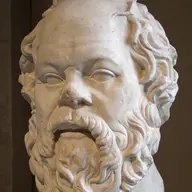 Socratesc. 470 – 399 BCE. On this page
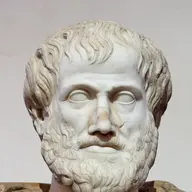 Aristotle384 – 322 BCE. On this page
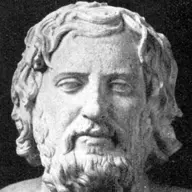 Xenophonc. 430 – c. 354 BCE. On this page
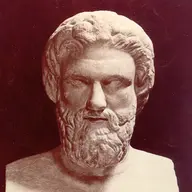 Aristophanesc. 446 – c. 386 BCE. On this page
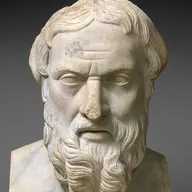 Herodotusc. 484 – c. 425 BCE. Alive at the same time
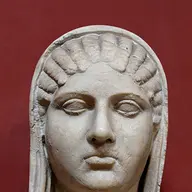 Aspasiac. 470 – after 428 BCE. Alive at the same time
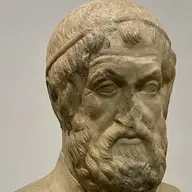 Sophoclesc. 497 – 406 BCE. Alive at the same time
 Euripidesc. 480 – c. 406 BCE. Alive at the same time
 Thucydidesc. 460 – c. 400 BCE. Alive at the same time
- Meletusfl. 399 BCE. Alive at the same time
Places
During Plato's life
- 427 BCEAthens votes to kill Mytilene's men, then relents
- 425 BCESpartans surrender on Sphacteria
- 424/423 BCEThucydides fails to save Amphipolis and is exiled
- 422 BCECleon and Brasidas both die at Amphipolis
- 421 BCEThe Peace of Nicias
- 416 BCEAthens takes Melos and kills its men
- 415 BCEStatues of Hermes are smashed across Athens
- 415 BCEThe great fleet sails for Sicily
- 413 BCEThe Athenian army is destroyed in Sicily
- 411 BCEAn oligarchy of Four Hundred seizes Athens
- 406 BCEAthens wins at Arginusae, then condemns its generals
- c. 406 BCEEuripides and Sophocles die
- 405 BCEThe Athenian fleet is lost at Aegospotami
- 404 BCEAthens surrenders and its walls come down
- 404 BCEThe Thirty take power in Athens
- 403 BCEDemocracy returns to Athens, with an amnesty
- 399 BCESocrates is tried, condemned and put to death
- c. 387 BCEPlato starts teaching at the Academy
- c. 367 BCEAristotle, aged about seventeen, joins Plato's Academy
- c. 348/347 BCEPlato dies, aged about eighty
Periods
Every line here is ours, written from Wikipedia, Plato (opens en.wikipedia.org) (text CC BY-SA 4.0) and checked line by line against the sentences it cites. Where Wikipedia relies on Plutarch or another ancient writer, so do we, and we say so.