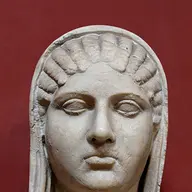
Aspasia
c. 470 – after 428 BCE, Miletus
c. 470 – after 428 BCEMiletus
about 2,474 years ago

A metic woman (c. 470–after 428 BCE), born in Miletus, who lived in Classical Athens and had a relationship with the statesman Pericles.
Aspasia (c. 470 – after 428 BC) was a metic woman who lived in Classical Athens. Born in Miletus, she moved to Athens and began a relationship with the statesman Pericles.
From Wikipedia, Aspasia (opens en.wikipedia.org), as of 2026-09-18.
Short and sourced: tap any line to see the sentences it rests on.
In short
She is one of the best-attested women of the Greco-Roman world, yet almost nothing about her life is certain.
Though Aspasia is one of the best-attested women from the Greco-Roman world, and the most important woman in the history of fifth-century Athens, almost nothing is certain about her life.
From Wikipedia, Aspasia (opens en.wikipedia.org), as of 2026-09-18.
Apart from her name, her father's name and her birthplace, her life story is almost entirely unverifiable.
Aside from her name, father's name, and place of birth, Aspasia's biography is almost entirely unverifiable
From Wikipedia, Aspasia (opens en.wikipedia.org), as of 2026-09-18.
Early life
She was born, probably no earlier than 470 BCE, in the Ionian Greek city of Miletus, the daughter of a man called Axiochus.
Aspasia was born, probably no earlier than 470 BC, in the Ionian Greek city of Miletus (in modern Aydın Province, Turkey), the daughter of a man called Axiochus.
From Wikipedia, Aspasia (opens en.wikipedia.org), as of 2026-09-18.
How she came to Athens is unknown.
The circumstances surrounding Aspasia's move to Athens are unknown.
From Wikipedia, Aspasia (opens en.wikipedia.org), as of 2026-09-18.
One theory, from Peter Bicknell, is that the grandfather of the famous Alcibiades married her sister in Miletus, and Aspasia went with him to Athens.
One theory, first put forward by Peter Bicknell based on a fourth-century tomb inscription, suggests that Alcibiades of Scambonidae, the grandfather of the famous Alcibiades, married Aspasia's sister while he was in exile in Miletus following his ostracism, and Aspasia went with him when he returned to Athens.
From Wikipedia, Aspasia (opens en.wikipedia.org), as of 2026-09-18.
A courtesan?
The conventional account says she worked as a courtesan and then ran a brothel. Some scholars have challenged this view.
According to the conventional understanding of Aspasia's life, she worked as a courtesan and then ran a brothel. Some scholars have challenged this view.
From Wikipedia, Aspasia (opens en.wikipedia.org), as of 2026-09-18.
The claim comes from ancient comedy, and modern scholars have questioned its factual basis.
According to the traditional historical narrative, she worked as a hetaira, though modern scholars have questioned the factual basis for this claim, which derives from ancient comedy.
From Wikipedia, Aspasia (opens en.wikipedia.org), as of 2026-09-18.
Madeleine Henry argues we need not believe Aspasia was a prostitute just because a comic poet says she was.
Madeleine Henry argues in her biography of Aspasia that "we are not required to believe that Aspasia was a whore because a comic poet says she was"
From Wikipedia, Aspasia (opens en.wikipedia.org), as of 2026-09-18.
Konstantinos Kapparis argues the comic attacks make it likely she had been a sex worker before her relationship with Pericles.
Konstantinos Kapparis argues that the kinds of comic attacks made on Aspasia would not have been acceptable to make about a respectable woman, and that it is therefore likely that Aspasia did have a history as a sex worker before she began her relationship with Pericles.
From Wikipedia, Aspasia (opens en.wikipedia.org), as of 2026-09-18.
With Pericles
Her relationship with Pericles began some time between 452 and 441 BCE. How they met is uncertain.
Aspasia's relationship with Pericles began some time between 452 and 441.
In Athens, Aspasia met and began a relationship with the statesman Pericles. It is uncertain how they met
From Wikipedia, Aspasia (opens en.wikipedia.org), as of 2026-09-18.
The nature of her relationship with Pericles is disputed: ancient authors called her a prostitute, his concubine or his wife, and modern scholars are divided.
The exact nature of Pericles and Aspasia's relationship is disputed. Ancient authors variously portrayed her as a prostitute, his concubine, or his wife. Modern scholars are also divided.
From Wikipedia, Aspasia (opens en.wikipedia.org), as of 2026-09-18.
Aspasia and Pericles had a son, Pericles the Younger, born no later than 440/439 BCE.
Aspasia and Pericles had a son, Pericles the Younger, born no later than 440/39 BC.
From Wikipedia, Aspasia (opens en.wikipedia.org), as of 2026-09-18.
In 430/429 BCE, after his two elder sons died, Pericles proposed changing his citizenship law so Pericles the Younger could become a citizen and inherit.
In 430/29, after the death of his two elder sons, Pericles proposed an amendment to his citizenship law of 451/0 which would have made Pericles the Younger able to become a citizen and inherit.
From Wikipedia, Aspasia (opens en.wikipedia.org), as of 2026-09-18.
According to Plutarch, the comic poet Hermippus prosecuted her for impiety; she was supposedly defended by Pericles and acquitted.
According to Plutarch, Aspasia was prosecuted for asebeia (impiety) by the comic poet Hermippus. She was supposedly defended by Pericles and acquitted.
From Wikipedia, Aspasia (opens en.wikipedia.org), as of 2026-09-18.
Many scholars doubt the trial of Aspasia took place, suggesting the story comes from a fictional trial in a play by Hermippus.
Many scholars have questioned whether this trial ever took place, suggesting that the tradition derives from a fictional trial of Aspasia in a play by Hermippus.
From Wikipedia, Aspasia (opens en.wikipedia.org), as of 2026-09-18.
After Pericles
Pericles died in 429 BCE. Ancient sources say Aspasia then married another politician, Lysicles, and had a son, Poristes.
In 429 BC, Pericles died. According to ancient sources, Aspasia then married another politician, Lysicles, and gave birth to another son, Poristes.
From Wikipedia, Aspasia (opens en.wikipedia.org), as of 2026-09-18.
Henry doubts Aspasia had a child with Lysicles, and Kennedy questions whether she married him at all.
Henry doubts whether Aspasia had a child with Lysicles, and Kennedy questions whether she married Lysicles at all.
From Wikipedia, Aspasia (opens en.wikipedia.org), as of 2026-09-18.
Lysicles died in 428 BCE. Nothing is recorded of Aspasia's life after that, and where and when she died is unknown.
Lysicles died a year after Pericles, in 428, and nothing is recorded of Aspasia's life after this point. It is unknown where or when she died.
From Wikipedia, Aspasia (opens en.wikipedia.org), as of 2026-09-18.
How we know about her
The only surviving sources about Aspasia written in her lifetime are comedies, and they focus on her sexuality.
The only surviving ancient sources to discuss Aspasia which were written during her life are from comedy. The surviving comic tradition about Aspasia – unlike her male contemporaries – focuses on her sexuality.
From Wikipedia, Aspasia (opens en.wikipedia.org), as of 2026-09-18.
In Acharnians, Aristophanes jokes that the Megarian decree was revenge for the kidnapping of two prostitutes from Aspasia.
Aristophanes, the only writer of Old Comedy for whom complete works survive, refers to Aspasia only once in his surviving corpus, in Acharnians.
Aristophanes jokes that the Megarian decree was retaliation for the kidnapping of two pornai ("prostitutes") from Aspasia.
From Wikipedia, Aspasia (opens en.wikipedia.org), as of 2026-09-18.
In the 4th century BCE she appears in Socratic dialogues by Antisthenes, Plato, Aeschines and Xenophon.
in the fourth century BC she appears in Socratic dialogues.
In the fourth century, four philosophers are known to have written Socratic dialogues which feature Aspasia: Antisthenes, Plato, Aeschines and Xenophon.
From Wikipedia, Aspasia (opens en.wikipedia.org), as of 2026-09-18.
Plato, Xenophon and Aeschines show Aspasia as an educated, skilled rhetorician and a source of advice on marriage.
In the dialogues by Plato, Xenophon, and Aeschines, Aspasia is portrayed as an educated, skilled rhetorician, and a source of advice for marital concerns.
From Wikipedia, Aspasia (opens en.wikipedia.org), as of 2026-09-18.
She may have been a model for the character of Diotima in Plato's Symposium.
she may have been a model for the character of Diotima in the Symposium of Plato.
From Wikipedia, Aspasia (opens en.wikipedia.org), as of 2026-09-18.
Plutarch's Life of Pericles is the fullest ancient account of Aspasia. Modern biographies depend on it, though he wrote nearly seven centuries after her death.
Plutarch wrote his Life of Pericles, the longest and most complete ancient biographical treatment of Aspasia.
Modern biographies of Aspasia are dependent on Plutarch, despite his writing nearly seven centuries after her death.
From Wikipedia, Aspasia (opens en.wikipedia.org), as of 2026-09-18.
Aspasia on hstry
Related
People
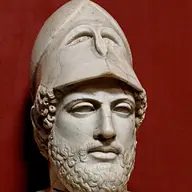 Periclesc. 495 – 429 BCE. On this page
 Aristophanesc. 446 – c. 386 BCE. On this page
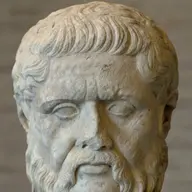 Platoc. 428 – 348 BCE. On this page
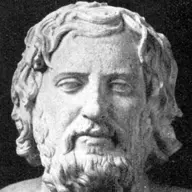 Xenophonc. 430 – c. 354 BCE. On this page
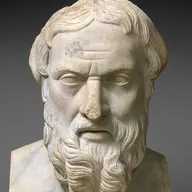 Herodotusc. 484 – c. 425 BCE. Alive at the same time
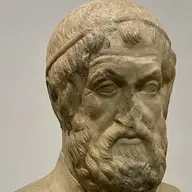 Sophoclesc. 497 – 406 BCE. Alive at the same time
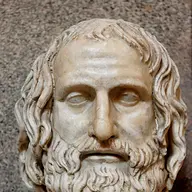 Euripidesc. 480 – c. 406 BCE. Alive at the same time
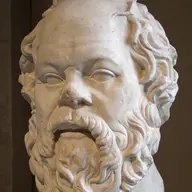 Socratesc. 470 – 399 BCE. Alive at the same time
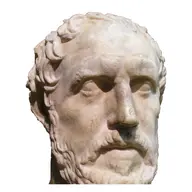 Thucydidesc. 460 – c. 400 BCE. Alive at the same time
Places
During Aspasia's life
- c. 461 BCEEphialtes strips the old Areopagus council of power
- 447 BCEWork begins on the Parthenon
- 446/445 BCEAthens and Sparta agree a Thirty Years' Peace
- 431 BCEThebans attack Plataea and the war begins
- 431 BCESpartan army invades Attica
- 431/430 BCEAthens holds a public funeral for its first war dead
- 430 BCEPlague breaks out in Athens
- 429 BCEPericles dies
Periods
Every line here is ours, written from Wikipedia, Aspasia (opens en.wikipedia.org) (text CC BY-SA 4.0) and checked line by line against the sentences it cites. Where Wikipedia relies on Plutarch or another ancient writer, so do we, and we say so.