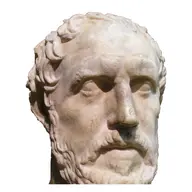
Thucydides
c. 460 – c. 400 BCE, Athens
c. 460 – c. 400 BCEAthens
about 2,455 years ago

Athenian historian and general (c. 460–c. 400 BCE) whose History of the Peloponnesian War tells of the war between Sparta and Athens up to 411 BCE.
c. 460 – c. 400 BC) was an Athenian historian and general.
His History of the Peloponnesian War recounts the 5th century BC war between Sparta and Athens until the year 411 BC.
From Wikipedia, Thucydides (opens en.wikipedia.org), as of 2026-06-23.
Short and sourced: tap any line to see the sentences it rests on.
In short
Those who accept his claims to strict standards of evidence and cause and effect, without the gods, call him the father of "scientific history".
Thucydides has been dubbed the father of "scientific history" by those who accept his claims to have applied strict standards of impartiality and evidence-gathering and analysis of cause and effect, without reference to intervention by the gods
From Wikipedia, Thucydides (opens en.wikipedia.org), as of 2026-06-23.
He has been called the father of political realism, which sees how states deal with each other as built on fear and self-interest.
Thucydides has been called the father of the school of political realism, which views the political behaviour of individuals and the subsequent outcomes of relations between states as ultimately mediated by, and constructed upon, fear and self-interest.
From Wikipedia, Thucydides (opens en.wikipedia.org), as of 2026-06-23.
His Melian dialogue is regarded as a seminal text of international relations theory; his version of Pericles's Funeral Oration is widely studied.
The Melian dialogue is regarded as a seminal text of international relations theory, while his version of Pericles's Funeral Oration is widely studied by political theorists, historians, and students of the classics.
From Wikipedia, Thucydides (opens en.wikipedia.org), as of 2026-06-23.
Early life
He calls himself an Athenian, the son of Olorus, from the Athenian deme of Halimous.
Thucydides identifies himself as an Athenian, telling us that his father's name was Olorus and that he was from the Athenian deme of Halimous.
From Wikipedia, Thucydides (opens en.wikipedia.org), as of 2026-06-23.
He says he fought in the war and caught the plague. He survived the Plague of Athens, which killed Pericles.
Thucydides says that he fought in the war, contracted the plague, and was exiled by the democracy.
He survived the Plague of Athens, which killed Pericles and many other Athenians.
From Wikipedia, Thucydides (opens en.wikipedia.org), as of 2026-06-23.
He records that he owned gold mines at Scapte Hyle, on the coast of Thrace opposite the island of Thasos.
He also records that he owned gold mines at Scapte Hyle (literally "Dug Woodland"), a coastal area in Thrace, opposite the island of Thasos.
From Wikipedia, Thucydides (opens en.wikipedia.org), as of 2026-06-23.
One disputed anecdote, most likely from a later account, says he wept with joy as a boy at a lecture by Herodotus.
According to one disputed anecdote, when Thucydides was 10–12 years old, he and his father were supposed to have gone to the agora of Athens where the young Thucydides heard a lecture by the historian Herodotus.
According to some accounts, the young Thucydides wept with joy after hearing the lecture
The episode is most likely from a later Greek or Roman account of his life.
From Wikipedia, Thucydides (opens en.wikipedia.org), as of 2026-06-23.
Amphipolis and exile
Because of his influence in Thrace, he was sent as a general to Thasos in 424 BCE.
Because of his influence in the Thracian region, Thucydides was sent as a strategos (general) to Thasos in 424 BC.
From Wikipedia, Thucydides (opens en.wikipedia.org), as of 2026-06-23.
In the winter of 424–423 BCE the Spartan general Brasidas attacked Amphipolis; when Thucydides arrived, it had accepted terms and was under Spartan control.
During the winter of 424–423 BC, the Spartan general Brasidas attacked Amphipolis, a half-day's sail west from Thasos on the Thracian coast
acted quickly to offer moderate terms to the Amphipolitans for their surrender, which they accepted. Thus, when Thucydides arrived, Amphipolis was already under Spartan control.
From Wikipedia, Thucydides (opens en.wikipedia.org), as of 2026-06-23.
The loss of Amphipolis was blamed on Thucydides, who said he could not reach it in time. For this he was exiled.
The fall of the city was blamed on Thucydides, although he claimed that it was not his fault and that he had been unable to reach it in time. Because of his failure to save Amphipolis, he was exiled
From Wikipedia, Thucydides (opens en.wikipedia.org), as of 2026-06-23.
In his words, he was an exile for twenty years after Amphipolis, and being with both sides gave him leisure to observe affairs closely.
It was also my fate to be an exile from my country for twenty years after my command at Amphipolis; and being present with both parties, and more especially with the Peloponnesians by reason of my exile, I had leisure to observe affairs somewhat particularly.
From Wikipedia, Thucydides (opens en.wikipedia.org), as of 2026-06-23.
The History
He began writing it when the war broke out in 431 BCE, meaning it to be "a possession for all time".
As such, he began to write the History at the onset of the war in 431 BC. He declared his intention was to write an account which would serve as "a possession for all time".
From Wikipedia, Thucydides (opens en.wikipedia.org), as of 2026-06-23.
It breaks off near the end of the war's 21st year (411 BCE) and leaves out the final seven years.
The History breaks off near the end of the 21st year of the war (411 BC), in the wake of the Athenian defeat at Syracuse, and so does not elaborate on the final seven years of the conflict.
From Wikipedia, Thucydides (opens en.wikipedia.org), as of 2026-06-23.
The abrupt end has traditionally been put down to his death while writing it, though other explanations have been offered.
Thucydides's narrative breaks off in the middle of the year 411 BC, and this abrupt end has traditionally been explained as due to his death while writing the book, although other explanations have been put forward.
From Wikipedia, Thucydides (opens en.wikipedia.org), as of 2026-06-23.
He valued eyewitness testimony, consulted written documents and interviewed people who took part.
Thucydides places a high value on eyewitness testimony and writes about events in which he probably took part. He also assiduously consulted written documents and interviewed participants about the events that he recorded.
From Wikipedia, Thucydides (opens en.wikipedia.org), as of 2026-06-23.
Unlike Herodotus, he does not acknowledge divine intervention in human affairs.
Unlike Herodotus, whose stories often teach that a hubris invites the wrath of the deities, Thucydides does not acknowledge divine intervention in human affairs.
From Wikipedia, Thucydides (opens en.wikipedia.org), as of 2026-06-23.
Its long speeches were, as he states, literary reconstructions rather than quotations of what was said.
Thucydides's inclusion of lengthy formal speeches that, as he states, were literary reconstructions rather than quotations of what was said
From Wikipedia, Thucydides (opens en.wikipedia.org), as of 2026-06-23.
His views
He admired Pericles and showed a marked distaste for the demagogues who followed him.
Thucydides admired Pericles, approving of his power over the people and showing a marked distaste for the demagogues who followed him.
From Wikipedia, Thucydides (opens en.wikipedia.org), as of 2026-06-23.
He did not approve of the radical democracy Pericles ushered in, but thought democracy acceptable when guided by a good leader.
He did not approve of the democratic commoners nor of the radical democracy that Pericles ushered in, but considered democracy acceptable when guided by a good leader.
From Wikipedia, Thucydides (opens en.wikipedia.org), as of 2026-06-23.
His account is generally even-handed, but strong passions break through in his scathing views of the democratic leaders Cleon and Hyperbolus.
Thucydides's presentation of events is generally even-handed
Occasionally, however, strong passions break through, as in his scathing appraisals of the democratic leaders Cleon and Hyperbolus.
From Wikipedia, Thucydides (opens en.wikipedia.org), as of 2026-06-23.
His account of the atrocities in the civil conflict on Corcyra includes the phrase "war is a violent teacher".
as in his analysis of the atrocities committed during the civil conflict on Corcyra, which includes the phrase "war is a violent teacher"
From Wikipedia, Thucydides (opens en.wikipedia.org), as of 2026-06-23.
Thomas Hobbes admired him and in 1628 was the first to translate his writings into English directly from Greek.
admired Thucydides and in 1628 was the first to translate his writings into English directly from Greek.
In the seventeenth century, the English political philosopher Thomas Hobbes, whose Leviathan advocated absolute monarchy
From Wikipedia, Thucydides (opens en.wikipedia.org), as of 2026-06-23.
How we know about him
Little is known of his life. The most reliable information comes from his own History, which gives his nationality, father and birthplace.
modern historians know relatively little about Thucydides's life. The most reliable information comes from his own History of the Peloponnesian War, in which he mentions his nationality, paternity, and birthplace.
From Wikipedia, Thucydides (opens en.wikipedia.org), as of 2026-06-23.
Later sources are less reliable; Marcellinus wrote his biography about a thousand years after his death.
The remaining evidence for Thucydides's life comes from later and rather less reliable ancient sources; Marcellinus wrote Thucydides's biography about a thousand years after his death.
From Wikipedia, Thucydides (opens en.wikipedia.org), as of 2026-06-23.
According to Pausanias, a law let him return to Athens and he was murdered on the way back. Many doubt this account.
According to Pausanias, someone named Oenobius had a law passed allowing Thucydides to return to Athens
Pausanias goes on to say that Thucydides was murdered on his way back to Athens, placing his tomb near the Melite gate. Many doubt this account
From Wikipedia, Thucydides (opens en.wikipedia.org), as of 2026-06-23.
Thucydides on hstry
- 431 BCE, written laterThucydides opens his history of the war
- 430 BCE, written laterThucydides on the plague in Athens
- 430 BCE, written laterThucydides on the plague he caught
- 430 BCE, written laterThucydides on how the plague changed people
- 430 BCE, written laterThucydides on Pericles
- 427 BCE, written laterThucydides on revolution in the cities
- 427 BCE, written laterThucydides on words changing meaning
- 427 BCE, written laterThucydides on the moderates caught between sides
- 424 BCE, written laterThucydides on his exile
- 416 BCE, written laterAthenian envoys to Melos on the strong and weak
- 416 BCE, written laterThe Athenian envoys to Melos on power
- c. 431–400 BCEThucydides on how he wrote the speeches
- c. 431–400 BCEThucydides on a possession for all time
- 413 BCE, written laterThucydides on the disaster in Sicily
Related
People
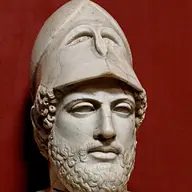 Periclesc. 495 – 429 BCE. On this page
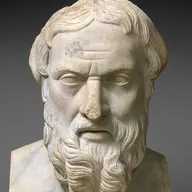 Herodotusc. 484 – c. 425 BCE. On this page
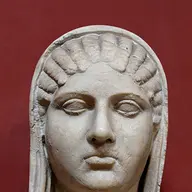 Aspasiac. 470 – after 428 BCE. Alive at the same time
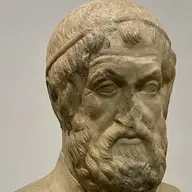 Sophoclesc. 497 – 406 BCE. Alive at the same time
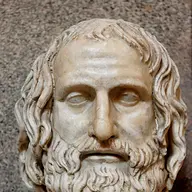 Euripidesc. 480 – c. 406 BCE. Alive at the same time
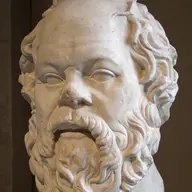 Socratesc. 470 – 399 BCE. Alive at the same time
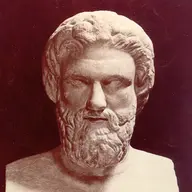 Aristophanesc. 446 – c. 386 BCE. Alive at the same time
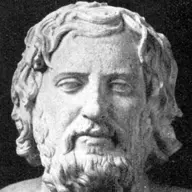 Xenophonc. 430 – c. 354 BCE. Alive at the same time
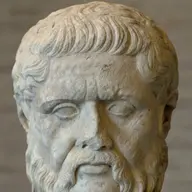 Platoc. 428 – 348 BCE. Alive at the same time
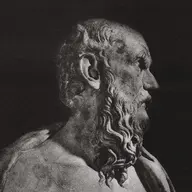 Diogenesc. 412 – 323 BCE. Alive at the same time
Places
During Thucydides's life
- 447 BCEWork begins on the Parthenon
- 446/445 BCEAthens and Sparta agree a Thirty Years' Peace
- 431 BCEThebans attack Plataea and the war begins
- 431 BCESpartan army invades Attica
- 431/430 BCEAthens holds a public funeral for its first war dead
- 430 BCEPlague breaks out in Athens
- 429 BCEPericles dies
- 427 BCEAthens votes to kill Mytilene's men, then relents
- 425 BCESpartans surrender on Sphacteria
- 424/423 BCEThucydides fails to save Amphipolis and is exiled
- 422 BCECleon and Brasidas both die at Amphipolis
- 421 BCEThe Peace of Nicias
- 416 BCEAthens takes Melos and kills its men
- 415 BCEStatues of Hermes are smashed across Athens
- 415 BCEThe great fleet sails for Sicily
- 413 BCEThe Athenian army is destroyed in Sicily
- 411 BCEAn oligarchy of Four Hundred seizes Athens
- 406 BCEAthens wins at Arginusae, then condemns its generals
- c. 406 BCEEuripides and Sophocles die
- 405 BCEThe Athenian fleet is lost at Aegospotami
- 404 BCEAthens surrenders and its walls come down
- 404 BCEThe Thirty take power in Athens
- 403 BCEDemocracy returns to Athens, with an amnesty
Periods
Every line here is ours, written from Wikipedia, Thucydides (opens en.wikipedia.org) (text CC BY-SA 4.0) and checked line by line against the sentences it cites. Where Wikipedia relies on Plutarch or another ancient writer, so do we, and we say so.