hstry

Thucydides on the moderates caught between sides

427 BCE, written later, Corcyra. His own words.

Where and when

427 BCE, written laterCorcyra

2,452 years ago

Explore
Thucydides, c. 460 – c. 400 BCE3000 BCE2900 BCE2800 BCE2700 BCE2600 BCE2500 BCE2400 BCE2300 BCE2200 BCE2100 BCE2000 BCE1900 BCE1800 BCE1700 BCE1600 BCE1500 BCE1400 BCE1300 BCE1200 BCE1100 BCE1000 BCE900 BCE800 BCE700 BCE600 BCE500 BCE400 BCE300 BCE200 BCE100 BCE1 CE100 CE200 CE300 CE400 CE500 CE600 CE700 CE800 CE900 CE1000 CE1100 CE1200 CE1300 CE1400 CE1500 CE1600 CE1700 CE1800 CE1900 CE2000 CEGreat Pyramid of Giza built, c. 2600 BCERome founded (traditional date), 753 BCELast western Roman emperor deposed, 476 CEGutenberg's printing press, c. 1440 CEColumbus reaches the Americas, 1492 CEFirst people on the Moon, 1969 CEToday, 2026

Swipe the line. Bars: entries. Dots: events.

In plain words, ours

Neither side respected religion, but nice words for ugly goals were admired. The moderates in the middle were killed, for staying out or out of envy.

Thus religion was in honor with neither party; but the use of fair phrases to arrive at guilty ends was in high reputation. Meanwhile the moderate part of the citizens perished between the two, either for not joining in the quarrel, or because envy would not suffer them to escape.

Thucydides, History of the Peloponnesian War 3.82.8Translated by Richard Crawley (1874)Read the full passage (Thucydides, History of the Peloponnesian War 3.82.8, opens scaife.perseus.org)

What was going on, our summary

Thucydides is describing the civil strife in Corcyra in 427 BCE. Leaders on two sides, one crying equality for the people and the other a moderate aristocracy, fought for power and took revenge without limit.

Checked claim by claim against: the passage around the quote.

Related moments

In time order, with this one in its place. Each says why it is here.

  1. 430 BCE3 years earlier Plague breaks out in Athens Same years
  2. 431/430 BCE3 years earlier Athens holds a public funeral for its first war dead Same years
  3. 430 BCE, written later3 years earlier Thucydides on the plague in Athens More from Thucydides
  4. 429 BCE2 years earlier Pericles dies Same years
  5. 427 BCESame year Athens votes to kill Mytilene's men, then relents Same years
  6. 427 BCE, written laterThis momentThucydides on the moderates caught between sides
  7. 427 BCE, written laterSame year Thucydides on revolution in the cities Same passageMore from Thucydides
  8. 427 BCE, written laterSame year Thucydides on words changing meaning Same passageMore from Thucydides
  9. 425 BCE2 years later Spartans surrender on Sphacteria Same years

Just before and after

The text around the quote, word for word from the same translation.

Show the passageHide the passage

The cause of all these evils was the lust for power arising from greed and ambition; and from these passions proceeded the violence of parties once engaged in contention. The leaders in the cities, each provided with the fairest professions, on the one side with the cry of political equality of the people, on the other of a moderate aristocracy, sought prizes for themselves in those public interests which they pretended to cherish, and, recoiling from no means in their struggles for ascendancy, engaged in the direct excesses; in their acts of vengeance they went to even greater lengths, not stopping at what justice or the good of the state demanded, but making the party caprice of the moment their only standard, and invoking with equal readiness the condemnation of an unjust verdict or the authority of the strong arm to glut the animosities of the hour.

The quote: Thus religion was in honor with neither party; but the use of fair phrases to arrive at guilty ends was in high reputation. Meanwhile the moderate part of the citizens perished between the two, either for not joining in the quarrel, or because envy would not suffer them to escape.

Thus every form of iniquity took root in the Hellenic countries by reason of the troubles. The ancient simplicity into which honor so largely entered was laughed down and disappeared; and society became divided into camps in which no man trusted his fellow. To put an end to this, there was neither promise to be depended upon, nor oath that could command respect; but all parties dwelling rather in their calculation upon the hopelessness of a permanent state of things, were more intent upon self-defence than capable of confidence. In this contest the blunter wits were most successful.

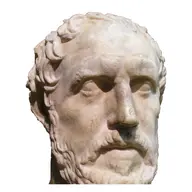
Thucydides, History of the Peloponnesian War 3.82.8–3.83.3Translated by Richard Crawley (1874)Read the full passage (opens scaife.perseus.org)

When, and whose words

Date
427 BCE, written later. The civil strife at Corcyra he describes happened in 427 BCE; he wrote it up during or after the war.
Whose words
His own words. Who was Thucydides?
How this post was checked
  • The plain-words line was read against the quote alone by a second, independent pass, which found it adds no claim the quote does not make (2026-10-03).
  • Each claim in the summary was checked by an independent pass against only the material it cites.
  • The quote itself is checked by the build: word for word, once, at the cited section of the stored translation.

See it among its momentsMore from ThucydidesSee it in the feed