hstry

Thucydides on his exile

424 BCE, written later, in exile. His own words.

Where and when

424 BCE, written laterin exile, not on the map

2,449 years ago

Explore
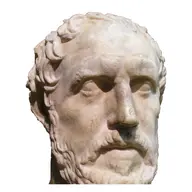
Thucydides, c. 460 – c. 400 BCE3000 BCE2900 BCE2800 BCE2700 BCE2600 BCE2500 BCE2400 BCE2300 BCE2200 BCE2100 BCE2000 BCE1900 BCE1800 BCE1700 BCE1600 BCE1500 BCE1400 BCE1300 BCE1200 BCE1100 BCE1000 BCE900 BCE800 BCE700 BCE600 BCE500 BCE400 BCE300 BCE200 BCE100 BCE1 CE100 CE200 CE300 CE400 CE500 CE600 CE700 CE800 CE900 CE1000 CE1100 CE1200 CE1300 CE1400 CE1500 CE1600 CE1700 CE1800 CE1900 CE2000 CEGreat Pyramid of Giza built, c. 2600 BCERome founded (traditional date), 753 BCELast western Roman emperor deposed, 476 CEGutenberg's printing press, c. 1440 CEColumbus reaches the Americas, 1492 CEFirst people on the Moon, 1969 CEToday, 2026

Swipe the line. Bars: entries. Dots: events.

In plain words, ours

I lived through all of it, old enough to understand it. I was exiled for twenty years after my command at Amphipolis, which let me watch both sides closely.

I lived through the whole of it, being of an age to comprehend events, and giving my attention to them in order to know the exact truth about them. It was also my fate to be an exile from my country for twenty years after my command at Amphipolis; and being present with both parties, and more especially with the Peloponnesians by reason of my exile, I had leisure to observe affairs somewhat particularly.

Thucydides, History of the Peloponnesian War 5.26.5Translated by Richard Crawley (1874)Read the full passage (Thucydides, History of the Peloponnesian War 5.26.5, opens scaife.perseus.org)

What was going on, our summary

Thucydides has just counted up the length of the whole war, which people often said would last three times nine years. After Amphipolis was lost under his command, he was exiled for twenty years.

Checked claim by claim against: Thucydides fails to save Amphipolis and is exiled, the passage around the quote.

Why it matters

About the event it belongs to: Thucydides fails to save Amphipolis and is exiled

Exile let Thucydides travel freely among Sparta's allies and see the war from the point of view of both sides.

Based on Wikipedia: Thucydides

Using his status as an exile from Athens to travel freely among the Peloponnesian allies, Thucydides was able to view the war from the perspective of both sides.

Wikipedia, Thucydides (opens en.wikipedia.org), as of 2026-06-23. Text CC BY-SA 4.0. Our line is checked against these sentences only.

Related moments

In time order, with this one in its place. Each says why it is here.

  1. 427 BCE3 years earlier Athens votes to kill Mytilene's men, then relents Same years
  2. c. 430–425 BCEabout 3 years earlier Herodotus on why he wrote his Histories Also about how history gets told
  3. 427 BCE, written later3 years earlier Thucydides on the moderates caught between sides More from Thucydides
  4. 427 BCE, written later3 years earlier Thucydides on revolution in the cities More from Thucydides
  5. 427 BCE, written later3 years earlier Thucydides on words changing meaning More from Thucydides
  6. 425 BCE1 year earlier Spartans surrender on Sphacteria Same years
  7. 424/423 BCEBegins this year Thucydides fails to save Amphipolis and is exiled The event behind itAlso about how history gets told
  8. 424 BCE, written laterThis momentThucydides on his exile
  9. 422 BCE2 years later Cleon and Brasidas both die at Amphipolis Same years
  10. 421 BCE3 years later The Peace of Nicias Same years

Just before and after

The text around the quote, word for word from the same translation.

Show the passageHide the passage

So that the first ten years' war, the treacherous armistice that followed it, and the subsequent war will, calculating by the seasons, be found to make up the number of years which I have mentioned, with the difference of a few days, and to afford an instance of faith in oracles being for once justified by the event. I certainly all along remember from the beginning to the end of the war its being commonly declared that it would last thrice nine years.

The quote: I lived through the whole of it, being of an age to comprehend events, and giving my attention to them in order to know the exact truth about them. It was also my fate to be an exile from my country for twenty years after my command at Amphipolis; and being present with both parties, and more especially with the Peloponnesians by reason of my exile, I had leisure to observe affairs somewhat particularly.

I will accordingly now relate the differences that arose after the ten years' war, the breach of the treaty, and the hostilities that followed. After the conclusion of the fifty years' truce and of the subsequent alliance, the embassies from Peloponnese which had been summoned for this business returned from Lacedaemon.

Thucydides, History of the Peloponnesian War 5.26.3–5.27.1Translated by Richard Crawley (1874)Read the full passage (opens scaife.perseus.org)

When, and whose words

Date
424 BCE, written later. His exile began after his command at Amphipolis in 424 BCE; he wrote this after the war ended in 404 BCE, since it counts its full length.
Whose words
His own words. Who was Thucydides?
How this post was checked
  • The plain-words line was read against the quote alone by a second, independent pass, which found it adds no claim the quote does not make (2026-10-03).
  • Each claim in the summary was checked by an independent pass against only the material it cites.
  • The quote itself is checked by the build: word for word, once, at the cited section of the stored translation.

See it among its momentsMore from ThucydidesSee it in the feed