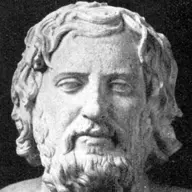
What was going on: Xenophon is describing the Athenian assembly in 406 BCE, after the sea victory at Arginusae, as it decides the fate of the generals. A survivor has just said the generals failed to rescue the bravest men. In the end, six of the generals were executed.
Why it matters: The Athenians soon came to regret executing the generals, and charges were brought against those who had pushed for the executions.
Some challenged the proposal as illegal. A few cheered, but most shouted that it was outrageous to stop the people doing whatever they wanted.
Now Euryptolemus, the son of Peisianax, and some others served a summons upon Callixeinus, alleging that he had made an unconstitutional proposal. And some of the people applauded this act, but the greater number cried out that it was monstrous if the people were to be prevented from doing whatever they wished.
Xenophon's own narration. Xenophon, Hellenica 1.7.12, translated by Carleton L. Brownson (1918)
What was going on: After the sea battle of Arginusae in 406 BCE, Athens put its generals on trial. As Xenophon tells it, the crowd in the assembly shouted down objections to judging them in one vote and threatened officials who refused to call it.
Why it matters: The Athenians soon came to regret executing the generals, and charges were brought against those who had pushed for the executions.
Scared, the presiding officials agreed to put it to a vote. All but Socrates, who said he would only act within the law.
Then the Prytanes, stricken with fear, agreed to put the question,—all of them except Socrates, the son of Sophroniscus; and he said that in no case would he act except in accordance with the law.
Xenophon's own narration. Xenophon, Hellenica 1.7.15, translated by Carleton L. Brownson (1918)
What was going on: Lysander had just captured almost the whole Athenian fleet at Aegospotami, and had been sending Athenians home so the crowded city would run short of food. The next day the Assembly began preparing for a siege.
Why it matters: Without a fleet Athens could not import grain or reach its empire, so the defeat effectively ended the war. It left Sparta dominant across the Greek world, in an order that lasted more than thirty years.
The bad news came at night. Wailing spread from the harbour up into the city, and no one slept, grieving for the dead and even more for themselves.
It was at night that the Paralus arrived at Athens with tidings of the disaster, and a sound of wailing ran from Piraeus through the long walls to the city, one man passing on the news to another; and during that night no one slept, all mourning, not for the lost alone, but far more for their own selves
Xenophon's own narration. Xenophon, Hellenica 2.2.3, translated by Carleton L. Brownson (1918)
What was going on: Xenophon is narrating Athens' surrender in 404 BCE. With people dying of famine, the Assembly has just voted, on Theramenes' advice, to accept Sparta's peace terms and tear down the walls.
Why it matters: The surrender ended the Peloponnesian War. Athens lost its Aegean empire and its dominance at sea, and Sparta became established as the leading power of Greece.
Lysander sailed into the harbour, the exiles came home, and the Peloponnesians happily tore down the walls to flute music, thinking Greece's freedom began that day.
After this Lysander sailed into Piraeus, the exiles returned, and the Peloponnesians with great enthusiasm began to tear down the walls to the music of flute-girls, thinking that that day was the beginning of freedom for Greece.
Xenophon's own narration. Xenophon, Hellenica 2.2.23, translated by Carleton L. Brownson (1918)
What was going on: Xenophon describes the death of Theramenes under the Thirty, who ruled Athens after its surrender. Critias handed him over to be executed, and Satyrus dragged him from the altar while the council kept quiet, with armed men waiting outside.
Why it matters: Though they held power for only eight months, their rule saw 5% of the Athenian population killed, citizens' property confiscated and other democrats exiled.
Led through the market, he shouted about the wrongs done to him. Told to keep quiet or suffer, he reportedly asked: and if I keep quiet, won't I suffer?
So they led the man away through the market-place, while he proclaimed in a very loud voice the wrongs he was suffering. One saying of his that is reported was this: when Satyrus told him that if he did not keep quiet, he would suffer for it, he asked: Then if I do keep quiet, shall I not suffer?
Xenophon's own narration, passing on a reported saying of Theramenes. Xenophon, Hellenica 2.3.56, translated by Carleton L. Brownson (1918)
What was going on: After Athens surrendered in 404 BCE, the Thirty ruled the city with Sparta's backing. Xenophon has just described a man led through the market-place to drink hemlock, playful to the end. Soon Thrasybulus seized the fortress of Phyle.
Why it matters: The more violent the Thirty's regime became, the more opposition it faced, and that opposition ultimately led to its overthrow by Thrasybulus' rebel forces.
With Theramenes dead, the Thirty thought they could rule as tyrants without fear. They barred people from the city and took their land for themselves and their friends.
So, then, Theramenes died; but the Thirty, thinking that now they could play the tyrant without fear, issued a proclamation forbidding those who were outside the roll to enter the city and evicted them from their estates, in order that they themselves and their friends might have these people’s lands.
Xenophon's own narration. Xenophon, Hellenica 2.4.1, translated by Carleton L. Brownson (1918)
What was going on: Xenophon, writing after Socrates' trial, is explaining how Socrates faced his conviction and death. Just before, he tells of Socrates predicting that the son of a man named Anytus would go bad.
Why it matters: Xenophon's Apology is one of the two surviving primary sources on the trial, besides Plato's; unlike Plato, it explains Socrates' readiness to die as better than facing the pains of old age.
By praising himself in court, Socrates made the jury angrier and his conviction surer. Still, I think he got a fate the gods love: he skipped the hardest part of life.
And as for Socrates, by exalting himself before the court, he brought ill-will upon himself and made his conviction by the jury more certain. Now to me he seems to have met a fate that the gods love; for he escaped the hardest part of life and met the easiest sort of death.
Xenophon's own words, in his account of the trial. Xenophon, Apology 32, translated by O. J. Todd (1923)
What was going on: Xenophon, writing about Socrates' trial, says Socrates exalted himself before the court, which made his conviction surer, and then met death cheerfully. Socrates was condemned and put to death in Athens in 399 BCE.
Why it matters:Plato's account of the trial and death inspired writers, artists and philosophers to return to it. Some saw the execution as showing the defects of democracy; others as a justifiable defence of a newly restored democracy.
When I think about how wise and good he was, I can't forget him, and I can't remember him without praising him.
And so, in contemplating the man’s wisdom and nobility of character, I find it beyond my power to forget him or, in remembering him, to refrain from praising him.
Xenophon's own words, in his account of the trial. Xenophon, Apology 34, translated by O. J. Todd (1923)
What was going on: Xenophon opens his defense of Socrates, written years after the trial of 399 BCE in which a jury condemned Socrates to death. He starts with the charge about the gods, noting that Socrates sacrificed openly.
Why it matters: These are the opening words of the Memorabilia, the longest and most famous of Xenophon's writings on Socrates; besides Plato and Aristophanes, he is the only contemporary whose writings on Socrates survive.
I keep wondering how the accusers convinced Athens to put Socrates to death. The charge: rejecting the city's gods, bringing in new ones, and corrupting the young.
I have often wondered by what arguments those who drew up the indictment against Socrates could persuade the Athenians that his life was forfeit to the state. The indictment against him was to this effect: Socrates is guilty of rejecting the gods acknowledged by the state and of bringing in strange deities: he is also guilty of corrupting the youth.
Xenophon's own words, opening his defence of Socrates. Xenophon, Memorabilia 1.1.1, translated by E. C. Marchant (1923)
What was going on: Xenophon, writing years after Socrates was put to death, is describing how Socrates lived. He has just explained Socrates' view of which questions to take to the gods and which to work out by learning.
Why it matters:Plato's account of the trial and death inspired writers, artists and philosophers to return to it. Some saw the execution as showing the defects of democracy; others as a justifiable defence of a newly restored democracy.
Socrates lived in public: gyms in the morning, the market before noon, then wherever the crowds were. Usually talking, and anyone could listen.
Moreover, Socrates lived ever in the open; for early in the morning he went to the public promenades and training-grounds; in the forenoon he was seen in the market; and the rest of the day he passed just where most people were to be met: he was generally talking, and anyone might listen.
Xenophon's own words, remembering Socrates. Xenophon, Memorabilia 1.1.10, translated by E. C. Marchant (1923)
What was going on: Xenophon, remembering Socrates, describes how frugally he lived and how closely he heeded signs from the gods. He adds that Socrates easily avoided overeating at dinners, and joked that Circe turned men into swine with a feast of tempting dishes.
Socrates ate just enough to enjoy it. Hunger was his best sauce, and any drink tasted good because he only drank when thirsty.
He ate just sufficient food to make eating a pleasure, and he was so ready for his food that he found appetite the best sauce: and any kind of drink he found pleasant, because he drank only when he was thirsty.
Xenophon's own words, remembering Socrates. Xenophon, Memorabilia 1.3.5, translated by E. C. Marchant (1923)
What was going on: These are Xenophon's closing words in his book about Socrates, written years after Socrates was put to death in 399 BCE. Xenophon has just summed him up as religious, just, self-controlled and wise, and says those who knew him still miss him.
Why it matters:Plato's account of the trial and death inspired writers, artists and philosophers to return to it. Some saw the execution as showing the defects of democracy; others as a justifiable defence of a newly restored democracy.
To me he was everything a truly good and happy man should be. If you doubt it, compare other people with him, then decide.
To me then he seemed to be all that a truly good and happy man must be. But if there is any doubter, let him set the character of other men beside these things; then let him judge.
Xenophon's own words, closing the Memorabilia. Xenophon, Memorabilia 4.8.11, translated by E. C. Marchant (1923)
What was going on: Xenophon, writing years after Socrates was condemned to death in 399 BCE, is remembering how he died. He argues Socrates was already old and won glory by how calmly and bravely he faced his sentence.
Why it matters:Plato's account of the trial and death inspired writers, artists and philosophers to return to it. Some saw the execution as showing the defects of democracy; others as a justifiable defence of a newly restored democracy.
It's agreed there is no record of anyone facing death more nobly. He had to live thirty days after the verdict, because the law allowed no public execution until the sacred mission came back from Delos.
In fact it is admitted that there is no record of death more nobly borne. For he was forced to live for thirty days after the verdict was given, because it was the month of the Dêlia, and the law did not allow any public execution to take place until the sacred embassy had returned from Delos.
Xenophon's own words, remembering Socrates. Xenophon, Memorabilia 4.8.2, translated by E. C. Marchant (1923)
What was going on: As Xenophon tells it, Ischomachus is talking to his wife about keeping their house in order. He has just praised how beautiful boots, cloaks and dishes look when each kind is set out in rows.
Why it matters: The Oeconomicus is one of the earliest works on economics in its original sense of household management, and some see it as the source of the word economy.
No serious person will laugh when I say even pots and pans look beautiful lined up neatly, however much a joker might.
Yes, no serious man will smile when I claim that there is beauty in the order even of pots and pans set out in neat array, however much it may move the laughter of a wit.
Ischomachus speaking to his wife, as Xenophon tells it. Xenophon, Oeconomicus 8.19, translated by E. C. Marchant (1923)