hstry

The walls of Athens come down

set in 404 BCE, Athens. Xenophon's own narration.

Where and when

set in 404 BCEAthens

2,429 years ago

Explore
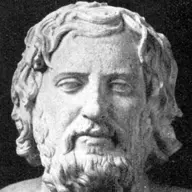
Xenophon, c. 430 – c. 354 BCE3000 BCE2900 BCE2800 BCE2700 BCE2600 BCE2500 BCE2400 BCE2300 BCE2200 BCE2100 BCE2000 BCE1900 BCE1800 BCE1700 BCE1600 BCE1500 BCE1400 BCE1300 BCE1200 BCE1100 BCE1000 BCE900 BCE800 BCE700 BCE600 BCE500 BCE400 BCE300 BCE200 BCE100 BCE1 CE100 CE200 CE300 CE400 CE500 CE600 CE700 CE800 CE900 CE1000 CE1100 CE1200 CE1300 CE1400 CE1500 CE1600 CE1700 CE1800 CE1900 CE2000 CEGreat Pyramid of Giza built, c. 2600 BCERome founded (traditional date), 753 BCELast western Roman emperor deposed, 476 CEGutenberg's printing press, c. 1440 CEColumbus reaches the Americas, 1492 CEFirst people on the Moon, 1969 CEToday, 2026

Swipe the line. Bars: entries. Dots: events.

Xenophon

, AthensXenophon's own narration

In plain words, ours

Lysander sailed into the harbour, the exiles came home, and the Peloponnesians happily tore down the walls to flute music, thinking Greece's freedom began that day.

After this Lysander sailed into Piraeus, the exiles returned, and the Peloponnesians with great enthusiasm began to tear down the walls to the music of flute-girls, thinking that that day was the beginning of freedom for Greece.

Xenophon, Hellenica 2.2.23Translated by Carleton L. Brownson (1918)Read the full passage (Xenophon, Hellenica 2.2.23, opens scaife.perseus.org)

What was going on, our summary

Xenophon is narrating Athens' surrender in 404 BCE. With people dying of famine, the Assembly has just voted, on Theramenes' advice, to accept Sparta's peace terms and tear down the walls.

Checked claim by claim against: Athens surrenders and its walls come down, the passage around the quote.

Why it matters

About the event it belongs to: Athens surrenders and its walls come down

The surrender ended the Peloponnesian War. Athens lost its Aegean empire and its dominance at sea, and Sparta became established as the leading power of Greece.

Based on Wikipedia: Peloponnesian War

Athens fell the following year and the Delian League was dissolved, ending the war.

Athens lost its Aegean empire and its maritime dominance, while Sparta became established as the leading power of Greece.

Wikipedia, Peloponnesian War (opens en.wikipedia.org), as of 2026-08-22. Text CC BY-SA 4.0. Our line is checked against these sentences only.

Related moments

In time order, with this one in its place. Each says why it is here.

  1. c. 406 BCEabout 1.8999999999999773 years earlier Euripides and Sophocles die Same years
  2. 405 BCE1 year earlier The Athenian fleet is lost at Aegospotami Also about war and empire
  3. set in 405 BCE1 year earlier Athens hears of the lost fleet Same passageMore from Xenophon
  4. 404 BCE0.19999999999998863 years earlier Athens surrenders and its walls come down The event behind itAlso in AthensAlso about war and empire
  5. 404 BCESame year The Thirty take power in Athens Also in Athens
  6. set in 404 BCEThis momentThe walls of Athens come down
  7. set in 404–403 BCEBegins this year Theramenes on his way to execution More from Xenophon
  8. set in 404–403 BCEBegins this year The Thirty seize Athenians' lands More from Xenophon
  9. 403 BCE1 year later Democracy returns to Athens, with an amnesty Also in Athens

Just before and after

The text around the quote, word for word from the same translation.

Show the passageHide the passage

So Theramenes and his fellow-ambassadors brought back this word to Athens. And as they were entering the city, a great crowd gathered around them, fearful that they had returned unsuccessful; for it was no longer possible to delay, on account of the number who were dying of the famine. On the next day the ambassadors reported to the Assembly the terms on which the Lacedaemonians offered to make peace; Theramenes acted as spokesman for the embassy, and urged that it was best to obey the Lacedaemonians and tear down the walls. And while some spoke in opposition to him, a far greater number supported him, and it was voted to accept the peace.

The quote: After this Lysander sailed into Piraeus, the exiles returned, and the Peloponnesians with great enthusiasm began to tear down the walls to the music of flute-girls, thinking that that day was the beginning of freedom for Greece.

So the year ended, in the middle of which Dionysius of Syracuse, the son of Hermocrates, became tyrant, after the Carthaginians had been defeated in battle by the Syracusans, but had captured Acragas by famine, the Siceliots abandoning the city. In the following year—in which was celebrated an Olympiad, wherein Crocinas the Thessalian was victorious in the stadium, Endius being now ephor at Sparta and Pythodorus archon at Athens. Since, however, Pythodorus was chosen during the time of the oligarchy, the Athenians do not use his name to mark the year, but call it the archonless year.

Xenophon, Hellenica 2.2.21–2.3.1Translated by Carleton L. Brownson (1918)Read the full passage (opens scaife.perseus.org)

When, and whose words

Date
set in 404 BCE. Set at Athens' surrender in 404 BCE; Xenophon wrote it decades later.
Whose words
Xenophon's own narration.
How this post was checked
  • The plain-words line was read against the quote alone by a second, independent pass, which found it adds no claim the quote does not make (2026-10-03).
  • Each claim in the summary was checked by an independent pass against only the material it cites.
  • The quote itself is checked by the build: word for word, once, at the cited section of the stored translation.

See it among its momentsMore from XenophonSee it in the feed