hstry

The Thirty seize Athenians' lands

set in 404–403 BCE, Athens. Xenophon's own narration.

Where and when

set in 404–403 BCEAthens

about 2,429 years ago

Explore
Xenophon, c. 430 – c. 354 BCE3000 BCE2900 BCE2800 BCE2700 BCE2600 BCE2500 BCE2400 BCE2300 BCE2200 BCE2100 BCE2000 BCE1900 BCE1800 BCE1700 BCE1600 BCE1500 BCE1400 BCE1300 BCE1200 BCE1100 BCE1000 BCE900 BCE800 BCE700 BCE600 BCE500 BCE400 BCE300 BCE200 BCE100 BCE1 CE100 CE200 CE300 CE400 CE500 CE600 CE700 CE800 CE900 CE1000 CE1100 CE1200 CE1300 CE1400 CE1500 CE1600 CE1700 CE1800 CE1900 CE2000 CEGreat Pyramid of Giza built, c. 2600 BCERome founded (traditional date), 753 BCELast western Roman emperor deposed, 476 CEGutenberg's printing press, c. 1440 CEColumbus reaches the Americas, 1492 CEFirst people on the Moon, 1969 CEToday, 2026sometime in these 1 years

Swipe the line. Bars: entries. Dots: events.

Xenophon

, AthensXenophon's own narration

In plain words, ours

With Theramenes dead, the Thirty thought they could rule as tyrants without fear. They barred people from the city and took their land for themselves and their friends.

So, then, Theramenes died; but the Thirty, thinking that now they could play the tyrant without fear, issued a proclamation forbidding those who were outside the roll to enter the city and evicted them from their estates, in order that they themselves and their friends might have these people’s lands.

Xenophon, Hellenica 2.4.1Translated by Carleton L. Brownson (1918)Read the full passage (Xenophon, Hellenica 2.4.1, opens scaife.perseus.org)

What was going on, our summary

After Athens surrendered in 404 BCE, the Thirty ruled the city with Sparta's backing. Xenophon has just described a man led through the market-place to drink hemlock, playful to the end. Soon Thrasybulus seized the fortress of Phyle.

Checked claim by claim against: Athens surrenders and its walls come down, The Thirty take power in Athens, the passage around the quote.

Why it matters

The more violent the Thirty's regime became, the more opposition it faced, and that opposition ultimately led to its overthrow by Thrasybulus' rebel forces.

Based on Wikipedia: Thirty Tyrants

However, the more violent the Thirty's regime became, the more opposition they faced.

The increased level of opposition ultimately led to the overthrow of the Thirty's regime by Thrasybulus' rebel forces.

Wikipedia, Thirty Tyrants (opens en.wikipedia.org), as of 2026-09-19. Text CC BY-SA 4.0. Our line is checked against these sentences only.

Related moments

In time order, with this one in its place. Each says why it is here.

  1. c. 406 BCEabout 1.8999999999999773 years earlier Euripides and Sophocles die Same years
  2. 405 BCE1 year earlier The Athenian fleet is lost at Aegospotami Same years
  3. set in 405 BCE1 year earlier Athens hears of the lost fleet More from Xenophon
  4. 404 BCE0.19999999999998863 years earlier Athens surrenders and its walls come down The event behind itAlso in Athens
  5. 404 BCEAbout the same year The Thirty take power in Athens The event behind itAlso in AthensAlso about tyrants and the Thirty
  6. set in 404–403 BCEThis momentThe Thirty seize Athenians' lands
  7. set in 404–403 BCEBegins this year Theramenes on his way to execution Same passageMore from Xenophon
  8. set in 404 BCEAbout the same year The walls of Athens come down More from Xenophon
  9. 403 BCE1 year later Democracy returns to Athens, with an amnesty Also in AthensAlso about tyrants and the Thirty

Just before and after

The text around the quote, word for word from the same translation.

Show the passageHide the passage

So they led the man away through the market-place, while he proclaimed in a very loud voice the wrongs he was suffering. One saying of his that is reported was this: when Satyrus told him that if he did not keep quiet, he would suffer for it, he asked: Then if I do keep quiet, shall I not suffer? And when, being compelled to die, he had drunk the hemlock, they said that he threw out the last drops, like a man playing kottabos, and exclaimed: Here’s to the health of my beloved Critias. Now I am not unaware of this, that these are not sayings worthy of record; still, I deem it admirable in the man that when death was close at hand, neither self-possession nor the spirit of playfulness departed from his soul.

The quote: So, then, Theramenes died; but the Thirty, thinking that now they could play the tyrant without fear, issued a proclamation forbidding those who were outside the roll to enter the city and evicted them from their estates, in order that they themselves and their friends might have these people’s lands.

And when they fled to Piraeus, they drove many of them away from there also, and filled both Megara and Thebes with the refugees. Presently Thrasybulus set out from Thebes with about seventy companions and seized Phyle, a strong fortress. And the Thirty marched out from the city against him with the Three Thousand and the cavalry, the weather being very fine indeed. When they reached Phyle, some of the young men were so bold as to attack the fortress at once, but they accomplished nothing and suffered some wounds themselves before they retired.

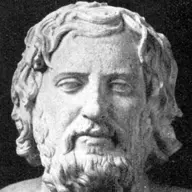
Xenophon, Hellenica 2.3.56–2.4.2Translated by Carleton L. Brownson (1918)Read the full passage (opens scaife.perseus.org)

When, and whose words

Date
set in 404–403 BCE. Set under the rule of the Thirty, 404–403 BCE; Xenophon wrote it decades later.
Whose words
Xenophon's own narration.
How this post was checked
  • The plain-words line was read against the quote alone by a second, independent pass, which found it adds no claim the quote does not make (2026-10-03).
  • Each claim in the summary was checked by an independent pass against only the material it cites.
  • The quote itself is checked by the build: word for word, once, at the cited section of the stored translation.

See it among its momentsMore from XenophonSee it in the feed