hstry

Ischomachus on pots and pans

by c. 354 BCE, Athens. Ischomachus speaking to his wife, as Xenophon tells it.

Where and when

by c. 354 BCEAthens

about 2,379 years ago

Explore
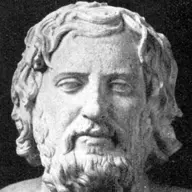
Xenophon, c. 430 – c. 354 BCE3000 BCE2900 BCE2800 BCE2700 BCE2600 BCE2500 BCE2400 BCE2300 BCE2200 BCE2100 BCE2000 BCE1900 BCE1800 BCE1700 BCE1600 BCE1500 BCE1400 BCE1300 BCE1200 BCE1100 BCE1000 BCE900 BCE800 BCE700 BCE600 BCE500 BCE400 BCE300 BCE200 BCE100 BCE1 CE100 CE200 CE300 CE400 CE500 CE600 CE700 CE800 CE900 CE1000 CE1100 CE1200 CE1300 CE1400 CE1500 CE1600 CE1700 CE1800 CE1900 CE2000 CEGreat Pyramid of Giza built, c. 2600 BCERome founded (traditional date), 753 BCELast western Roman emperor deposed, 476 CEGutenberg's printing press, c. 1440 CEColumbus reaches the Americas, 1492 CEFirst people on the Moon, 1969 CEToday, 2026

Swipe the line. Bars: entries. Dots: events.

Xenophon

, AthensIschomachus speaking to his wife, as Xenophon tells it

In plain words, ours

No serious person will laugh when I say even pots and pans look beautiful lined up neatly, however much a joker might.

Yes, no serious man will smile when I claim that there is beauty in the order even of pots and pans set out in neat array, however much it may move the laughter of a wit.

Xenophon, Oeconomicus 8.19Translated by E. C. Marchant (1923)Read the full passage (Xenophon, Oeconomicus 8.19, opens scaife.perseus.org)

What was going on, our summary

As Xenophon tells it, Ischomachus is talking to his wife about keeping their house in order. He has just praised how beautiful boots, cloaks and dishes look when each kind is set out in rows.

Checked claim by claim against: the passage around the quote.

Why it matters

The Oeconomicus is one of the earliest works on economics in its original sense of household management, and some see it as the source of the word economy.

Based on Wikipedia: Oeconomicus

It is one of the earliest works on economics in its original sense of household management, and a significant source for the social and intellectual history of Classical Athens.

Some philologues see the work as the source of the word "economy".

Wikipedia, Oeconomicus (opens en.wikipedia.org), as of 2025-08-31. Text CC BY-SA 4.0. Our line is checked against these sentences only.

Related moments

In time order, with this one in its place. Each says why it is here.

  1. c. 371–354 BCEDuring it Xenophon answers the charge against Socrates More from Xenophon
  2. c. 371–354 BCEDuring it Xenophon on Socrates and appetite More from Xenophon
  3. c. 371–354 BCEDuring it Xenophon on how Socrates lived More from Xenophon
  4. by c. 354 BCEThis momentIschomachus on pots and pans
  5. c. 360–348 BCEDuring it Plato's Athenian Stranger on law over rulers Also in Athens
  6. c. 360–348 BCEDuring it The Athenian Stranger on puppets of the gods Also in Athens
  7. c. 360–348 BCEDuring it The Athenian Stranger on truth Also in Athens

Just before and after

The text around the quote, word for word from the same translation.

Show the passageHide the passage

Considering that folk aboard a merchant vessel, even though it be a little one, find room for things and keep order, though tossed violently to and fro, and find what they want to get, though terror-stricken, it would be downright carelessness on our part if we, who have large storerooms in our house to keep everything separate and whose house rests on solid ground, fail to find a good and handy place for everything. Would it not be sheer stupidity on our part? How good it is to keep one’s stock of utensils in order, and how easy to find a suitable place in a house to put each set in, I have already said. And what a beautiful sight is afforded by boots of all sorts and conditions ranged in rows! How beautiful it is to see cloaks of all sorts and conditions kept separate, or blankets, or brazen vessels, or table furniture!

The quote: Yes, no serious man will smile when I claim that there is beauty in the order even of pots and pans set out in neat array, however much it may move the laughter of a wit.

There is nothing, in short, that does not gain in beauty when set out in order. For each set looks like a troop of utensils, and the space between the sets is beautiful to see, when each set is kept clear of it, just as a troop of dancers about the altar is a beautiful spectacle in itself, and even the free space looks beautiful and unencumbered. We can test the truth of what I say, dear, without any inconvenience and with very little trouble.

Xenophon, Oeconomicus 8.17–21Translated by E. C. Marchant (1923)Read the full passage (opens scaife.perseus.org)

When, and whose words

Date
by c. 354 BCE. Written in Xenophon's lifetime, before his death c. 354 BCE; the year is not known.
Whose words
Ischomachus speaking to his wife, as Xenophon tells it.
How this post was checked
  • The plain-words line was read against the quote alone by a second, independent pass, which found it adds no claim the quote does not make (2026-10-03).
  • Each claim in the summary was checked by an independent pass against only the material it cites.
  • The quote itself is checked by the build: word for word, once, at the cited section of the stored translation.

See it among its momentsMore from XenophonSee it in the feed