hstry

The Athenian Stranger on truth

c. 360–348 BCE, Athens. The Athenian Stranger speaking, in Plato's Laws.

Where and when

c. 360–348 BCEAthens

about 2,379 years ago

Explore
Plato, c. 428 – 348 BCE3000 BCE2900 BCE2800 BCE2700 BCE2600 BCE2500 BCE2400 BCE2300 BCE2200 BCE2100 BCE2000 BCE1900 BCE1800 BCE1700 BCE1600 BCE1500 BCE1400 BCE1300 BCE1200 BCE1100 BCE1000 BCE900 BCE800 BCE700 BCE600 BCE500 BCE400 BCE300 BCE200 BCE100 BCE1 CE100 CE200 CE300 CE400 CE500 CE600 CE700 CE800 CE900 CE1000 CE1100 CE1200 CE1300 CE1400 CE1500 CE1600 CE1700 CE1800 CE1900 CE2000 CEGreat Pyramid of Giza built, c. 2600 BCERome founded (traditional date), 753 BCELast western Roman emperor deposed, 476 CEGutenberg's printing press, c. 1440 CEColumbus reaches the Americas, 1492 CEFirst people on the Moon, 1969 CEToday, 2026sometime in these 12 years

Swipe the line. Bars: entries. Dots: events.

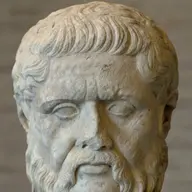
Plato

, AthensThe Athenian Stranger speaking, in Plato's Laws

In plain words, ours

For gods and people alike, truth is the first of all good things. If you want a happy life, start living by it from childhood.

Of all the goods, for gods and men alike, truth stands first. Thereof let every man partake from his earliest days, if he purposes to become blessed and happy, that so he may live his life as a true man so long as possible.

Plato, Laws 730b–cTranslated by R. G. Bury (1926)Read the full passage (Plato, Laws 730b–c, opens scaife.perseus.org)

What was going on, our summary

In Plato's Laws, an Athenian visitor is explaining how citizens should be raised to live well under the laws. Having covered how a person should treat parents, friends and the state, he turns to the kind of character that leads to a noble life.

Checked claim by claim against: the passage around the quote.

Related moments

In time order, with this one in its place. Each says why it is here.

  1. c. 371–354 BCEDuring it Xenophon on Socrates and appetite Also about how to live well
  2. c. 360–348 BCEThis momentThe Athenian Stranger on truth
  3. c. 360–348 BCEDuring it Plato's Athenian Stranger on law over rulers More from Plato
  4. c. 360–348 BCEDuring it The Athenian Stranger on puppets of the gods More from Plato
  5. by c. 354 BCEBy this year Ischomachus on pots and pans Also in Athens
  6. c. 353 BCE1 year later Plato's Seventh Letter on entering public life More from Plato
  7. by 348 BCEabout 6 years later Diogenes and the plucked chicken Also in Athens
  8. by 348 BCEabout 6 years later Diogenes tramples Plato's carpets Also in AthensAlso about how to live well

Just before and after

The text around the quote, word for word from the same translation.

Show the passageHide the passage

As concerns a man’s social relations towards his parents, himself and his own belongings, towards the State also and friends and kindred,—whether foreign relations or domestic,—our exposition is now fairly complete. It remains to expound next the character which is most conducive to nobility of life; and after that we shall have to state all the matters which are subject, not to law, but rather to praise or blame,—as the instruments whereby the citizens are educated individually and rendered more tractable and well-inclined towards the laws which are to be imposed on them.

The quote: Of all the goods, for gods and men alike, truth stands first. Thereof let every man partake from his earliest days, if he purposes to become blessed and happy, that so he may live his life as a true man so long as possible.

He is a trusty man; but untrustworthy is the man who loves the voluntary lie; and senseless is the man who loves the involuntary lie; and neither of these two is to be envied. For everyone that is either faithless or foolish is friendless; and since, as time goes on, he is found out, he is making for himself, in his woeful old-age, at life’s close, a complete solitude, wherein his life becomes almost equally desolate whether his companions and children are living or dead.

Plato, Laws 730b–dTranslated by R. G. Bury (1926)Read the full passage (opens scaife.perseus.org)

When, and whose words

Date
c. 360–348 BCE. The Laws is Plato's last work, written in his final years and left unrevised at his death in 348 BCE.
Whose words
The Athenian Stranger speaking, in Plato's Laws. Who was Plato?
How this post was checked
  • The plain-words line was read against the quote alone by a second, independent pass, which found it adds no claim the quote does not make (2026-10-03).
  • Each claim in the summary was checked by an independent pass against only the material it cites.
  • The quote itself is checked by the build: word for word, once, at the cited section of the stored translation.

See it among its momentsMore from PlatoSee it in the feed