hstry

The Athenian Stranger on puppets of the gods

c. 360–348 BCE, Athens. The Athenian Stranger speaking, in Plato's Laws.

Where and when

c. 360–348 BCEAthens

about 2,379 years ago

Explore
Plato, c. 428 – 348 BCE3000 BCE2900 BCE2800 BCE2700 BCE2600 BCE2500 BCE2400 BCE2300 BCE2200 BCE2100 BCE2000 BCE1900 BCE1800 BCE1700 BCE1600 BCE1500 BCE1400 BCE1300 BCE1200 BCE1100 BCE1000 BCE900 BCE800 BCE700 BCE600 BCE500 BCE400 BCE300 BCE200 BCE100 BCE1 CE100 CE200 CE300 CE400 CE500 CE600 CE700 CE800 CE900 CE1000 CE1100 CE1200 CE1300 CE1400 CE1500 CE1600 CE1700 CE1800 CE1900 CE2000 CEGreat Pyramid of Giza built, c. 2600 BCERome founded (traditional date), 753 BCELast western Roman emperor deposed, 476 CEGutenberg's printing press, c. 1440 CEColumbus reaches the Americas, 1492 CEFirst people on the Moon, 1969 CEToday, 2026sometime in these 12 years

Swipe the line. Bars: entries. Dots: events.

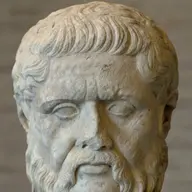
Plato

, AthensThe Athenian Stranger speaking, in Plato's Laws

In plain words, ours

Imagine each of us is a clever puppet made by the gods, maybe as a toy, maybe for something serious. We have no idea which.

Let us suppose that each of us living creatures is an ingenious puppet of the gods, whether contrived by way of a toy of theirs or for some serious purpose—for as to that we know nothing;

Plato, Laws 644dTranslated by R. G. Bury (1926)Read the full passage (Plato, Laws 644d, opens scaife.perseus.org)

What was going on, our summary

In Plato's Laws, a character called the Athenian Stranger is talking with Clinias and Megillus. He has just described pleasure and pain as two foolish advisers inside each of us, and now offers an image to explain them.

Checked claim by claim against: the passage around the quote.

Related moments

In time order, with this one in its place. Each says why it is here.

  1. 415 BCEabout 61.10000000000002 years earlier Statues of Hermes are smashed across Athens Also about the gods
  2. set in 399 BCEabout 45 years earlier Socrates asks Euthyphro what holiness is Also about the gods
  3. c. 360–348 BCEThis momentThe Athenian Stranger on puppets of the gods
  4. c. 360–348 BCEDuring it Plato's Athenian Stranger on law over rulers More from Plato
  5. c. 360–348 BCEDuring it The Athenian Stranger on truth More from Plato
  6. by c. 354 BCEBy this year Ischomachus on pots and pans Also in Athens
  7. c. 353 BCE1 year later Plato's Seventh Letter on entering public life More from Plato
  8. by 348 BCEabout 6 years later Diogenes and the plucked chicken Also in Athens
  9. by 348 BCEabout 6 years later Diogenes tramples Plato's carpets Also in Athens

Just before and after

The text around the quote, word for word from the same translation.

Show the passageHide the passage

Clin. Go ahead. Ath. May we assume that each of us by himself is a single unit? Clin. Yes. Ath. And that each possesses within himself two antagonistic and foolish counsellors, whom we call by the names of pleasure and pain? Clin. That is so. Ath. And that, besides these two, each man possesses opinions about the future, which go by the general name of expectations; and of these, that which precedes pain bears the special name of fear, and that which precedes pleasure the special name of confidence; and in addition to all these there is calculation, pronouncing which of them is good, which bad; and calculation, when it has become the public decree of the State, is named law. Clin. I have some difficulty in keeping pace with you: assume, however, that I do so, and proceed. Meg. I am in exactly the same predicament. Ath. Let us conceive of the matter in this way.

The quote: Let us suppose that each of us living creatures is an ingenious puppet of the gods, whether contrived by way of a toy of theirs or for some serious purpose—for as to that we know nothing;

but this we do know, that these inward affections of ours, like sinews or cords, drag us along and, being opposed to each other, pull one against the other to opposite actions; and herein lies the dividing line between goodness and badness.

Plato, Laws 644c–eTranslated by R. G. Bury (1926)Read the full passage (opens scaife.perseus.org)

When, and whose words

Date
c. 360–348 BCE. The Laws is Plato's last work, written in his final years and left unrevised at his death in 348 BCE.
Whose words
The Athenian Stranger speaking, in Plato's Laws. Who was Plato?
How this post was checked
  • The plain-words line was read against the quote alone by a second, independent pass, which found it adds no claim the quote does not make (2026-10-03).
  • Each claim in the summary was checked by an independent pass against only the material it cites.
  • The quote itself is checked by the build: word for word, once, at the cited section of the stored translation.

See it among its momentsMore from PlatoSee it in the feed