hstry

Plato's Athenian Stranger on law over rulers

c. 360–348 BCE, Athens. The Athenian Stranger speaking, in Plato's Laws.

Where and when

c. 360–348 BCEAthens

about 2,379 years ago

Explore
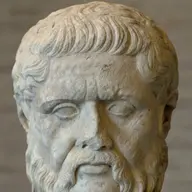
Plato, c. 428 – 348 BCE3000 BCE2900 BCE2800 BCE2700 BCE2600 BCE2500 BCE2400 BCE2300 BCE2200 BCE2100 BCE2000 BCE1900 BCE1800 BCE1700 BCE1600 BCE1500 BCE1400 BCE1300 BCE1200 BCE1100 BCE1000 BCE900 BCE800 BCE700 BCE600 BCE500 BCE400 BCE300 BCE200 BCE100 BCE1 CE100 CE200 CE300 CE400 CE500 CE600 CE700 CE800 CE900 CE1000 CE1100 CE1200 CE1300 CE1400 CE1500 CE1600 CE1700 CE1800 CE1900 CE2000 CEGreat Pyramid of Giza built, c. 2600 BCERome founded (traditional date), 753 BCELast western Roman emperor deposed, 476 CEGutenberg's printing press, c. 1440 CEColumbus reaches the Americas, 1492 CEFirst people on the Moon, 1969 CEToday, 2026sometime in these 12 years

Swipe the line. Bars: entries. Dots: events.

Plato

, AthensThe Athenian Stranger speaking, in Plato's Laws

In plain words, ours

Where the law bows to those in power, I see ruin coming. Where officials serve the law, I see a state that will be saved and blessed.

For wherever in a State the law is subservient and impotent, over that State I see ruin impending; but wherever the law is lord over the magistrates, and the magistrates are servants to the law, there I descry salvation and all the blessings that the gods bestow on States.

Plato, Laws 715dTranslated by R. G. Bury (1926)Read the full passage (Plato, Laws 715d, opens scaife.perseus.org)

What was going on, our summary

In Plato's Laws, an Athenian Stranger is talking with Clinias about a new city they are planning, with settlers about to arrive. He argues that office should go not to the rich, strong or well-born, but to whoever best obeys the laws.

Checked claim by claim against: the passage around the quote.

Related moments

In time order, with this one in its place. Each says why it is here.

  1. set in 404–403 BCEabout 50 years earlier Theramenes on his way to execution Also about justice and law
  2. set in 399 BCEabout 45 years earlier Socrates on not returning wrong for wrong Also about justice and law
  3. c. 386 BCEabout 32 years earlier Aspasia's speech on how a state shapes men Also about democracy and government
  4. c. 360–348 BCEThis momentPlato's Athenian Stranger on law over rulers
  5. c. 360–348 BCEDuring it The Athenian Stranger on puppets of the gods More from Plato
  6. c. 360–348 BCEDuring it The Athenian Stranger on truth More from Plato
  7. by c. 354 BCEBy this year Ischomachus on pots and pans Also in Athens
  8. c. 353 BCE1 year later Plato's Seventh Letter on entering public life More from Plato
  9. by 348 BCEabout 6 years later Diogenes and the plucked chicken Also in Athens
  10. by 348 BCEabout 6 years later Diogenes tramples Plato's carpets Also in Athens
  11. c. 335–322 BCEabout 26 years later Aristotle on the wisdom of the many Also about democracy and government

Just before and after

The text around the quote, word for word from the same translation.

Show the passageHide the passage

Our reason for saying this is that in your State we shall assign office to a man, not because he is wealthy, nor because he possesses any other quality of the kind—such as strength or size or birth; but the ministration of the laws must be assigned, as we assert, to that man who is most obedient to the laws and wins the victory for obedience in the State,—the highest office to the first, the next to him that shows the second degree of mastery, and the rest must similarly be assigned, each in succession, to those that come next in order. And those who are termed magistrates I have now called ministers of the laws, not for the sake of coining a new phrase, but in the belief that salvation, or ruin, for a State hangs upon nothing so much as this.

The quote: For wherever in a State the law is subservient and impotent, over that State I see ruin impending; but wherever the law is lord over the magistrates, and the magistrates are servants to the law, there I descry salvation and all the blessings that the gods bestow on States.

Clin. Aye, by Heaven, Stranger; for, as befits your age, you have keen sight. Ath. Yes; for a man’s vision of such objects is at its dullest when he is young, but at its keenest when he is old. Clin. Very true. Ath. What, then, is to be our next step? May we not assume that our immigrants have arrived and are in the country, and should we not proceed with our address to them? Clin. Of course. Ath.

Plato, Laws 715b–4.716Translated by R. G. Bury (1926)Read the full passage (opens scaife.perseus.org)

When, and whose words

Date
c. 360–348 BCE. The Laws is Plato's last work, written in his final years and left unrevised at his death in 348 BCE.
Whose words
The Athenian Stranger speaking, in Plato's Laws. Who was Plato?
How this post was checked
  • The plain-words line was read against the quote alone by a second, independent pass, which found it adds no claim the quote does not make (2026-10-03).
  • Each claim in the summary was checked by an independent pass against only the material it cites.
  • The quote itself is checked by the build: word for word, once, at the cited section of the stored translation.

See it among its momentsMore from PlatoSee it in the feed