hstry

Plato's Seventh Letter on entering public life

c. 353 BCE, Athens. Seventh Letter; authorship disputed.

Where and when

c. 353 BCEAthens

about 2,378 years ago

Explore
Plato, c. 428 – 348 BCE3000 BCE2900 BCE2800 BCE2700 BCE2600 BCE2500 BCE2400 BCE2300 BCE2200 BCE2100 BCE2000 BCE1900 BCE1800 BCE1700 BCE1600 BCE1500 BCE1400 BCE1300 BCE1200 BCE1100 BCE1000 BCE900 BCE800 BCE700 BCE600 BCE500 BCE400 BCE300 BCE200 BCE100 BCE1 CE100 CE200 CE300 CE400 CE500 CE600 CE700 CE800 CE900 CE1000 CE1100 CE1200 CE1300 CE1400 CE1500 CE1600 CE1700 CE1800 CE1900 CE2000 CEGreat Pyramid of Giza built, c. 2600 BCERome founded (traditional date), 753 BCELast western Roman emperor deposed, 476 CEGutenberg's printing press, c. 1440 CEColumbus reaches the Americas, 1492 CEFirst people on the Moon, 1969 CEToday, 2026

Swipe the line. Bars: entries. Dots: events.

Plato

, AthensSeventh Letter; authorship disputed

In plain words, ours

When I was young I felt what many others feel: I thought that as soon as I was my own master, I'd go straight into public life.

In the days of my youth my experience was the same as that of many others. I thought that as soon as I should become my own master I would immediately enter into public life.

Plato, Letters 7.324b–cTranslated by R. G. Bury (1929)Read the full passage (Plato, Letters 7.324b–c, opens scaife.perseus.org)

What was going on, our summary

In a letter said to be Plato's (his authorship is disputed), the writer turns to his own youth. Next he tells of a revolution that put Thirty men in charge with no one to answer to.

Checked claim by claim against: the passage around the quote.

Why it matters

Plato's youthful hope of a public life is known from the Seventh Letter, the longest of his letters and considered the most important, though its authenticity has been disputed.

Based on Wikipedia: Epistles (Plato), Plato

It is the longest of the Epistles and considered to be the most important.

According to the Seventh Letter, whose authenticity has been disputed, as Plato came of age, he imagined for himself a life in public affairs.

Wikipedia, Epistles (Plato) (opens en.wikipedia.org), as of 2025-11-15; Wikipedia, Plato (opens en.wikipedia.org), as of 2026-09-28. Text CC BY-SA 4.0. Our line is checked against these sentences only.

Related moments

In time order, with this one in its place. Each says why it is here.

  1. c. 386 BCEabout 33 years earlier Aspasia's speech on how a state shapes men Also about democracy and government
  2. by c. 354 BCE1 year earlier Ischomachus on pots and pans Also in Athens
  3. c. 353 BCEThis momentPlato's Seventh Letter on entering public life
  4. c. 353 BCEAbout the same year Plato's Seventh Letter on going into politics More from Plato
  5. c. 353 BCEAbout the same year Plato's Seventh Letter on Socrates in court Same passageMore from Plato
  6. c. 353 BCEAbout the same year Plato's Seventh Letter on the Thirty Same passageMore from Plato
  7. by 348 BCEabout 5 years later Diogenes and the plucked chicken Also in Athens
  8. by 348 BCEabout 5 years later Diogenes tramples Plato's carpets Also in Athens
  9. c. 335–322 BCEabout 25 years later Aristotle on the wisdom of the many Also about democracy and government

Just before and after

The text around the quote, word for word from the same translation.

Show the passageHide the passage

And what was his policy and his aim I will tell you, and that, as I may say, not from mere conjecture but from certain knowledge. For when I originally arrived at Syracuse, being about forty years old, Dion was of the age which Hipparinus has now reached, and the views which he had then come to hold he continued to hold unchanged; for he believed that the Syracusans ought to be free and dwell under the best laws. Consequently, it is no matter of surprise if some Deity has made Hipparinus also come to share his views about government and be of the same mind. Now the manner in which these views originated is a story well worth hearing for young and old alike, and I shall endeavor to narrate it to you from the beginning; for at the present moment it is opportune.

The quote: In the days of my youth my experience was the same as that of many others. I thought that as soon as I should become my own master I would immediately enter into public life.

But it so happened, I found, that the following changes occurred in the political situation. In the government then existing, reviled as it was by many, a revolution took place; and the revolution was headed by fifty-one leaders, of whom eleven were in the City and ten in the Piraeus—each of these sections dealing with the market and with all municipal matters requiring management—and Thirty were established as irresponsible rulers of all.

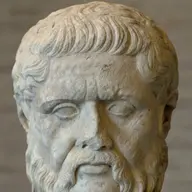
Plato, Letters 7.324–324dTranslated by R. G. Bury (1929)Read the full passage (opens scaife.perseus.org)

When, and whose words

Date
c. 353 BCE. The Seventh Letter is conventionally dated c. 353 BCE, soon after Dion's death (354 BCE), which it mentions; it looks back on Plato's youth.
Whose words
Seventh Letter; authorship disputed. Who was Plato?
How this post was checked
  • The plain-words line was read against the quote alone by a second, independent pass, which found it adds no claim the quote does not make (2026-10-03).
  • Each claim in the summary was checked by an independent pass against only the material it cites.
  • The quote itself is checked by the build: word for word, once, at the cited section of the stored translation.

See it among its momentsMore from PlatoSee it in the feed