hstry

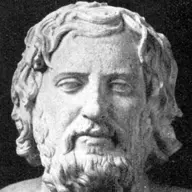
Diogenes tramples Plato's carpets

by 348 BCE, Athens. As Diogenes Laertius tells it, centuries later.

Where and when

by 348 BCEAthens

about 2,373 years ago

Explore
Diogenes, c. 412 – 323 BCE3000 BCE2900 BCE2800 BCE2700 BCE2600 BCE2500 BCE2400 BCE2300 BCE2200 BCE2100 BCE2000 BCE1900 BCE1800 BCE1700 BCE1600 BCE1500 BCE1400 BCE1300 BCE1200 BCE1100 BCE1000 BCE900 BCE800 BCE700 BCE600 BCE500 BCE400 BCE300 BCE200 BCE100 BCE1 CE100 CE200 CE300 CE400 CE500 CE600 CE700 CE800 CE900 CE1000 CE1100 CE1200 CE1300 CE1400 CE1500 CE1600 CE1700 CE1800 CE1900 CE2000 CEGreat Pyramid of Giza built, c. 2600 BCERome founded (traditional date), 753 BCELast western Roman emperor deposed, 476 CEGutenberg's printing press, c. 1440 CEColumbus reaches the Americas, 1492 CEFirst people on the Moon, 1969 CEToday, 2026

Swipe the line. Bars: entries. Dots: events.

Diogenes

, AthensAs Diogenes Laertius tells it, centuries later

In plain words, ours

Plato had friends over who came from Dionysius. Diogenes walked all over his carpets: I'm trampling on Plato's vanity.

And one day when Plato had invited to his house friends coming from Dionysius, Diogenes trampled upon his carpets and said, I trample upon Plato’s vainglory.

Diogenes Laertius, Lives of Eminent Philosophers 6.26Translated by R. D. Hicks (1925)Read the full passage (Diogenes Laertius, Lives of Eminent Philosophers 6.26, opens scaife.perseus.org)

Answered by Plato, by 348 BCE

What was going on, our summary

Diogenes Laertius, writing centuries later, collects stories of Diogenes the Cynic needling Plato, from mocking his trip to Sicily to a joke about shared figs. In this one, Plato's guests have come from Dionysius, and Plato replies that Diogenes shows pride of another sort.

Checked claim by claim against: the passage around the quote.

Related moments

In time order, with this one in its place. Each says why it is here.

  1. c. 371–354 BCEabout 14 years earlier Xenophon on Socrates and appetite Also about how to live well
  2. by 348 BCEThis momentDiogenes tramples Plato's carpets
  3. by 348 BCEBy this year Diogenes and the plucked chicken More from Diogenes
  4. by 348 BCEBy this year Plato answers Diogenes Answered by PlatoSame passageAlso in AthensAlso about how to live well
  5. by 348 BCEBy this year Plato defines man as a featherless biped Also in Athens
  6. by 348 BCEBy this year Plato's Second Letter on writing nothing down Also in Athens
  7. c. 348/347 BCEBegins this year Plato dies, aged about eighty Same years
  8. 338 BCEabout 10 years later Diogenes before Philip, in one story More from Diogenes
  9. c. 336 BCEabout 12 years later Diogenes asks Alexander to step out of his sun More from Diogenes
  10. by 323 BCEabout 25 years later Diogenes makes a tub his home Same passage

Just before and after

The text around the quote, word for word from the same translation.

Show the passageHide the passage

He would continually say that for the conduct of life we need right reason or a halter. Observing Plato one day at a costly banquet taking olives, How is it, he said, that you the philosopher who sailed to Sicily for the sake of these dishes, now when they are before you do not enjoy them? Nay, by the gods, Diogenes, replied Plato, there also for the most part I lived upon olives and such like. Why then, said Diogenes, did you need to go to Syracuse? Was it that Attica at that time did not grow olives? But Favorinus in his Miscellaneous History attributes this to Aristippus. Again, another time he was eating dried figs when he encountered Plato and offered him a share of them. When Plato took them and ate them, he said, I said you might share them, not that you might eat them all up.

The quote: And one day when Plato had invited to his house friends coming from Dionysius, Diogenes trampled upon his carpets and said, I trample upon Plato’s vainglory.

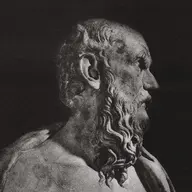
Plato’s reply was, How much pride you expose to view, Diogenes, by seeming not to be proud. Others tell us that what Diogenes said was, I trample upon the pride of Plato, who retorted, Yes, Diogenes, with pride of another sort. Sotion, however, in his fourth book makes the Cynic address this remark to Plato himself. Diogenes once asked him for wine, and after that also for some dried figs; and Plato sent him a whole jar full. Then the other said, If some one asks you how many two and two are, will you answer, Twenty?

Diogenes Laertius, Lives of Eminent Philosophers 6.24–26Translated by R. D. Hicks (1925)Read the full passage (opens scaife.perseus.org)

When, and whose words

Date
by 348 BCE. Undated anecdote; it must fall before Plato's death (c. 348 BCE). Diogenes Laertius wrote around the 3rd century CE.
Whose words
As Diogenes Laertius tells it, centuries later.
How this post was checked
  • The plain-words line was read against the quote alone by a second, independent pass, which found it adds no claim the quote does not make (2026-10-03).
  • Each claim in the summary was checked by an independent pass against only the material it cites.
  • The quote itself is checked by the build: word for word, once, at the cited section of the stored translation.

See it among its momentsMore from DiogenesSee it in the feed