hstry

Plato's Second Letter on writing nothing down

by 348 BCE, Athens. Second Letter; authorship disputed, widely thought not by Plato.

Where and when

by 348 BCEAthens

about 2,373 years ago

Explore
Plato, c. 428 – 348 BCE3000 BCE2900 BCE2800 BCE2700 BCE2600 BCE2500 BCE2400 BCE2300 BCE2200 BCE2100 BCE2000 BCE1900 BCE1800 BCE1700 BCE1600 BCE1500 BCE1400 BCE1300 BCE1200 BCE1100 BCE1000 BCE900 BCE800 BCE700 BCE600 BCE500 BCE400 BCE300 BCE200 BCE100 BCE1 CE100 CE200 CE300 CE400 CE500 CE600 CE700 CE800 CE900 CE1000 CE1100 CE1200 CE1300 CE1400 CE1500 CE1600 CE1700 CE1800 CE1900 CE2000 CEGreat Pyramid of Giza built, c. 2600 BCERome founded (traditional date), 753 BCELast western Roman emperor deposed, 476 CEGutenberg's printing press, c. 1440 CEColumbus reaches the Americas, 1492 CEFirst people on the Moon, 1969 CEToday, 2026

Swipe the line. Bars: entries. Dots: events.

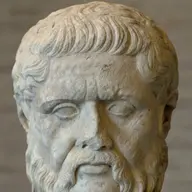
Plato

, AthensSecond Letter; authorship disputed, widely thought not by Plato

In plain words, ours

I have never written anything on these subjects, and there is no book by Plato. The works under my name belong to a Socrates made handsome and young.

For this reason I myself have never yet written anything on these subjects, and no treatise by Plato exists or will exist, but those which now bear his name belong to a Socrates become fair and young.

Plato, Letters 2.314cTranslated by R. G. Bury (1929)Read the full passage (Plato, Letters 2.314c, opens scaife.perseus.org)

What was going on, our summary

In a letter said to be Plato's, though many doubt he wrote it, the writer warns that written teachings always get out, so it is safer to learn by heart. Right after, he asks the reader to read the letter over and then burn it.

Checked claim by claim against: the passage around the quote.

Why it matters

The Second Letter is the source of this oft-cited remark about Plato's writings, though R. G. Bury argues the letter is almost certainly not by Plato.

Based on Wikipedia: Epistles (Plato)

The Second Letter is the source of the oft-cited remark that "no writing of Plato exists or ever will exist, but those now said to be his are those of a Socrates become beautiful and new (καλός καί νέος)."

R. G. Bury argues that the Second Letter is almost certainly inauthentic

Wikipedia, Epistles (Plato) (opens en.wikipedia.org), as of 2025-11-15. Text CC BY-SA 4.0. Our line is checked against these sentences only.

Related moments

In time order, with this one in its place. Each says why it is here.

  1. c. 431–400 BCEabout 67 years earlier Thucydides on how he wrote the speeches Also about how history gets told
  2. c. 353 BCEabout 5 years earlier Plato's Seventh Letter on entering public life More from Plato
  3. by 348 BCEThis momentPlato's Second Letter on writing nothing down
  4. by 348 BCEBy this year Diogenes and the plucked chicken Also in Athens
  5. by 348 BCEBy this year Diogenes tramples Plato's carpets Also in Athens
  6. by 348 BCEBy this year Plato answers Diogenes More from Plato
  7. by 348 BCEBy this year Plato defines man as a featherless biped More from Plato
  8. c. 348/347 BCEBegins this year Plato dies, aged about eighty Also in Athens
  9. c. 335–322 BCEabout 20 years later Aristotle on poetry and history Also about how history gets told

Just before and after

The text around the quote, word for word from the same translation.

Show the passageHide the passage

But listen now to the most remarkable result of all. Quite a number of men there are who have listened to these doctrines—men capable of learning and capable also of holding them in mind and judging them by all sorts of tests—and who have been hearers of mine for no less than thirty years and are now quite old; and these men now declare that the doctrines that they once held to be most incredible appear to them now the most credible, and what they then held most credible now appears the Opposite. So, bearing this in mind, have a care lest one day you should repent of what has now been divulged improperly. The greatest safeguard is to avoid writing and to learn by heart; for it is not possible that what is written down should not get divulged.

The quote: For this reason I myself have never yet written anything on these subjects, and no treatise by Plato exists or will exist, but those which now bear his name belong to a Socrates become fair and young.

Fare thee well, and give me credence; and now, to begin with, read this letter over repeatedly and then burn it up. So much, then, for that. You were surprised at my sending Polyxenus to you; but now as of old I repeat the same statement about Lycophron also and the others you have with you, that, as respects dialectic, you are far superior to them all both in natural intelligence and in argumentative ability; and I maintain that if any of them is beaten in argument, this defeat is not voluntary, as some imagine, but involuntary.

Plato, Letters 2.314a–dTranslated by R. G. Bury (1929)Read the full passage (opens scaife.perseus.org)

When, and whose words

Date
by 348 BCE. If genuine, written in Plato's lifetime, which ended in 348 BCE; the letter cannot be dated more closely and may be a later forgery.
Whose words
Second Letter; authorship disputed, widely thought not by Plato. Who was Plato?
How this post was checked
  • The plain-words line was read against the quote alone by a second, independent pass, which found it adds no claim the quote does not make (2026-10-03).
  • Each claim in the summary was checked by an independent pass against only the material it cites.
  • The quote itself is checked by the build: word for word, once, at the cited section of the stored translation.

See it among its momentsMore from PlatoSee it in the feed