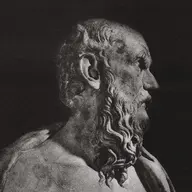
hstry

Plato defines man as a featherless biped

by 348 BCE, Athens. As Diogenes Laertius tells it, centuries later.

Where and when

by 348 BCEAthens

about 2,373 years ago

Explore
Plato, c. 428 – 348 BCE3000 BCE2900 BCE2800 BCE2700 BCE2600 BCE2500 BCE2400 BCE2300 BCE2200 BCE2100 BCE2000 BCE1900 BCE1800 BCE1700 BCE1600 BCE1500 BCE1400 BCE1300 BCE1200 BCE1100 BCE1000 BCE900 BCE800 BCE700 BCE600 BCE500 BCE400 BCE300 BCE200 BCE100 BCE1 CE100 CE200 CE300 CE400 CE500 CE600 CE700 CE800 CE900 CE1000 CE1100 CE1200 CE1300 CE1400 CE1500 CE1600 CE1700 CE1800 CE1900 CE2000 CEGreat Pyramid of Giza built, c. 2600 BCERome founded (traditional date), 753 BCELast western Roman emperor deposed, 476 CEGutenberg's printing press, c. 1440 CEColumbus reaches the Americas, 1492 CEFirst people on the Moon, 1969 CEToday, 2026

Swipe the line. Bars: entries. Dots: events.

Plato

, AthensAs Diogenes Laertius tells it, centuries later

In plain words, ours

Plato defined a human as an animal with two legs and no feathers, and people applauded.

Plato had defined Man as an animal, biped and featherless, and was applauded.

Diogenes Laertius, Lives of Eminent Philosophers 6.40Translated by R. D. Hicks (1925)Read the full passage (Diogenes Laertius, Lives of Eminent Philosophers 6.40, opens scaife.perseus.org)

Answered by Diogenes, by 348 BCE

What was going on, our summary

Diogenes Laertius, writing centuries later, collects stories of Diogenes the Cynic mocking people in Athens. In this one, Diogenes answers Plato's definition by bringing a plucked fowl into the lecture room.

Checked claim by claim against: the passage around the quote.

Related moments

In time order, with this one in its place. Each says why it is here.

  1. c. 353 BCEabout 5 years earlier Plato's Seventh Letter on entering public life More from Plato
  2. by 348 BCEThis momentPlato defines man as a featherless biped
  3. by 348 BCEBy this year Diogenes and the plucked chicken Answered by DiogenesAlso in AthensAlso about knowing and not knowing
  4. by 348 BCEBy this year Diogenes tramples Plato's carpets Also in Athens
  5. by 348 BCEBy this year Plato answers Diogenes More from Plato
  6. by 348 BCEBy this year Plato's Second Letter on writing nothing down More from Plato
  7. c. 348/347 BCEBegins this year Plato dies, aged about eighty Also in Athens
  8. 334–323 BCEabout 19 years later Alexander writes to Aristotle Also about knowing and not knowing
  9. by 323 BCEabout 25 years later Diogenes throws away his cup Same passage
  10. by 323 BCEabout 25 years later Diogenes refuses to slow down in old age Same passage

Just before and after

The text around the quote, word for word from the same translation.

Show the passageHide the passage

When he had anointed his feet with unguent, he declared that from his head the unguent passed into the air, but from his feet into his nostrils. The Athenians urged him to become initiated, and told him that in the other world those who have been initiated enjoy a special privilege. It would be ludicrous, quoth he, if Agesilaus and Epaminondas are to dwell in the mire, while certain folk of no account will live in the Isles of the Blest because they have been initiated. When mice crept on to the table he addressed them thus, See now even Diogenes keeps parasites. When Plato styled him a dog, Quite true, he said, for I come back again and again to those who have sold me. As he was leaving the public baths, somebody inquired if many men were bathing. He said, No. But to another who asked if there was a great crowd of bathers, he said, Yes.

The quote: Plato had defined Man as an animal, biped and featherless, and was applauded.

Diogenes plucked a fowl and brought it into the lecture-room with the words, Here is Plato’s man. In consequence of which there was added to the definition, having broad nails. To one who asked what was the proper time for lunch, he said, If a rich man, when you will; if a poor man, when you can. At Megara he saw the sheep protected by leather jackets, while the children went bare. It’s better, said he, to be a Megarian’s ram than his son. To one who had brandished a beam at him and then cried, Look out, he replied, What, are you intending to strike me again?

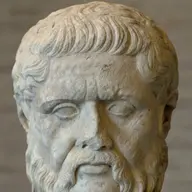
Diogenes Laertius, Lives of Eminent Philosophers 6.39–41Translated by R. D. Hicks (1925)Read the full passage (opens scaife.perseus.org)

When, and whose words

Date
by 348 BCE. Undated anecdote; it must fall before Plato's death (c. 348 BCE). Diogenes Laertius wrote around the 3rd century CE.
Whose words
As Diogenes Laertius tells it, centuries later. Who was Plato?
How this post was checked
  • The plain-words line was read against the quote alone by a second, independent pass, which found it adds no claim the quote does not make (2026-10-03).
  • Each claim in the summary was checked by an independent pass against only the material it cites.
  • The quote itself is checked by the build: word for word, once, at the cited section of the stored translation.

See it among its momentsMore from PlatoSee it in the feed