hstry

Diogenes refuses to slow down in old age

by 323 BCE. As Diogenes Laertius tells it, centuries later.

Where and when

by 323 BCEAthens and the Greek world

about 2,348 years ago

Explore
Diogenes, c. 412 – 323 BCE3000 BCE2900 BCE2800 BCE2700 BCE2600 BCE2500 BCE2400 BCE2300 BCE2200 BCE2100 BCE2000 BCE1900 BCE1800 BCE1700 BCE1600 BCE1500 BCE1400 BCE1300 BCE1200 BCE1100 BCE1000 BCE900 BCE800 BCE700 BCE600 BCE500 BCE400 BCE300 BCE200 BCE100 BCE1 CE100 CE200 CE300 CE400 CE500 CE600 CE700 CE800 CE900 CE1000 CE1100 CE1200 CE1300 CE1400 CE1500 CE1600 CE1700 CE1800 CE1900 CE2000 CEGreat Pyramid of Giza built, c. 2600 BCERome founded (traditional date), 753 BCELast western Roman emperor deposed, 476 CEGutenberg's printing press, c. 1440 CEColumbus reaches the Americas, 1492 CEFirst people on the Moon, 1969 CEToday, 2026

Swipe the line. Bars: entries. Dots: events.

Diogenes

As Diogenes Laertius tells it, centuries later

In plain words, ours

Told he was old and should rest, he said: if I were running a race, would I slow down near the finish? Shouldn't I speed up?

To those who said to him, You are an old man; take a rest, What? he replied, if I were running in the stadium, ought I to slacken my pace when approaching the goal? ought I not rather to put on speed?

Diogenes Laertius, Lives of Eminent Philosophers 6.34Translated by R. D. Hicks (1925)Read the full passage (Diogenes Laertius, Lives of Eminent Philosophers 6.34, opens scaife.perseus.org)

What was going on, our summary

Diogenes Laertius, writing centuries later, collects sayings of Diogenes the Cynic, and this reply comes from late in his life. Stories nearby have him walking barefoot on snow, trying to eat raw meat, and mocking the orator Demosthenes.

Checked claim by claim against: the passage around the quote.

Related moments

In time order, with this one in its place. Each says why it is here.

  1. by 348 BCEabout 25 years earlier Diogenes tramples Plato's carpets Same passage
  2. by 348 BCEabout 25 years earlier Plato answers Diogenes Also about how to live well
  3. c. 335–322 BCEDuring it Aristotle on one swallow and happiness Also about how to live well
  4. 323 BCE0.5 years earlier Alexander dies in Babylon Same years
  5. c. 324–321 BCEDuring it Diogenes the Cynic dies in Corinth Same years
  6. by 323 BCEThis momentDiogenes refuses to slow down in old age
  7. by 323 BCEBy this year Diogenes throws away his cup More from Diogenes
  8. by 323 BCEBy this year Diogenes searches for a man with a lamp More from Diogenes
  9. by 323 BCEBy this year Diogenes makes a tub his home Same passageMore from Diogenes
  10. 322 BCE1 year later Aristotle dies at Chalcis Same years

Just before and after

The text around the quote, word for word from the same translation.

Show the passageHide the passage

Alexander is reported to have said, Had I not been Alexander, I should have liked to be Diogenes. The word disabled (ἀναπήρους), Diogenes held, ought to be applied not to the deaf or blind, but to those who have no wallet (πήρα). One day he made his way with head half shaven into a party of young revellers, as Metrocles relates in his Anecdotes, and was roughly handled by them. Afterwards he entered on a tablet the names of those who had struck him and went about with the tablet hung round his neck, till he had covered them with ridicule and brought universal blame and discredit upon them. He described himself as a hound of the sort which all men praise, but no one, he added, of his admirers dared go out hunting along with him. When some one boasted that at the Pythian games he had vanquished men, Diogenes replied, Nay, I defeat men, you defeat slaves.

The quote: To those who said to him, You are an old man; take a rest, What? he replied, if I were running in the stadium, ought I to slacken my pace when approaching the goal? ought I not rather to put on speed?

Having been invited to a dinner, he declared that he wouldn’t go; for, the last time he went, his host had not expressed a proper gratitude. He would walk upon snow barefoot and do the other things mentioned above. Not only so; he even attempted to eat meat raw, but could not manage to digest it. He once found Demosthenes the orator lunching at an inn, and, when he retired within, Diogenes said, All the more you will be inside the tavern. When some strangers expressed a wish to see Demosthenes, he stretched out his middle finger and said, There goes the demagogue of Athens.

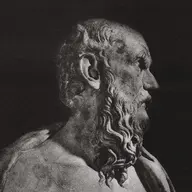
Diogenes Laertius, Lives of Eminent Philosophers 6.32–34Translated by R. D. Hicks (1925)Read the full passage (opens scaife.perseus.org)

When, and whose words

Date
by 323 BCE. Undated, from his old age; before his death (323 BCE, as commonly given). Diogenes Laertius wrote around the 3rd century CE.
Whose words
As Diogenes Laertius tells it, centuries later.
How this post was checked
  • The plain-words line was read against the quote alone by a second, independent pass, which found it adds no claim the quote does not make (2026-10-03).
  • Each claim in the summary was checked by an independent pass against only the material it cites.
  • The quote itself is checked by the build: word for word, once, at the cited section of the stored translation.

See it among its momentsMore from DiogenesSee it in the feed