hstry

Diogenes throws away his cup

by 323 BCE. As Diogenes Laertius tells it, centuries later.

Where and when

by 323 BCEAthens and the Greek world

about 2,348 years ago

Explore
Diogenes, c. 412 – 323 BCE3000 BCE2900 BCE2800 BCE2700 BCE2600 BCE2500 BCE2400 BCE2300 BCE2200 BCE2100 BCE2000 BCE1900 BCE1800 BCE1700 BCE1600 BCE1500 BCE1400 BCE1300 BCE1200 BCE1100 BCE1000 BCE900 BCE800 BCE700 BCE600 BCE500 BCE400 BCE300 BCE200 BCE100 BCE1 CE100 CE200 CE300 CE400 CE500 CE600 CE700 CE800 CE900 CE1000 CE1100 CE1200 CE1300 CE1400 CE1500 CE1600 CE1700 CE1800 CE1900 CE2000 CEGreat Pyramid of Giza built, c. 2600 BCERome founded (traditional date), 753 BCELast western Roman emperor deposed, 476 CEGutenberg's printing press, c. 1440 CEColumbus reaches the Americas, 1492 CEFirst people on the Moon, 1969 CEToday, 2026

Swipe the line. Bars: entries. Dots: events.

Diogenes

As Diogenes Laertius tells it, centuries later

In plain words, ours

He saw a child drinking from his hands and threw away his own cup: a child has beaten me at living simply.

One day, observing a child drinking out of his hands, he cast away the cup from his wallet with the words, A child has beaten me in plainness of living.

Diogenes Laertius, Lives of Eminent Philosophers 6.37Translated by R. D. Hicks (1925)Read the full passage (Diogenes Laertius, Lives of Eminent Philosophers 6.37, opens scaife.perseus.org)

What was going on, our summary

Diogenes Laertius, writing centuries later, collects stories about how simply Diogenes the Cynic lived. He also says Diogenes threw away his bowl after seeing a child eat lentils from a hollowed piece of bread.

Checked claim by claim against: the passage around the quote.

Why it matters

Diogenes famously threw away his cup after watching a boy drink from his hands, one of the stories of a man who practiced asceticism and minimalism.

Based on Wikipedia: Diogenes

One day, he famously discarded his drinking cup after watching a boy drink water from the hollow of his hands

Diogenes practiced asceticism and minimalism.

Wikipedia, Diogenes (opens en.wikipedia.org), as of 2026-09-11. Text CC BY-SA 4.0. Our line is checked against these sentences only.

Related moments

In time order, with this one in its place. Each says why it is here.

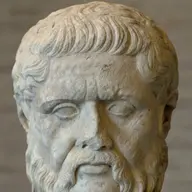
  1. by 348 BCEabout 25 years earlier Plato answers Diogenes Also about how to live well
  2. by 348 BCEabout 25 years earlier Plato defines man as a featherless biped Same passage
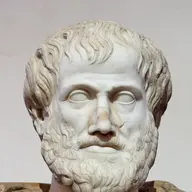
  3. c. 335–322 BCEDuring it Aristotle on one swallow and happiness Also about how to live well
  4. 323 BCE0.5 years earlier Alexander dies in Babylon Same years
  5. c. 324–321 BCEDuring it Diogenes the Cynic dies in Corinth Same years
  6. by 323 BCEThis momentDiogenes throws away his cup
  7. by 323 BCEBy this year Diogenes, citizen of the world More from Diogenes
  8. by 323 BCEBy this year Diogenes searches for a man with a lamp More from Diogenes
  9. by 323 BCEBy this year Diogenes refuses to slow down in old age Same passage
  10. by 323 BCEBy this year Diogenes makes a tub his home More from Diogenes
  11. 322 BCE1 year later Aristotle dies at Chalcis Same years

Just before and after

The text around the quote, word for word from the same translation.

Show the passageHide the passage

To Xeniades, who purchased him, he said, Come, see that you obey orders. When he quoted the line, Backward the streams flow to their founts, Diogenes asked, If you had been ill and had purchased a doctor, would you then, instead of obeying him, have said Backward the streams flow to their founts? Some one wanted to study philosophy under him. Diogenes gave him a tunny to carry and told him to follow him. And when for shame the man threw it away and departed, some time after on meeting him he laughed and said, The friendship between you and me was broken by a tunny. The version given by Diocles, however, is as follows. Some one having said to him, Lay your commands upon us, Diogenes, he took him away and gave him a cheese to carry, which cost half an obol. The other declined; whereupon he remarked, The friendship between you and me is broken by a little cheese worth half an obol.

The quote: One day, observing a child drinking out of his hands, he cast away the cup from his wallet with the words, A child has beaten me in plainness of living.

He also threw away his bowl when in like manner he saw a child who had broken his plate taking up his lentils with the hollow part of a morsel of bread. He used also to reason thus: All things belong to the gods. The wise are friends of the gods, and friends hold things in common. Therefore all things belong to the wise.

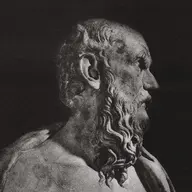
Diogenes Laertius, Lives of Eminent Philosophers 6.36–37Translated by R. D. Hicks (1925)Read the full passage (opens scaife.perseus.org)

When, and whose words

Date
by 323 BCE. Undated; before Diogenes' death (323 BCE, as commonly given). Diogenes Laertius wrote around the 3rd century CE.
Whose words
As Diogenes Laertius tells it, centuries later.
How this post was checked
  • The plain-words line was read against the quote alone by a second, independent pass, which found it adds no claim the quote does not make (2026-10-03).
  • Each claim in the summary was checked by an independent pass against only the material it cites.
  • The quote itself is checked by the build: word for word, once, at the cited section of the stored translation.

See it among its momentsMore from DiogenesSee it in the feed