hstry

Diogenes, citizen of the world

by 323 BCE. As Diogenes Laertius tells it, centuries later.

Where and when

by 323 BCEAthens and the Greek world

about 2,348 years ago

Explore
Diogenes, c. 412 – 323 BCE3000 BCE2900 BCE2800 BCE2700 BCE2600 BCE2500 BCE2400 BCE2300 BCE2200 BCE2100 BCE2000 BCE1900 BCE1800 BCE1700 BCE1600 BCE1500 BCE1400 BCE1300 BCE1200 BCE1100 BCE1000 BCE900 BCE800 BCE700 BCE600 BCE500 BCE400 BCE300 BCE200 BCE100 BCE1 CE100 CE200 CE300 CE400 CE500 CE600 CE700 CE800 CE900 CE1000 CE1100 CE1200 CE1300 CE1400 CE1500 CE1600 CE1700 CE1800 CE1900 CE2000 CEGreat Pyramid of Giza built, c. 2600 BCERome founded (traditional date), 753 BCELast western Roman emperor deposed, 476 CEGutenberg's printing press, c. 1440 CEColumbus reaches the Americas, 1492 CEFirst people on the Moon, 1969 CEToday, 2026

Swipe the line. Bars: entries. Dots: events.

Diogenes

As Diogenes Laertius tells it, centuries later

In plain words, ours

Asked where he was from, he said: I'm a citizen of the world.

Asked where he came from, he said, I am a citizen of the world.

Diogenes Laertius, Lives of Eminent Philosophers 6.63Translated by R. D. Hicks (1925)Read the full passage (Diogenes Laertius, Lives of Eminent Philosophers 6.63, opens scaife.perseus.org)

What was going on, our summary

Diogenes Laertius, writing centuries later, gives a long run of quick replies he credits to Diogenes. This one comes just after Diogenes says that philosophy taught him to be ready for every kind of fortune.

Checked claim by claim against: the passage around the quote.

Why it matters

Diogenes invented an early form of cosmopolitanism, and probably the word itself, which was his one-word answer when asked where he came from.

Based on Wikipedia: Diogenes

Diogenes invented an early form of cosmopolitanism, and probably the term itself.

When asked about his origin, he responded with a single word: kosmopolitēs ("I am a citizen of the world").

Wikipedia, Diogenes (opens en.wikipedia.org), as of 2026-09-11. Text CC BY-SA 4.0. Our line is checked against these sentences only.

Related moments

In time order, with this one in its place. Each says why it is here.

  1. 336–323 BCEDuring it Diogenes meets Alexander Same passage
  2. 323 BCE0.5 years earlier Alexander dies in Babylon Same years
  3. c. 324–321 BCEDuring it Diogenes the Cynic dies in Corinth Same years
  4. by 323 BCEThis momentDiogenes, citizen of the world
  5. by 323 BCEBy this year Diogenes throws away his cup More from Diogenes
  6. by 323 BCEBy this year Diogenes searches for a man with a lamp More from Diogenes
  7. by 323 BCEBy this year Diogenes makes a tub his home More from Diogenes
  8. 322 BCE1 year later Aristotle dies at Chalcis Same years

Just before and after

The text around the quote, word for word from the same translation.

Show the passageHide the passage

Is it that you may now have your revenge on the rivals who formerly beat you? Seeing the child of a courtesan throw stones at a crowd, he cried out, Take care you don’t hit your father. A boy having shown him a dagger that he had received from an admirer, Diogenes remarked, A pretty blade with an ugly handle. When some people commended a person who had given him a gratuity, he broke in with You have no praise for me who was worthy to receive it. When some one asked that he might have back his cloak, If it was a gift, replied Diogenes, I possess it; while, if it was a loan, I am using it. A supposititious son having told him that he had gold in the pocket of his dress, True, said he, and therefore you sleep with it under your pillow. On being asked what he had gained from philosophy, he replied, This at least, if nothing else—to be prepared for every fortune.

The quote: Asked where he came from, he said, I am a citizen of the world.

Certain parents were sacrificing to the gods, that a son might be born to them. But, said he, do you not sacrifice to ensure what manner of man he shall turn out to be? When asked for a subscription towards a club, he said to the president: Despoil the rest; off Hector keep thy hands. The mistresses of kings he designated queens; for, said he, they make the kings do their bidding. When the Athenians gave Alexander the title of Dionysus, he said, Me too you might make Sarapis.

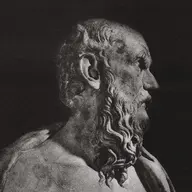
Diogenes Laertius, Lives of Eminent Philosophers 6.62–63Translated by R. D. Hicks (1925)Read the full passage (opens scaife.perseus.org)

When, and whose words

Date
by 323 BCE. Undated; before Diogenes' death (323 BCE, as commonly given). Diogenes Laertius wrote around the 3rd century CE.
Whose words
As Diogenes Laertius tells it, centuries later.
How this post was checked
  • The plain-words line was read against the quote alone by a second, independent pass, which found it adds no claim the quote does not make (2026-10-03).
  • Each claim in the summary was checked by an independent pass against only the material it cites.
  • The quote itself is checked by the build: word for word, once, at the cited section of the stored translation.

See it among its momentsMore from DiogenesSee it in the feed