hstry

Diogenes searches for a man with a lamp

by 323 BCE. As Diogenes Laertius tells it, centuries later.

Where and when

by 323 BCEAthens and the Greek world

about 2,348 years ago

Explore
Diogenes, c. 412 – 323 BCE3000 BCE2900 BCE2800 BCE2700 BCE2600 BCE2500 BCE2400 BCE2300 BCE2200 BCE2100 BCE2000 BCE1900 BCE1800 BCE1700 BCE1600 BCE1500 BCE1400 BCE1300 BCE1200 BCE1100 BCE1000 BCE900 BCE800 BCE700 BCE600 BCE500 BCE400 BCE300 BCE200 BCE100 BCE1 CE100 CE200 CE300 CE400 CE500 CE600 CE700 CE800 CE900 CE1000 CE1100 CE1200 CE1300 CE1400 CE1500 CE1600 CE1700 CE1800 CE1900 CE2000 CEGreat Pyramid of Giza built, c. 2600 BCERome founded (traditional date), 753 BCELast western Roman emperor deposed, 476 CEGutenberg's printing press, c. 1440 CEColumbus reaches the Americas, 1492 CEFirst people on the Moon, 1969 CEToday, 2026

Swipe the line. Bars: entries. Dots: events.

Diogenes

As Diogenes Laertius tells it, centuries later

In plain words, ours

He walked around in broad daylight carrying a lit lamp, saying: I'm looking for a human being.

He lit a lamp in broad daylight and said, as he went about, I am looking for a man.

Diogenes Laertius, Lives of Eminent Philosophers 6.41Translated by R. D. Hicks (1925)Read the full passage (Diogenes Laertius, Lives of Eminent Philosophers 6.41, opens scaife.perseus.org)

What was going on, our summary

Diogenes Laertius, writing centuries later, strings together anecdotes about Diogenes the Cynic, such as plucking a chicken to mock Plato's definition of man and calling popular leaders the lackeys of the people. This is one more of those stories.

Checked claim by claim against: the passage around the quote.

Why it matters

Walking about with a lit lamp in daylight, looking for a man, meaning a wise man, is one of the behaviours that made Diogenes famous for challenging social norms.

Based on Wikipedia: Diogenes

he became famous for his unconventional, shameless behaviors that openly challenged societal norms, such as living in a large ceramic jar or wandering public spaces with a lit lantern in daylight, claiming to be "looking for a man", that is to say "for a wise man" (sophos).

Wikipedia, Diogenes (opens en.wikipedia.org), as of 2026-09-11. Text CC BY-SA 4.0. Our line is checked against these sentences only.

Related moments

In time order, with this one in its place. Each says why it is here.

  1. 323 BCE0.5 years earlier Alexander dies in Babylon Same years
  2. c. 324–321 BCEDuring it Diogenes the Cynic dies in Corinth Same years
  3. by 323 BCEThis momentDiogenes searches for a man with a lamp
  4. by 323 BCEBy this year Diogenes throws away his cup Same passageMore from Diogenes
  5. by 323 BCEBy this year Diogenes, citizen of the world More from Diogenes
  6. by 323 BCEBy this year Diogenes refuses to slow down in old age Same passage
  7. by 323 BCEBy this year Diogenes makes a tub his home More from Diogenes
  8. 322 BCE1 year later Aristotle dies at Chalcis Same years

Just before and after

The text around the quote, word for word from the same translation.

Show the passageHide the passage

He said, No. But to another who asked if there was a great crowd of bathers, he said, Yes. Plato had defined Man as an animal, biped and featherless, and was applauded. Diogenes plucked a fowl and brought it into the lecture-room with the words, Here is Plato’s man. In consequence of which there was added to the definition, having broad nails. To one who asked what was the proper time for lunch, he said, If a rich man, when you will; if a poor man, when you can. At Megara he saw the sheep protected by leather jackets, while the children went bare. It’s better, said he, to be a Megarian’s ram than his son. To one who had brandished a beam at him and then cried, Look out, he replied, What, are you intending to strike me again? He used to call the demagogues the lackeys of the people and the crowns awarded to them the efflorescence of fame.

The quote: He lit a lamp in broad daylight and said, as he went about, I am looking for a man.

One day he got a thorough drenching where he stood, and, when the bystanders pitied him, Plato said, if they really pitied him, they should move away, alluding to his vanity. When some one hit him a blow with his fist, Heracles, said he, how came I to forget to put on a helmet when I walked out? Further, when Meidias assaulted him and went on to say, There are 3000 drachmas to your credit, the next day he took a pair of boxing-gauntlets, gave him a thrashing and said, There are 3000 blows to your credit.

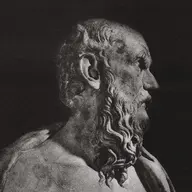
Diogenes Laertius, Lives of Eminent Philosophers 6.40–42Translated by R. D. Hicks (1925)Read the full passage (opens scaife.perseus.org)

When, and whose words

Date
by 323 BCE. Undated; before Diogenes' death (323 BCE, as commonly given). Diogenes Laertius wrote around the 3rd century CE.
Whose words
As Diogenes Laertius tells it, centuries later.
How this post was checked
  • The plain-words line was read against the quote alone by a second, independent pass, which found it adds no claim the quote does not make (2026-10-03).
  • Each claim in the summary was checked by an independent pass against only the material it cites.
  • The quote itself is checked by the build: word for word, once, at the cited section of the stored translation.

See it among its momentsMore from DiogenesSee it in the feed