hstry

Thucydides on how he wrote the speeches

c. 431–400 BCE, Greece. His own words.

Where and when

c. 431–400 BCEGreece, not on the map

about 2,440 years ago

Explore
Thucydides, c. 460 – c. 400 BCE3000 BCE2900 BCE2800 BCE2700 BCE2600 BCE2500 BCE2400 BCE2300 BCE2200 BCE2100 BCE2000 BCE1900 BCE1800 BCE1700 BCE1600 BCE1500 BCE1400 BCE1300 BCE1200 BCE1100 BCE1000 BCE900 BCE800 BCE700 BCE600 BCE500 BCE400 BCE300 BCE200 BCE100 BCE1 CE100 CE200 CE300 CE400 CE500 CE600 CE700 CE800 CE900 CE1000 CE1100 CE1200 CE1300 CE1400 CE1500 CE1600 CE1700 CE1800 CE1900 CE2000 CEGreat Pyramid of Giza built, c. 2600 BCERome founded (traditional date), 753 BCELast western Roman emperor deposed, 476 CEGutenberg's printing press, c. 1440 CEColumbus reaches the Americas, 1492 CEFirst people on the Moon, 1969 CEToday, 2026sometime in these 31 years

Swipe the line. Bars: entries. Dots: events.

In plain words, ours

It was always hard to remember speeches word for word, so I wrote what I thought each speaker needed to say, staying as close as I could to the gist of what they really said.

…it was in all cases difficult to carry them word for word in one's memory, so my habit has been to make the speakers say what was in my opinion demanded of them by the various occasions, of course adhering as closely as possible to the general sense of what they really said.

Thucydides, History of the Peloponnesian War 1.22.1Translated by Richard Crawley (1874)Read the full passage (Thucydides, History of the Peloponnesian War 1.22.1, opens scaife.perseus.org)

What was going on, our summary

Thucydides is explaining how he wrote his history of the war. He says some speeches he heard himself and others he got from various people, and that he tested reports of events against different eyewitnesses.

Checked claim by claim against: the passage around the quote.

Why it matters

Classicists treat his speeches with suspicion, since it is not clear how far he altered them, and some are probably made up to fit what, as he puts it here, each situation called for.

Based on Wikipedia: History of the Peloponnesian War

These speeches are suspect in the eyes of classicists, however, inasmuch as it is not clear to what degree Thucydides altered these speeches in order to elucidate better the crux of the argument presented.

Some of the speeches are probably fabricated according to his expectations of, as he puts it, "what was called for in each situation" (1.22.1)

Wikipedia, History of the Peloponnesian War (opens en.wikipedia.org), as of 2026-09-14. Text CC BY-SA 4.0. Our line is checked against these sentences only.

Related moments

In time order, with this one in its place. Each says why it is here.

  1. c. 430–425 BCEabout 12 years earlier Herodotus on why he wrote his Histories Also about how history gets told
  2. 424/423 BCEabout 9 years earlier Thucydides fails to save Amphipolis and is exiled Also about how history gets told
  3. 423 BCEabout 8 years earlier Strepsiades on the better and worse cause Also about speech and persuasion
  4. 416 BCE1 year earlier Athens takes Melos and kills its men Same years
  5. 416 BCE, written later1 year earlier The Athenian envoys to Melos on power More from Thucydides
  6. 416 BCE, written later1 year earlier Athenian envoys to Melos on the strong and weak More from Thucydides
  7. 415 BCE0.10000000000002274 years earlier Statues of Hermes are smashed across Athens Same years
  8. 415 BCEAbout the same year The great fleet sails for Sicily Same years
  9. c. 431–400 BCEThis momentThucydides on how he wrote the speeches
  10. c. 420–410 BCEDuring it Socrates on why he stays in the city Same years
  11. c. 431–400 BCEDuring it Thucydides on a possession for all time Same passageMore from Thucydides
  12. 413 BCEabout 2 years later The Athenian army is destroyed in Sicily Same years
  13. c. 386 BCEabout 29 years later Socrates on Aspasia's funeral speech Also about speech and persuasion

Just before and after

The text around the quote, word for word from the same translation.

Show the passageHide the passage

Turning from these, we can rest satisfied with having proceeded upon the clearest data, and having arrived at conclusions as exact as can be expected in matters of such antiquity. To come to this war; despite the known disposition of the actors in a struggle to overrate its importance, and when it is over to return to their admiration of earlier events, yet an examination of the facts will show that it was much greater than the wars which preceded it. With reference to the speeches in this history, some were delivered before the war began, others while it was going on; some I heard myself, others I got from various quarters;

The quote: it was in all cases difficult to carry them word for word in one's memory, so my habit has been to make the speakers say what was in my opinion demanded of them by the various occasions, of course adhering as closely as possible to the general sense of what they really said.

And with reference to the narrative of events, far from permitting myself to derive it from the first source that came to hand, I did not even trust my own impressions, but it rests partly on what I saw myself, partly on what others saw for me, the accuracy of the report being always tried by the most severe and detailed tests possible. My conclusions have cost me some labour from the want of coincidence between accounts of the same occurrences by different eye-witnesses, arising sometimes from imperfect memory, sometimes from undue partiality for one side or the other.

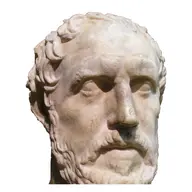
Thucydides, History of the Peloponnesian War 1.21.1–1.22.3Translated by Richard Crawley (1874)Read the full passage (opens scaife.perseus.org)

When, and whose words

Date
c. 431–400 BCE. A note on his method, written at some point between the war's start in 431 BCE and his death c. 400 BCE.
Whose words
His own words. Who was Thucydides?
How this post was checked
  • The plain-words line was read against the quote alone by a second, independent pass, which found it adds no claim the quote does not make (2026-10-03).
  • Each claim in the summary was checked by an independent pass against only the material it cites.
  • The quote itself is checked by the build: word for word, once, at the cited section of the stored translation.

See it among its momentsMore from ThucydidesSee it in the feed