hstry

The Athenian envoys to Melos on power

416 BCE, written later, Melos. The Athenian envoys speaking, as Thucydides writes it.

Where and when

416 BCE, written laterMelos

2,441 years ago

Explore
Thucydides, c. 460 – c. 400 BCE3000 BCE2900 BCE2800 BCE2700 BCE2600 BCE2500 BCE2400 BCE2300 BCE2200 BCE2100 BCE2000 BCE1900 BCE1800 BCE1700 BCE1600 BCE1500 BCE1400 BCE1300 BCE1200 BCE1100 BCE1000 BCE900 BCE800 BCE700 BCE600 BCE500 BCE400 BCE300 BCE200 BCE100 BCE1 CE100 CE200 CE300 CE400 CE500 CE600 CE700 CE800 CE900 CE1000 CE1100 CE1200 CE1300 CE1400 CE1500 CE1600 CE1700 CE1800 CE1900 CE2000 CEGreat Pyramid of Giza built, c. 2600 BCERome founded (traditional date), 753 BCELast western Roman emperor deposed, 476 CEGutenberg's printing press, c. 1440 CEColumbus reaches the Americas, 1492 CEFirst people on the Moon, 1969 CEToday, 2026

Swipe the line. Bars: entries. Dots: events.

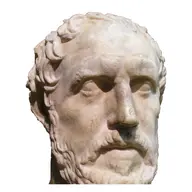
Thucydides

, MelosThe Athenian envoys speaking, as Thucydides writes it

In plain words, ours

Gods, we think, and people, we know, rule wherever they can. We didn't invent that rule, we just use it, and you would too in our place.

Of the gods we believe, and of men we know, that by a necessary law of their nature they rule wherever they can. And it is not as if we were the first to make this law, or to act upon it when made: we found it existing before us, and shall leave it to exist for ever after us; all we do is to make use of it, knowing that you and everybody else, having the same power as we have, would do the same as we do.

Thucydides, History of the Peloponnesian War 5.105.2Translated by Richard Crawley (1874)Read the full passage (Thucydides, History of the Peloponnesian War 5.105.2, opens scaife.perseus.org)
What was going on, our summary

In 416 BCE an Athenian force came to Melos, a neutral island that refused to join Athens. In the talks Thucydides writes up, the Melians say the gods will favor them as just men and the Spartans will help; here the Athenian envoys reply.

Checked claim by claim against: Athens takes Melos and kills its men, Spartan army invades Attica, the passage around the quote.

Why it matters

The Melian dialogue describes one of the early instances of power politics, and it is taught as arguing that the only rational approach is based on power and advantage.

Based on Wikipedia: History of the Peloponnesian War, Siege of Melos

Some events depicted in the History, such as the Melian dialogue, describe early instances of realpolitik or power politics.

The Melian Dialogue is taught as an advocation of imperialism at the expense of other states, and that the only rational approach is based on power and advantage.

Wikipedia, History of the Peloponnesian War (opens en.wikipedia.org), as of 2026-09-14; Wikipedia, Siege of Melos (opens en.wikipedia.org), as of 2026-08-10. Text CC BY-SA 4.0. Our line is checked against these sentences only.

Related moments

In time order, with this one in its place. Each says why it is here.

  1. 431 BCE14.899999999999977 years earlier Spartan army invades Attica The event behind it
  2. 423 BCE7 years earlier The Unjust Cause on making the worse cause win Also about justice and law
  3. c. 430–405 BCEDuring it Socrates would rather suffer wrong than do it Also about justice and law
  4. 416 BCESame year Athens takes Melos and kills its men The event behind itAlso in MelosAlso about war and empire
  5. 416 BCE, written laterThis momentThe Athenian envoys to Melos on power
  6. 416 BCE, written laterSame year Athenian envoys to Melos on the strong and weak Same passageMore from Thucydides
  7. 415 BCE0.8999999999999773 years later Statues of Hermes are smashed across Athens Same years
  8. 415 BCE1 year later The great fleet sails for Sicily Also about war and empire
  9. c. 431–400 BCEDuring it Thucydides on how he wrote the speeches More from Thucydides
  10. c. 431–400 BCEDuring it Thucydides on a possession for all time More from Thucydides
  11. 413 BCE3 years later The Athenian army is destroyed in Sicily Same years

Just before and after

The text around the quote, word for word from the same translation.

Show the passageHide the passage

‘You may be sure that we are as well aware as you of the difficulty of contending against your power and fortune, unless the terms be equal. But we trust that the gods may grant us fortune as good as yours, since we are just men fighting against unjust, and that what we want in power will be made up by the alliance of the Lacedaemonians, who are bound, if only for very shame, to come to the aid of their kindred. Our confidence, therefore, after all is not so utterly irrational.’ ‘When you speak of the favour of the gods, we may as fairly hope for that as yourselves; neither our pretensions nor our conduct being in any way contrary to what men believe of the gods, or practise among themselves.

The quote: Of the gods we believe, and of men we know, that by a necessary law of their nature they rule wherever they can. And it is not as if we were the first to make this law, or to act upon it when made: we found it existing before us, and shall leave it to exist for ever after us; all we do is to make use of it, knowing that you and everybody else, having the same power as we have, would do the same as we do.

Thus, as far as the gods are concerned, we have no fear and no reason to fear that we shall be at a disadvantage. But when we come to your notion about the Lacedaemonians, which leads you to believe that shame will make them help you, here we bless your simplicity but do not envy your folly.

Thucydides, History of the Peloponnesian War 5.104.1–5.105.3Translated by Richard Crawley (1874)Read the full passage (opens scaife.perseus.org)

When, and whose words

Date
416 BCE, written later. The Athenian expedition against Melos was in 416 BCE; Thucydides wrote the dialogue during or after the war.
Whose words
The Athenian envoys speaking, as Thucydides writes it. Who was Thucydides?
How this post was checked
  • The plain-words line was read against the quote alone by a second, independent pass, which found it adds no claim the quote does not make (2026-10-03).
  • Each claim in the summary was checked by an independent pass against only the material it cites.
  • The quote itself is checked by the build: word for word, once, at the cited section of the stored translation.

See it among its momentsMore from ThucydidesSee it in the feed