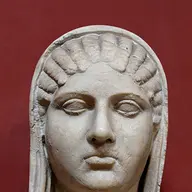
Men. Who is she? But you mean Aspasia, no doubt. Soc. I do and; also Connus the son of Metrobius; for these are my two instructors, the one in music, the other in rhetoric. So it is not surprising that a man who is trained like me should be clever at speaking. But even a man less well taught than I, who had learnt his music from Lamprus and his rhetoric from Antiphon the Rhamnusian, —even such a one, I say, could none the less win credit by praising Athenians before an Athenian audience. Men. What, then, would you have to say, if you were required to speak? Soc. Nothing, perhaps, myself of my own invention;
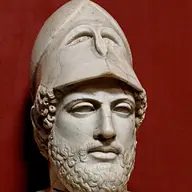
The quote: but I was listening only yesterday to Aspasia going through a funeral speech for these very people. For she had heard the report you mention, that the Athenians are going to select the speaker; and thereupon she rehearsed to me the speech in the form it should take, extemporizing in part, while other parts of it she had previously prepared, as I imagine, at the time when she was composing the funeral oration which Pericles delivered; and from this she patched together sundry fragments.
Men. Could you repeat from memory that speech of Aspasia? Soc. Yes, if I am not mistaken; for I learnt it, to be sure, from her as she went along, and I nearly got a flogging whenever I forgot. Men. Why don’t you repeat it then? Soc. But possibly my teacher will be vexed with me if I publish abroad her speech. Men. Never fear, Socrates; only tell it and you will gratify me exceedingly, whether it is Aspasia’s that you wish to deliver or anyone else’s; only say on. Soc. But you will probably laugh me to scorn if I, at my age, seem to you to be playing like a child. Men.