hstry

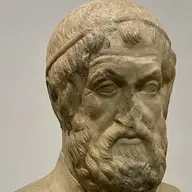
Socrates and the oracle at Delphi

set in 399 BCE, Athens. As Plato tells it.

Where and when

set in 399 BCEAthens

2,424 years ago

Explore
Socrates, c. 470 – 399 BCE3000 BCE2900 BCE2800 BCE2700 BCE2600 BCE2500 BCE2400 BCE2300 BCE2200 BCE2100 BCE2000 BCE1900 BCE1800 BCE1700 BCE1600 BCE1500 BCE1400 BCE1300 BCE1200 BCE1100 BCE1000 BCE900 BCE800 BCE700 BCE600 BCE500 BCE400 BCE300 BCE200 BCE100 BCE1 CE100 CE200 CE300 CE400 CE500 CE600 CE700 CE800 CE900 CE1000 CE1100 CE1200 CE1300 CE1400 CE1500 CE1600 CE1700 CE1800 CE1900 CE2000 CEGreat Pyramid of Giza built, c. 2600 BCERome founded (traditional date), 753 BCELast western Roman emperor deposed, 476 CEGutenberg's printing press, c. 1440 CEColumbus reaches the Americas, 1492 CEFirst people on the Moon, 1969 CEToday, 2026

Swipe the line. Bars: entries. Dots: events.

In plain words, ours

He went to Delphi and asked the oracle whether anyone was wiser than me. The priestess answered that no one was.

Well, once he went to Delphi and made so bold as to ask the oracle this question; and, gentlemen, don’t make a disturbance at what I say; for he asked if there were anyone wiser than I. Now the Pythia replied that there was no one wiser.

Plato, Apology 21aTranslated by Harold North Fowler (1914)Read the full passage (Plato, Apology 21a, opens scaife.perseus.org)

What was going on, our summary

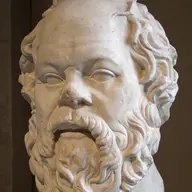
As Plato tells it, Socrates is defending himself at his trial in Athens, charged with not recognising the city's gods and corrupting the young. He calls the god of Delphi as witness and tells what his late comrade Chaerephon once asked the oracle.

Checked claim by claim against: Socrates is tried, condemned and put to death, the passage around the quote.

Why it matters

In Plato's account, Socrates says the charge that he corrupts the young began when he set out to obey this oracle.

Based on Wikipedia: Apology (Plato)

He says that the accusations of him being a corrupter of youth began at the time of his obedience to the Oracle at Delphi

Wikipedia, Apology (Plato) (opens en.wikipedia.org), as of 2026-09-09. Text CC BY-SA 4.0. Our line is checked against these sentences only.

Related moments

In time order, with this one in its place. Each says why it is here.

  1. c. 429 BCEabout 30 years earlier Oedipus demands to learn his birth Also about knowing and not knowing
  2. 423 BCE24 years earlier Strepsiades on the gnat's trumpet Also about knowing and not knowing
  3. 404 BCE5 years earlier The Thirty take power in Athens Same years
  4. 403 BCE4 years earlier Democracy returns to Athens, with an amnesty Same years
  5. 399 BCESame year Socrates is tried, condemned and put to death The event behind itAlso in Athens
  6. set in 399 BCEThis momentSocrates and the oracle at Delphi
  7. by 399 BCEBy this year Aspasia on honest matchmaking Also in Athens
  8. set in 399 BCESame year The charge Meletus swore against Socrates Also in Athens
  9. set in 399 BCESame year Socrates on Aristophanes' comedy Same passageMore from Socrates
  10. set in 399 BCESame year Socrates on what makes things beautiful More from Socrates
  11. set in 399 BCESame year Socrates on knowing that he does not know Same passageMore from Socrates

Just before and after

The text around the quote, word for word from the same translation.

Show the passageHide the passage

What kind of wisdom is this? Just that which is perhaps human wisdom. For perhaps I really am wise in this wisdom; and these men, perhaps, of whom I was just speaking, might be wise in some wisdom greater than human, or I don’t know what to say; for I do not understand it, and whoever says I do, is lying and speaking to arouse prejudice against me. And, men of Athens, do not interrupt me with noise, even if I seem to you to be boasting; for the word which I speak is not mine, but the speaker to whom I shall refer it is a person of weight. For of my wisdom—if it is wisdom at all—and of its nature, I will offer you the god of Delphi as a witness. You know Chaerephon, I fancy. He was my comrade from a youth and the comrade of your democratic party, and shared in the recent exile and came back with you. And you know the kind of man Chaerephon was, how impetuous in whatever he undertook.

The quote: Well, once he went to Delphi and made so bold as to ask the oracle this question; and, gentlemen, don’t make a disturbance at what I say; for he asked if there were anyone wiser than I. Now the Pythia replied that there was no one wiser.

And about these things his brother here will bear you witness, since Chaerephon is dead. But see why I say these things; for I am going to tell you whence the prejudice against me has arisen. For when I heard this, I thought to myself: What in the world does the god mean, and what riddle is he propounding? For I am conscious that I am not wise either much or little. What then does he mean by declaring that I am the wisest? He certainly cannot be lying, for that is not possible for him.

Plato, Apology 20d–21bTranslated by Harold North Fowler (1914)Read the full passage (opens scaife.perseus.org)

When, and whose words

Date
set in 399 BCE. Spoken at the trial of Socrates in 399 BCE; Plato wrote the Apology some years later.
Whose words
As Plato tells it.
How this post was checked
  • The plain-words line was read against the quote alone by a second, independent pass, which found it adds no claim the quote does not make (2026-10-03).
  • Each claim in the summary was checked by an independent pass against only the material it cites.
  • The quote itself is checked by the build: word for word, once, at the cited section of the stored translation.

See it among its momentsMore from SocratesSee it in the feed