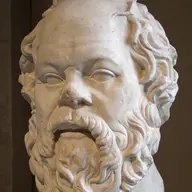
Socrates is charged with not recognising the city's gods and corrupting the young. A jury condemns him, and he dies in prison by drinking poison.
Socrates is guilty of refusing to recognize the gods recognized by the state, and of introducing other new divinities. He is also guilty of corrupting the youth. The penalty demanded is death.
Such was the end, Echecrates, of our friend, who was, as we may say, of all those of his time whom we have known, the best and wisest and most righteous man.
Plato's account of the trial and death inspired writers, artists and philosophers to return to it. Some saw the execution as showing the defects of democracy; others as a justifiable defence of a newly restored democracy.
Based on Wikipedia: Trial of Socrates
Plato's presentation of the trial and death of Socrates inspired writers, artists, and philosophers to revisit the matter.
For some, the execution of the man whom Plato called "the wisest and most just of all men" demonstrated the defects of democracy and of popular rule; for others, the Athenian actions were a justifiable defence of the recently re-established democracy.