hstry

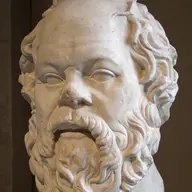
Socrates answers Meletus at his trial

set in 399 BCE, Athens. As Plato tells it.

Where and when

set in 399 BCEAthens

2,424 years ago

Explore
Socrates, c. 470 – 399 BCE3000 BCE2900 BCE2800 BCE2700 BCE2600 BCE2500 BCE2400 BCE2300 BCE2200 BCE2100 BCE2000 BCE1900 BCE1800 BCE1700 BCE1600 BCE1500 BCE1400 BCE1300 BCE1200 BCE1100 BCE1000 BCE900 BCE800 BCE700 BCE600 BCE500 BCE400 BCE300 BCE200 BCE100 BCE1 CE100 CE200 CE300 CE400 CE500 CE600 CE700 CE800 CE900 CE1000 CE1100 CE1200 CE1300 CE1400 CE1500 CE1600 CE1700 CE1800 CE1900 CE2000 CEGreat Pyramid of Giza built, c. 2600 BCERome founded (traditional date), 753 BCELast western Roman emperor deposed, 476 CEGutenberg's printing press, c. 1440 CEColumbus reaches the Americas, 1492 CEFirst people on the Moon, 1969 CEToday, 2026

Swipe the line. Bars: entries. Dots: events.

In plain words, ours

He says I corrupt the young. I say he's the wrongdoer: he drags people to court over things he never cared about.

He says I am a wrongdoer because I corrupt the youth. But I, men of Athens, say Meletus is a wrongdoer, because he jokes in earnest, lightly involving people in a lawsuit, pretending to be zealous and concerned about things or which he never cared at all.

Plato, Apology 24cTranslated by Harold North Fowler (1914)Read the full passage (Plato, Apology 24c, opens scaife.perseus.org)

What was going on, our summary

As Plato tells it, Socrates is defending himself at his trial in Athens. Having answered his older accusers, he now turns to the sworn charge brought by Meletus and questions him in front of the jury.

Checked claim by claim against: Socrates is tried, condemned and put to death, the passage around the quote.

Why it matters

Aristotle believed the dialogue, and especially this scene where Socrates questions Meletus, was a good use of interrogation.

Based on Wikipedia: Apology (Plato)

Aristotle believed the dialogue, particularly the scene where Socrates questions Meletus, represented a good use of interrogation.

Wikipedia, Apology (Plato) (opens en.wikipedia.org), as of 2026-09-09. Text CC BY-SA 4.0. Our line is checked against these sentences only.

Related moments

In time order, with this one in its place. Each says why it is here.

  1. 404 BCE5 years earlier The Thirty take power in Athens Same years
  2. 403 BCE4 years earlier Democracy returns to Athens, with an amnesty Same years
  3. 399 BCESame year Socrates is tried, condemned and put to death The event behind itAlso in AthensAlso about the trial of Socrates
  4. set in 399 BCEThis momentSocrates answers Meletus at his trial
  5. by 399 BCEBy this year Aspasia on honest matchmaking Also in Athens
  6. set in 399 BCESame year The charge Meletus swore against Socrates Answering MeletusAlso in AthensAlso about the trial of Socrates
  7. set in 399 BCESame year Socrates and the oracle at Delphi More from Socrates
  8. set in 399 BCESame year Socrates on what makes things beautiful More from Socrates
  9. set in 399 BCESame year Socrates on knowing that he does not know Same passageMore from Socrates

Just before and after

The text around the quote, word for word from the same translation.

Show the passageHide the passage

And yet I know pretty well that I am making myself hated by just that conduct; which is also a proof that I am speaking the truth and that this is the prejudice against me and these are its causes. And whether you investigate this now or hereafter, you will find that it is so.Now so far as the accusations are concerned which my first accusers made against me, this is a sufficient defence before you; but against Meletus, the good and patriotic, as he says, and the later ones, I will try to defend myself next. So once more, as if these were another set of accusers, let us take up in turn their sworn statement. It is about as follows: it states that Socrates is a wrongdoer because he corrupts the youth and does not believe in the gods the state believes in, but in other new spiritual beings.Such is the accusation. But let us examine each point of this accusation.

The quote: He says I am a wrongdoer because I corrupt the youth. But I, men of Athens, say Meletus is a wrongdoer, because he jokes in earnest, lightly involving people in a lawsuit, pretending to be zealous and concerned about things or which he never cared at all.

And that this is so I will try to make plain to you also.Come here, Meletus, tell me: don’t you consider it of great importance that the youth be as good as possible? I do. Come now, tell these gentlemen who makes them better? For it is evident that you know, since you care about it. For you have found the one who corrupts them, as you say, and you bring me before these gentlemen and accuse me; and now, come, tell who makes them better and inform them who he is. Do you see, Meletus, that you are silent and cannot tell?

Plato, Apology 24a–dTranslated by Harold North Fowler (1914)Read the full passage (opens scaife.perseus.org)

When, and whose words

Date
set in 399 BCE. Spoken at the trial of Socrates in 399 BCE; Plato wrote the Apology some years later.
Whose words
As Plato tells it.
How this post was checked
  • The plain-words line was read against the quote alone by a second, independent pass, which found it adds no claim the quote does not make (2026-10-03).
  • Each claim in the summary was checked by an independent pass against only the material it cites.
  • The quote itself is checked by the build: word for word, once, at the cited section of the stored translation.

See it among its momentsMore from SocratesSee it in the feed