hstry

Socrates on knowing that he does not know

set in 399 BCE, Athens. As Plato tells it.

Where and when

set in 399 BCEAthens

2,424 years ago

Explore
Socrates, c. 470 – 399 BCE3000 BCE2900 BCE2800 BCE2700 BCE2600 BCE2500 BCE2400 BCE2300 BCE2200 BCE2100 BCE2000 BCE1900 BCE1800 BCE1700 BCE1600 BCE1500 BCE1400 BCE1300 BCE1200 BCE1100 BCE1000 BCE900 BCE800 BCE700 BCE600 BCE500 BCE400 BCE300 BCE200 BCE100 BCE1 CE100 CE200 CE300 CE400 CE500 CE600 CE700 CE800 CE900 CE1000 CE1100 CE1200 CE1300 CE1400 CE1500 CE1600 CE1700 CE1800 CE1900 CE2000 CEGreat Pyramid of Giza built, c. 2600 BCERome founded (traditional date), 753 BCELast western Roman emperor deposed, 476 CEGutenberg's printing press, c. 1440 CEColumbus reaches the Americas, 1492 CEFirst people on the Moon, 1969 CEToday, 2026

Swipe the line. Bars: entries. Dots: events.

In plain words, ours

Neither of us knows anything really worth knowing. But he thinks he does, and I know I don't. That makes me a bit wiser.

I am wiser than this man; for neither of us really knows anything fine and good, but this man thinks he knows something when he does not, whereas I, as I do not know anything, do not think I do either.

Plato, Apology 21dTranslated by Harold North Fowler (1914)Read the full passage (Plato, Apology 21d, opens scaife.perseus.org)

What was going on, our summary

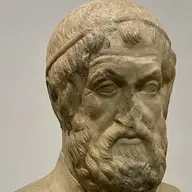
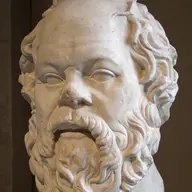
As Plato tells it, Socrates is speaking to the men of Athens at his trial in 399 BCE. After an oracle called him wisest, he went to question a public man with a name for wisdom, to test the oracle, and became hated for it.

Checked claim by claim against: Socrates is tried, condemned and put to death, the passage around the quote.

Why it matters

Socrates is known for disavowing knowledge, summed up in the saying I know that I know nothing, which is often traced to a statement in Plato's Apology.

Based on Wikipedia: Socrates

Socrates is known for disavowing knowledge, a claim encapsulated in the saying "I know that I know nothing".

This is often attributed to Socrates on the basis of a statement in Plato's Apology, though the same view is repeatedly found elsewhere in Plato's early writings on Socrates.

Wikipedia, Socrates (opens en.wikipedia.org), as of 2026-09-04. Text CC BY-SA 4.0. Our line is checked against these sentences only.

Related moments

In time order, with this one in its place. Each says why it is here.

  1. c. 429 BCEabout 30 years earlier Oedipus demands to learn his birth Also about knowing and not knowing
  2. 423 BCE24 years earlier Strepsiades on the gnat's trumpet Also about knowing and not knowing
  3. 404 BCE5 years earlier The Thirty take power in Athens Same years
  4. 403 BCE4 years earlier Democracy returns to Athens, with an amnesty Same years
  5. 399 BCESame year Socrates is tried, condemned and put to death The event behind itAlso in Athens
  6. set in 399 BCEThis momentSocrates on knowing that he does not know
  7. by 399 BCEBy this year Aspasia on honest matchmaking Also in Athens
  8. set in 399 BCESame year The charge Meletus swore against Socrates Also in Athens
  9. set in 399 BCESame year Socrates on Aristophanes' comedy Same passageMore from Socrates
  10. set in 399 BCESame year Socrates and the oracle at Delphi Same passageMore from Socrates
  11. set in 399 BCESame year Socrates on what makes things beautiful More from Socrates

Just before and after

The text around the quote, word for word from the same translation.

Show the passageHide the passage

He certainly cannot be lying, for that is not possible for him. And for a long time I was at a loss as to what he meant; then with great reluctance I proceeded to investigate him somewhat as follows.I went to one of those who had a reputation for wisdom, thinking that there, if anywhere, I should prove the utterance wrong and should show the oracle This man is wiser than I, but you said I was wisest. So examining this man—for I need not call him by name, but it was one of the public men with regard to whom I had this kind of experience, men of Athens—and conversing with him, this man seemed to me to seem to be wise to many other people and especially to himself, but not to be so; and then I tried to show him that he thought he was wise, but was not. As a result, I became hateful to him and to many of those present; and so, as I went away, I thought to myself,

The quote: I am wiser than this man; for neither of us really knows anything fine and good, but this man thinks he knows something when he does not, whereas I, as I do not know anything, do not think I do either.

I seem, then, in just this little thing to be wiser than this man at any rate, that what I do not know I do not think I know either. From him I went to another of those who were reputed to be wiser than he, and these same things seemed to me to be true; and there I became hateful both to him and to many others.After this then I went on from one to another, perceiving that I was hated, and grieving and fearing, but nevertheless I thought I must consider the god’s business of the highest importance.

Plato, Apology 21b–eTranslated by Harold North Fowler (1914)Read the full passage (opens scaife.perseus.org)

When, and whose words

Date
set in 399 BCE. Spoken at the trial of Socrates in 399 BCE; Plato wrote the Apology some years later.
Whose words
As Plato tells it.
How this post was checked
  • The plain-words line was read against the quote alone by a second, independent pass, which found it adds no claim the quote does not make (2026-10-03).
  • Each claim in the summary was checked by an independent pass against only the material it cites.
  • The quote itself is checked by the build: word for word, once, at the cited section of the stored translation.

See it among its momentsMore from SocratesSee it in the feed