hstry

Socrates on what makes things beautiful

set in 399 BCE, Athens. As Plato tells it.

Where and when

set in 399 BCEAthens

2,424 years ago

Explore
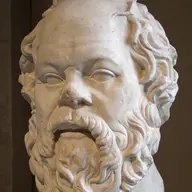
Socrates, c. 470 – 399 BCE3000 BCE2900 BCE2800 BCE2700 BCE2600 BCE2500 BCE2400 BCE2300 BCE2200 BCE2100 BCE2000 BCE1900 BCE1800 BCE1700 BCE1600 BCE1500 BCE1400 BCE1300 BCE1200 BCE1100 BCE1000 BCE900 BCE800 BCE700 BCE600 BCE500 BCE400 BCE300 BCE200 BCE100 BCE1 CE100 CE200 CE300 CE400 CE500 CE600 CE700 CE800 CE900 CE1000 CE1100 CE1200 CE1300 CE1400 CE1500 CE1600 CE1700 CE1800 CE1900 CE2000 CEGreat Pyramid of Giza built, c. 2600 BCERome founded (traditional date), 753 BCELast western Roman emperor deposed, 476 CEGutenberg's printing press, c. 1440 CEColumbus reaches the Americas, 1492 CEFirst people on the Moon, 1969 CEToday, 2026

Swipe the line. Bars: entries. Dots: events.

In plain words, ours

If someone says a thing is beautiful because of its color or shape, I ignore it. I hold, perhaps foolishly, that only beauty itself makes it beautiful.

If anyone tells me that what makes a thing beautiful is its lovely color, or its shape or anything else of the sort, I let all that go, for all those things confuse me, and I hold simply and plainly and perhaps foolishly to this, that nothing else makes it beautiful but the presence or communion (call it which you please) of absolute beauty,

Plato, Phaedo 100c–dTranslated by Harold North Fowler (1914)Read the full passage (Plato, Phaedo 100c–d, opens scaife.perseus.org)

Answered by Aristotle, c. 335–322 BCE

What was going on, our summary

As Plato tells it, Socrates is talking with Cebes in 399 BCE, the year Athens condemned him to death. He is trying to explain what causes things to be as they are, and to prove that the soul is immortal.

Checked claim by claim against: Socrates is tried, condemned and put to death, the passage around the quote.

Why it matters

About the event it belongs to: Socrates is tried, condemned and put to death

Plato's account of the trial and death inspired writers, artists and philosophers to return to it. Some saw the execution as showing the defects of democracy; others as a justifiable defence of a newly restored democracy.

Based on Wikipedia: Trial of Socrates

Plato's presentation of the trial and death of Socrates inspired writers, artists, and philosophers to revisit the matter.

For some, the execution of the man whom Plato called "the wisest and most just of all men" demonstrated the defects of democracy and of popular rule; for others, the Athenian actions were a justifiable defence of the recently re-established democracy.

Wikipedia, Trial of Socrates (opens en.wikipedia.org), as of 2026-10-01. Text CC BY-SA 4.0. Our line is checked against these sentences only.

Related moments

In time order, with this one in its place. Each says why it is here.

  1. c. 429 BCEabout 30 years earlier Oedipus demands to learn his birth Also about knowing and not knowing
  2. 423 BCE24 years earlier Strepsiades on the gnat's trumpet Also about knowing and not knowing
  3. 404 BCE5 years earlier The Thirty take power in Athens Same years
  4. 403 BCE4 years earlier Democracy returns to Athens, with an amnesty Same years
  5. 399 BCESame year Socrates is tried, condemned and put to death The event behind itAlso in Athens
  6. set in 399 BCEThis momentSocrates on what makes things beautiful
  7. by 399 BCEBy this year Aspasia on honest matchmaking Also in Athens
  8. set in 399 BCESame year The charge Meletus swore against Socrates Also in Athens
  9. set in 399 BCESame year Socrates on Aristophanes' comedy More from Socrates
  10. set in 399 BCESame year Socrates and the oracle at Delphi More from Socrates
  11. set in 399 BCESame year Socrates on knowing that he does not know More from Socrates
  12. c. 335–322 BCEabout 71 years later Aristotle puts truth before friends Answered by Aristotle

Just before and after

The text around the quote, word for word from the same translation.

Show the passageHide the passage

I am going to try to explain to you the nature of that cause which I have been studying, and I will revert to those familiar subjects of ours as my point of departure and assume that there are such things as absolute beauty and good and greatness and the like. If you grant this and agree that these exist, I believe I shall explain cause to you and shall prove that the soul is immortal.You may assume, said Cebes, that I grant it, and go on.Then, said he, see if you agree with me in the next step. I think that if anything is beautiful besides absolute beauty it is beautiful for no other reason than because it partakes of absolute beauty; and this applies to everything. Do you assent to this view of cause?I do, said he.Now I do not yet, understand, he went on, nor can I perceive those other ingenious causes.

The quote: If anyone tells me that what makes a thing beautiful is its lovely color, or its shape or anything else of the sort, I let all that go, for all those things confuse me, and I hold simply and plainly and perhaps foolishly to this, that nothing else makes it beautiful but the presence or communion (call it which you please) of absolute beauty,

however it may have been gained; about the way in which it happens, I make no positive statement as yet, but I do insist that beautiful things are made beautiful by beauty. For I think this is the safest answer I can give to myself or to others, and if I cleave fast to this, I think I shall never be overthrown, and I believe it is safe for me or anyone else to give this answer, that beautiful things are beautiful through beauty. Do you agree?I do.And great things are great and greater things greater by greatness, and smaller things smaller by smallness?Yes. Phaedo.

Plato, Phaedo 100b–101Translated by Harold North Fowler (1914)Read the full passage (opens scaife.perseus.org)

When, and whose words

Date
set in 399 BCE. Set on the day of Socrates' execution in 399 BCE; Plato wrote the Phaedo some years later.
Whose words
As Plato tells it.
How this post was checked
  • The plain-words line was read against the quote alone by a second, independent pass, which found it adds no claim the quote does not make (2026-10-03).
  • Each claim in the summary was checked by an independent pass against only the material it cites.
  • The quote itself is checked by the build: word for word, once, at the cited section of the stored translation.

See it among its momentsMore from SocratesSee it in the feed