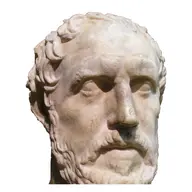
What was going on: Thucydides is describing the bloody revolution at Corcyra in 427 BCE, one of the first of its kind. In the war, popular leaders in city after city called in the Athenians and oligarchs called in the Spartans, and revolution spread from city to city.
Why it matters: His analysis of the atrocities in the civil conflict on Corcyra has been cited as a sign that he was moved by the suffering of war and the excesses human nature is prone to in it.
Civil war brings horrors that will keep happening as long as people are people. In good times we behave better; war takes away the basics and drags most people down with it.
The sufferings which revolution entailed upon the cities were many and terrible, such as have occurred and always will occur, as long as the nature of mankind remains the same; though in a severer or milder form, and varying in their symptoms, according to the variety of the particular cases. In peace and prosperity states and individuals have better sentiments, because they do not find themselves suddenly confronted with imperious necessities; but war takes away the easy supply of daily wants, and so proves a rough master, that brings most men's characters to a level with their fortunes.
His own words. Thucydides, History of the Peloponnesian War 3.82.2, translated by Richard Crawley (1874)
What was going on: Thucydides is describing the revolution inside the city of Corcyra in 427 BCE, and how such revolutions spread from city to city. He says that war, by taking away the easy supply of daily needs, drags most people's characters down to the level of their circumstances.
Words flipped their meaning. Recklessness was called loyal courage, caution was called cowardice, and seeing both sides meant you were useless.
Words had to change their ordinary meaning and to take that which was now given them. Reckless audacity came to be considered the courage of a loyal ally; prudent hesitation, specious cowardice; moderation was held to be a cloak for unmanliness; ability to see all sides of a question inaptness to act on any.
His own words. Thucydides, History of the Peloponnesian War 3.82.4, translated by Richard Crawley (1874)
What was going on: Thucydides is describing the civil strife in Corcyra in 427 BCE. Leaders on two sides, one crying equality for the people and the other a moderate aristocracy, fought for power and took revenge without limit.
Neither side respected religion, but nice words for ugly goals were admired. The moderates in the middle were killed, for staying out or out of envy.
Thus religion was in honor with neither party; but the use of fair phrases to arrive at guilty ends was in high reputation. Meanwhile the moderate part of the citizens perished between the two, either for not joining in the quarrel, or because envy would not suffer them to escape.
His own words. Thucydides, History of the Peloponnesian War 3.82.8, translated by Richard Crawley (1874)