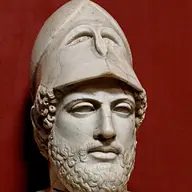
Pericles
c. 495 – 429 BCE, Athens
/ˈpɛɹɪkliːz/
c. 495 – 429 BCEAthens
about 2,487 years ago

Greek statesman and general (c. 495–429 BCE) in the Golden Age of Athens, called the first citizen of Athens by the contemporary historian Thucydides.
was a Greek statesman and general during the Golden Age of Athens. He was prominent and influential in Ancient Athenian politics, particularly between the Greco-Persian Wars and the Peloponnesian War, and was acclaimed by Thucydides, a contemporary historian, as "the first citizen of Athens"
Pericles was born c. 495 BC, in Athens, Greece.
He remained in power until his death in 429 BC.
From Wikipedia, Pericles (opens en.wikipedia.org), as of 2026-09-27.
Short and sourced: tap any line to see the sentences it rests on.
In short
He led Athens from roughly 461 to 429 BCE, a span sometimes called the Age of Pericles.
The period during which he led Athens as its preeminent orator and statesman, roughly from 461 to 429 BC, is sometimes known as the "Age of Pericles"
From Wikipedia, Pericles (opens en.wikipedia.org), as of 2026-09-27.
He turned the Delian League into an Athenian empire.
Pericles turned the Delian League into an Athenian empire
From Wikipedia, Pericles (opens en.wikipedia.org), as of 2026-09-27.
He used the alliance's money for new building on the Acropolis, including the Parthenon.
He started an ambitious project that generated most of the surviving structures on the Acropolis, including the Parthenon.
It was from the alliance's treasury that Pericles drew the funds necessary to enable his ambitious building plan
From Wikipedia, Pericles (opens en.wikipedia.org), as of 2026-09-27.
Early life
Born c. 495 BCE in Athens, the son of the politician Xanthippus.
Pericles was born c. 495 BC, in Athens, Greece. He was the son of the politician Xanthippus
From Wikipedia, Pericles (opens en.wikipedia.org), as of 2026-09-27.
His mother, Agariste, came from the powerful Alcmaeonid family, and her connections helped start his political career.
Pericles's mother, Agariste, was a member of the powerful and controversial noble family of the Alcmaeonidae, and her familial connections played a crucial role in helping start his political career.
From Wikipedia, Pericles (opens en.wikipedia.org), as of 2026-09-27.
According to Herodotus and Plutarch, his mother dreamed a few nights before his birth that she had borne a lion.
According to Herodotus and Plutarch, Agariste dreamed, a few nights before Pericles's birth, that she had borne a lion.
From Wikipedia, Pericles (opens en.wikipedia.org), as of 2026-09-27.
Comedians of his day mocked his unusually large head, calling him "Squill-head".
the unusually large size of Pericles's skull, which became a popular target of contemporary comedians (who called him "Squill-head", after the squill or sea-onion)
From Wikipedia, Pericles (opens en.wikipedia.org), as of 2026-09-27.
Anaxagoras became a close friend and influenced him greatly.
Anaxagoras, in particular, became a close friend and influenced him greatly.
From Wikipedia, Pericles (opens en.wikipedia.org), as of 2026-09-27.
Leading Athens
Around 461 BCE his mentor Ephialtes proposed cutting the powers of the Areopagus council, and the Assembly adopted it without opposition.
Around 461 BC, the leadership of the democratic party decided it was time to take aim at the Areopagus, a traditional council controlled by the Athenian aristocracy, which had once been the most powerful body in the state.
The leader of the party and mentor of Pericles, Ephialtes, proposed a reduction of the Areopagus's powers.
The Ecclesia (the Athenian Assembly) adopted Ephialtes's proposal without opposition.
From Wikipedia, Pericles (opens en.wikipedia.org), as of 2026-09-27.
In 461 BCE he removed his principal political opponent, Cimon, by ostracism.
his principal political opponent, Cimon, was both rich and generous
In 461 BC, Pericles achieved the political elimination of this opponent using ostracism. The accusation was that Cimon betrayed his city by aiding Sparta.
From Wikipedia, Pericles (opens en.wikipedia.org), as of 2026-09-27.
After Ephialtes was murdered that year, Pericles held power until his death in 429 BCE.
Ephialtes's murder in 461 BC paved the way for Pericles to consolidate his authority.
He remained in power until his death in 429 BC.
From Wikipedia, Pericles (opens en.wikipedia.org), as of 2026-09-27.
He proposed a decree letting the poor watch plays for free, with the state paying. He pushed democracy so far that critics called him a populist.
He first proposed a decree that permitted the poor to watch theatrical plays without paying, with the state covering the cost of their admission.
Pericles also fostered Athenian democracy to such an extent that critics called him a populist.
From Wikipedia, Pericles (opens en.wikipedia.org), as of 2026-09-27.
His most controversial law, in 451 BCE, limited citizenship to people with two Athenian parents.
His most controversial measure, however, was a law of 451 BC limiting Athenian citizenship to those of Athenian parentage on both sides.
From Wikipedia, Pericles (opens en.wikipedia.org), as of 2026-09-27.
War and death
He was convinced war with Sparta was inevitable. His Megarian decree shut Megara's merchants out of Athens' market and its empire's ports.
Pericles was convinced that the war against Sparta, which could not conceal its envy of Athens's pre-eminence, was inevitable if unfortunate.
During the same period, Pericles proposed the Megarian decree, which resembled a modern trade embargo.
According to the provisions of the decree, Megarian merchants were excluded from the market of Athens and the ports in its empire.
From Wikipedia, Pericles (opens en.wikipedia.org), as of 2026-09-27.
In 431 BCE Sparta's king invaded Attica but found no Athenians there: Pericles had moved the region's people inside the walls.
In 431 BC, while peace already was precarious, Archidamus II, Sparta's king, sent a new delegation to Athens
With his last attempt at negotiation thus declined, Archidamus invaded Attica, but found no Athenians there; Pericles, aware that Sparta's strategy would be to invade and ravage Athenian territory, had previously arranged to evacuate the entire population of the region to within the walls of Athens.
From Wikipedia, Pericles (opens en.wikipedia.org), as of 2026-09-27.
In the winter of 431–430 BCE he gave the Funeral Oration for the Athenians who had died.
winter of 431–430 BC) he delivered his monumental and emotional Funeral Oration, honouring the Athenians who died for their city.
From Wikipedia, Pericles (opens en.wikipedia.org), as of 2026-09-27.
The epidemic stirred public uproar; his enemies had him removed as general and fined. In 429 BCE he was re-elected.
In any case, the city's plight, caused by the epidemic, triggered a new wave of public uproar
but his internal enemies' final bid to undermine him came off; they managed to deprive him of the generalship and to fine him at an amount estimated between 15 and 50 talents.
in 429 BC, the Athenians not only forgave Pericles but also re-elected him as strategos.
From Wikipedia, Pericles (opens en.wikipedia.org), as of 2026-09-27.
That year he lost both his legitimate sons to the plague, then died of it himself.
In that year, however, Pericles witnessed in the epidemic the death of both Paralus and Xanthippus, his legitimate sons from his first wife.
He himself died of the plague later in the year.
From Wikipedia, Pericles (opens en.wikipedia.org), as of 2026-09-27.
Family and friends
His first wife was a close relative; they had two sons, Paralus and Xanthippus, and divorced around 445 BCE.
Pericles, following Athenian custom, was first married to one of his closest relatives, with whom he had two sons, Paralus and Xanthippus, but around 445 BC, Pericles divorced his wife.
From Wikipedia, Pericles (opens en.wikipedia.org), as of 2026-09-27.
He had a long relationship with Aspasia of Miletus, and they had a son, Pericles the Younger.
he had a long-term relationship with Aspasia of Miletus, with whom he had a son, Pericles the Younger.
From Wikipedia, Pericles (opens en.wikipedia.org), as of 2026-09-27.
Just before the Peloponnesian War, he and two close associates, Phidias and his companion Aspasia, faced personal and court attacks.
Just before the eruption of the Peloponnesian War, Pericles and two of his closest associates, Phidias and his companion, Aspasia, faced a series of personal and judicial attacks.
From Wikipedia, Pericles (opens en.wikipedia.org), as of 2026-09-27.
Shortly before he died, the Athenians allowed a change to the citizenship law of 451 BCE that made his half-Athenian son with Aspasia a citizen.
Just before his death, the Athenians allowed a change in the law of 451 BC that made his half-Athenian son with Aspasia, Pericles the Younger, a citizen, and legitimate heir
From Wikipedia, Pericles (opens en.wikipedia.org), as of 2026-09-27.
How we know about him
Pericles never wrote down his speeches, so no one can say for sure how much of the versions by Thucydides are his own words.
Modern commentators of Thucydides, with other modern historians and writers, take varying stances on the issue of how much of the speeches of Pericles, as given by this historian, do actually represent Pericles's own words and how much of them is free literary creation or paraphrase by Thucydides.
Since Pericles never wrote down or distributed his orations, no historians are able to answer this with certainty
From Wikipedia, Pericles (opens en.wikipedia.org), as of 2026-09-27.
Thucydides is generally seen as an admirer of Pericles and has been criticised for bias against Sparta.
However, as he is generally regarded as an admirer of Pericles, Thucydides has been criticised for bias against Sparta.
From Wikipedia, Pericles (opens en.wikipedia.org), as of 2026-09-27.
Some stories come from Plutarch, like his weeping with grief over his loss. Herodotus and Plutarch both tell of the lion dream.
According to Herodotus and Plutarch, Agariste dreamed, a few nights before Pericles's birth, that she had borne a lion.
According to Plutarch, Pericles was overwhelmed with grief and wept copiously for his loss.
From Wikipedia, Pericles (opens en.wikipedia.org), as of 2026-09-27.
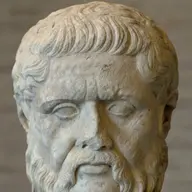
Plato rejected the praise, saying in one dialogue that Pericles made the Athenians lazy, chatty and greedy by starting public fees.
in one of his dialogues, Plato rejects the glorification of Pericles and declares: "as I know, Pericles made the Athenians slothful, garrulous and avaricious, by starting the system of public fees"
From Wikipedia, Pericles (opens en.wikipedia.org), as of 2026-09-27.
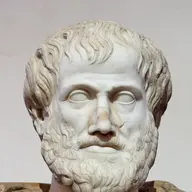
Other sources include Aristotle, Diodorus Siculus and Pausanias (c. 150 CE), who records seeing his tomb near the Academy.
According to Aristotle, Pericles's stance can be explained by the fact that his principal political opponent, Cimon, was both rich and generous
according to Diodorus Siculus, he "excelled all his fellow citizens in skill of oratory"
Pausanias (c. 150 AD) records (I.29) seeing the tomb of Pericles along a road near the Academy.
From Wikipedia, Pericles (opens en.wikipedia.org), as of 2026-09-27.
Pericles on hstry
- set in c. 447 BCEPericles counsels waiting for Time
- set in 432 BCEPericles urges Athens to guard the sea
- set in 432 BCEPericles warns Athens of its own blunders
- set in 431/430 BCEPericles on Athenian democracy
- set in 431/430 BCEPericles on freedom in daily life
- set in 431/430 BCEPericles on wealth and poverty
- set in 431/430 BCEPericles praises Athens
- set in 431/430 BCEPericles honors the war dead
- set in 430 BCEPericles calls Athens' empire a tyranny
- set in 429 BCEPericles on his deathbed
Related
People
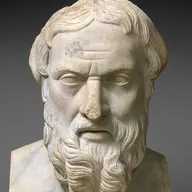 Herodotusc. 484 – c. 425 BCE. On this page
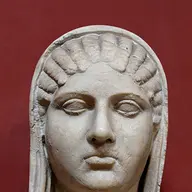 Aspasiac. 470 – after 428 BCE. On this page
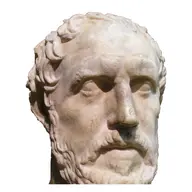 Thucydidesc. 460 – c. 400 BCE. On this page
 Platoc. 428 – 348 BCE. On this page
 Aristotle384 – 322 BCE. On this page
 Sophoclesc. 497 – 406 BCE. Alive at the same time
 Euripidesc. 480 – c. 406 BCE. Alive at the same time
 Socratesc. 470 – 399 BCE. Alive at the same time
 Aristophanesc. 446 – c. 386 BCE. Alive at the same time
 Xenophonc. 430 – c. 354 BCE. Alive at the same time
Places
During Pericles's life
- 480 BCEThe Greek fleet beats the Persians at Salamis
- 479 BCEGreeks defeat the Persian army at Plataea
- 478 BCEAthens leads a new alliance, the Delian League
- c. 461 BCEEphialtes strips the old Areopagus council of power
- 447 BCEWork begins on the Parthenon
- 446/445 BCEAthens and Sparta agree a Thirty Years' Peace
- 431 BCEThebans attack Plataea and the war begins
- 431 BCESpartan army invades Attica
- 431/430 BCEAthens holds a public funeral for its first war dead
- 430 BCEPlague breaks out in Athens
- 429 BCEPericles dies
Periods
The name as said in US English today, not as Athenians said it: recording by Sumxr for Lingua Libre, CC0 (opens commons.wikimedia.org); pronunciation from Wiktionary (opens en.wiktionary.org).
Every line here is ours, written from Wikipedia, Pericles (opens en.wikipedia.org) (text CC BY-SA 4.0) and checked line by line against the sentences it cites. Where Wikipedia relies on Plutarch or another ancient writer, so do we, and we say so.