hstry

Pericles on freedom in daily life

set in 431/430 BCE, Athens. As Thucydides tells it.

Where and when

set in 431/430 BCEAthens

about 2,455 years ago

Explore
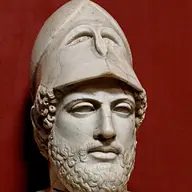
Pericles, c. 495 – 429 BCE3000 BCE2900 BCE2800 BCE2700 BCE2600 BCE2500 BCE2400 BCE2300 BCE2200 BCE2100 BCE2000 BCE1900 BCE1800 BCE1700 BCE1600 BCE1500 BCE1400 BCE1300 BCE1200 BCE1100 BCE1000 BCE900 BCE800 BCE700 BCE600 BCE500 BCE400 BCE300 BCE200 BCE100 BCE1 CE100 CE200 CE300 CE400 CE500 CE600 CE700 CE800 CE900 CE1000 CE1100 CE1200 CE1300 CE1400 CE1500 CE1600 CE1700 CE1800 CE1900 CE2000 CEGreat Pyramid of Giza built, c. 2600 BCERome founded (traditional date), 753 BCELast western Roman emperor deposed, 476 CEGutenberg's printing press, c. 1440 CEColumbus reaches the Americas, 1492 CEFirst people on the Moon, 1969 CEToday, 2026sometime in these 1 years

Swipe the line. Bars: entries. Dots: events.

In plain words, ours

Our freedom reaches daily life too. We don't spy on each other or get angry at a neighbor for living as he likes, not even with dirty looks.

The freedom which we enjoy in our government extends also to our ordinary life. There, far from exercising a jealous surveillance over each other, we do not feel called upon to be angry with our neighbor for doing what he likes, or even to indulge in those injurious looks which cannot fail to be offensive, although they inflict no positive penalty.

Thucydides, History of the Peloponnesian War 2.37.2Translated by Richard Crawley (1874)Read the full passage (Thucydides, History of the Peloponnesian War 2.37.2, opens scaife.perseus.org)
What was going on, our summary

As Thucydides tells it, Pericles is praising Athens in a speech early in the war with Sparta. He has just described its democracy, where laws give equal justice and poverty does not stop a capable man from serving.

Checked claim by claim against: Spartan army invades Attica, the passage around the quote.

Why it matters

The lines these words come from, on equal justice under the laws and freedom in private life, form the roots of the famous phrase equal justice under law.

Based on Wikipedia: Pericles's Funeral Oration

"If we look to the laws, they afford equal justice to all in their private differences ... if a man is able to serve the state, he is not hindered by the obscurity of his condition. The freedom we enjoy in our government extends also to our ordinary life. There, far from exercising a jealous surveillance over each other, we do not feel called upon to be angry with our neighbour for doing what he likes." These lines form the roots of the famous phrase "equal justice under law."

Wikipedia, Pericles's Funeral Oration (opens en.wikipedia.org), as of 2026-09-25. Text CC BY-SA 4.0. Our line is checked against these sentences only.

Related moments

In time order, with this one in its place. Each says why it is here.

  1. 431 BCE1 year earlier Thebans attack Plataea and the war begins Same years
  2. 431 BCE0.8999999999999773 years earlier Spartan army invades Attica The event behind it
  3. 430 BCESame year Plague breaks out in Athens Same years
  4. 431/430 BCEDuring it Athens holds a public funeral for its first war dead Same years
  5. set in 431/430 BCEThis momentPericles on freedom in daily life
  6. set in 431/430 BCEDuring it Pericles on Athenian democracy Same passageMore from Pericles
  7. set in 431/430 BCEDuring it Pericles praises Athens More from Pericles
  8. set in 431/430 BCEDuring it Pericles on wealth and poverty Same passageMore from Pericles
  9. 430 BCE, written laterSame year Thucydides on the plague he caught Also in Athens
  10. 430 BCE, written laterSame year Thucydides on Pericles Also about democracy and government
  11. 430 BCE, written laterSame year Thucydides on the plague in Athens Also in Athens
  12. 430 BCE, written laterSame year Thucydides on how the plague changed people Also in Athens
  13. 429 BCE1 year later Pericles dies Same years
  14. 427 BCE3 years later Athens votes to kill Mytilene's men, then relents Also about democracy and government

Just before and after

The text around the quote, word for word from the same translation.

Show the passageHide the passage

Our constitution does not copy the laws of neighboring states; we are rather a pattern to others than imitators ourselves. Its administration favors the many instead of the few; this is why it is called a democracy. If we look to the laws, they afford equal justice to all in their private differences; if to social standing, advancement in public life falls to reputation for capacity, class considerations not being allowed to interfere with merit; nor again does poverty bar the way, if a man is able to serve the state, he is not hindered by the obscurity of his condition.

The quote: The freedom which we enjoy in our government extends also to our ordinary life. There, far from exercising a jealous surveillance over each other, we do not feel called upon to be angry with our neighbor for doing what he likes, or even to indulge in those injurious looks which cannot fail to be offensive, although they inflict no positive penalty.

But all this ease in our private relations does not make us lawless as citizens. Against this fear is our chief safeguard, teaching us to obey the magistrates and the laws, particularly such as regard the protection of the injured, whether they are actually on the statute book, or belong to that code which, although unwritten, yet cannot be broken without acknowledged disgrace. Further, we provide plenty of means for the mind to refresh itself from business.

Thucydides, History of the Peloponnesian War 2.37.1–2.38.1Translated by Richard Crawley (1874)Read the full passage (opens scaife.perseus.org)

When, and whose words

Date
set in 431/430 BCE. The public funeral for the first year's dead, in the winter of 431/430 BCE; Thucydides wrote the speech later.
Whose words
As Thucydides tells it. Who was Pericles?
How this post was checked
  • The plain-words line was read against the quote alone by a second, independent pass, which found it adds no claim the quote does not make (2026-10-03).
  • Each claim in the summary was checked by an independent pass against only the material it cites.
  • The quote itself is checked by the build: word for word, once, at the cited section of the stored translation.

See it among its momentsMore from PericlesSee it in the feed