hstry

Thucydides on the plague he caught

430 BCE, written later, Athens. His own words.

Where and when

430 BCE, written laterAthens

2,455 years ago

Explore
Thucydides, c. 460 – c. 400 BCE3000 BCE2900 BCE2800 BCE2700 BCE2600 BCE2500 BCE2400 BCE2300 BCE2200 BCE2100 BCE2000 BCE1900 BCE1800 BCE1700 BCE1600 BCE1500 BCE1400 BCE1300 BCE1200 BCE1100 BCE1000 BCE900 BCE800 BCE700 BCE600 BCE500 BCE400 BCE300 BCE200 BCE100 BCE1 CE100 CE200 CE300 CE400 CE500 CE600 CE700 CE800 CE900 CE1000 CE1100 CE1200 CE1300 CE1400 CE1500 CE1600 CE1700 CE1800 CE1900 CE2000 CEGreat Pyramid of Giza built, c. 2600 BCERome founded (traditional date), 753 BCELast western Roman emperor deposed, 476 CEGutenberg's printing press, c. 1440 CEColumbus reaches the Americas, 1492 CEFirst people on the Moon, 1969 CEToday, 2026

Swipe the line. Bars: entries. Dots: events.

In plain words, ours

I'll just describe the symptoms, so it might be recognized if it ever comes back. I can, because I caught it myself and watched it in others.

…for myself, I shall simply set down its nature, and explain the symptoms by which perhaps it may be recognized by the student, if it should ever break out again. This I can the better do, as I had the disease myself, and watched its operation in the case of others.

Thucydides, History of the Peloponnesian War 2.48.3Translated by Richard Crawley (1874)Read the full passage (Thucydides, History of the Peloponnesian War 2.48.3, opens scaife.perseus.org)

What was going on, our summary

In 430 BCE a deadly plague struck Athens, soon after the Spartans invaded again. Thucydides says it hit Piraeus first, where people claimed the enemy had poisoned the water, then spread into the upper city.

Checked claim by claim against: Plague breaks out in Athens, the passage around the quote.

Why it matters

His detailed account of the symptoms has been used, together with analysis of victims' remains, to try to identify what caused the epidemic.

Based on Wikipedia: Plague of Athens

Thucydides left a detailed account of the plague's symptoms and epidemiology.

Upon this discovery, Thucydides' accounts of the event as well as analysis of the remains was used to try to identify the cause of the epidemic.

Wikipedia, Plague of Athens (opens en.wikipedia.org), as of 2026-09-23. Text CC BY-SA 4.0. Our line is checked against these sentences only.

Related moments

In time order, with this one in its place. Each says why it is here.

  1. 431 BCE1 year earlier Thebans attack Plataea and the war begins Same years
  2. 431 BCE0.8999999999999773 years earlier Spartan army invades Attica Same years
  3. 430 BCESame year Plague breaks out in Athens The event behind itAlso about the plague
  4. 431/430 BCEDuring it Athens holds a public funeral for its first war dead Same years
  5. 430 BCE, written laterThis momentThucydides on the plague he caught
  6. set in 431/430 BCEDuring it Pericles on Athenian democracy Also in Athens
  7. set in 431/430 BCEDuring it Pericles on freedom in daily life Also in Athens
  8. set in 431/430 BCEDuring it Pericles on wealth and poverty Also in Athens
  9. set in 431/430 BCEDuring it Pericles honors the war dead Same passage
  10. 430 BCE, written laterSame year Thucydides on Pericles More from Thucydides
  11. 430 BCE, written laterSame year Thucydides on the plague in Athens Same passageMore from Thucydides
  12. 430 BCE, written laterSame year Thucydides on how the plague changed people More from Thucydides
  13. 429 BCE1 year later Pericles dies Same years
  14. c. 430–425 BCEBegins this year Herodotus on why he wrote his Histories Also about how history gets told
  15. 424/423 BCE6 years later Thucydides fails to save Amphipolis and is exiled Also about how history gets told

Just before and after

The text around the quote, word for word from the same translation.

Show the passageHide the passage

Supplications in the temples, divinations, and so forth were found equally futile, till the overwhelming nature of the disaster at last put a stop to them altogether. It first began, it is said, in the parts of Ethiopia above Egypt, and thence descended into Egypt and Libya and into most of the king's country. Suddenly falling upon Athens, it first attacked the population in Piraeus,—which was the occasion of their saying that the Peloponnesians had poisoned the reservoirs, there being as yet no wells there—and afterwards appeared in the upper city, when the deaths became much more frequent. All speculation as to its origin and its causes, if causes can be found adequate to produce so great a disturbance, I leave to other writers, whether lay or professional;

The quote: for myself, I shall simply set down its nature, and explain the symptoms by which perhaps it may be recognized by the student, if it should ever break out again. This I can the better do, as I had the disease myself, and watched its operation in the case of others.

That year then is admitted to have been otherwise unprecedentedly free from sickness; and such few cases as occurred, all determined in this. As a rule, however, there was no ostensible cause; but people in good health were all of a sudden attacked by violent heats in the head, and redness and inflammation in the eyes, the inward parts, such as the throat or tongue, becoming bloody and emitting an unnatural and fetid breath. These symptoms were followed by sneezing and hoarseness, after which the pain soon reached the chest, and produced a hard cough.

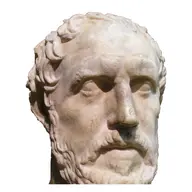
Thucydides, History of the Peloponnesian War 2.47.4–2.49.3Translated by Richard Crawley (1874)Read the full passage (opens scaife.perseus.org)

When, and whose words

Date
430 BCE, written later. The plague broke out in Athens in the summer of 430 BCE; he wrote it up during or after the war.
Whose words
His own words. Who was Thucydides?
How this post was checked
  • The plain-words line was read against the quote alone by a second, independent pass, which found it adds no claim the quote does not make (2026-10-03).
  • Each claim in the summary was checked by an independent pass against only the material it cites.
  • The quote itself is checked by the build: word for word, once, at the cited section of the stored translation.

No one else in hstry speaks about the plague yet.

See it among its momentsMore from ThucydidesSee it in the feed