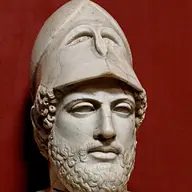
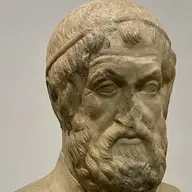
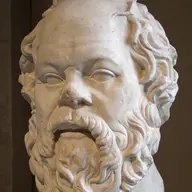
Ephialtes strips the old Areopagus council of power
Ephialtes, with Pericles' party behind him, takes most of the old Council of the Areopagus's powers away. He is murdered soon after.
Not only was the Council robbed of most of its jurisdiction by Ephialtes, but Cimon also, on the charge of being a lover of Sparta and a hater of the people, was ostracized
Under Pericles, Athens starts building a new temple of Athena on the Acropolis, with Ictinus and Callicrates as architects and Pheidias overseeing the work.
Of the Parthenon, for instance, with its cella of a hundred feet in length, Callicrates and Ictinus were the architects
What was going on: As Plutarch tells it, centuries later, Pericles was known as a cautious general. Tolmides was about to raid Boeotia with a thousand volunteers. A few days after Pericles warned him, news came that Tolmides was dead after a defeat near Coroneia.
Why it matters: The raid Pericles warned against ended in defeat at Coronea, after which Pericles was forced to concede the loss of Boeotia to recover the prisoners.
If you won't listen to me, at least wait for the wisest adviser of all: time.
…he tried to restrain and dissuade him in the popular assembly, uttering then that well remembered saying, to wit, that if he would not listen to Pericles, he would yet do full well to wait for that wisest of all counsellors, Time.
As Plutarch tells it, centuries later. Plutarch, Life of Pericles 18.2, translated by Bernadotte Perrin (1916)
, Athens and Sparta
Athens and Sparta agree a Thirty Years' Peace
Athens and Sparta make a truce meant to last thirty years, and Athens gives up the places it held in the Peloponnese.
Not long after their return from Euboea, they made a truce with the Lacedaemonians and their allies for thirty years, giving up the posts which they occupied in Peloponnese, Nisaea Pegae, Troezen, and Achaia.
What was going on: In a Sophocles play, Creon has just stormed out, threatening a guard unless the culprits of a crime are found, and the guard leaves glad to be alive. The Chorus then sings of human power: crossing the stormy sea, plowing the earth, trapping birds and beasts.
The world is full of amazing things, and nothing is more amazing than human beings.
Wonders are many, and none is more wonderful than man.
The Chorus speaking, in Sophocles’ play. Sophocles, Antigone line 332, translated by Richard Jebb (1891)
What was going on: In Sophocles' play, Antigone has been caught giving her dead brother burial against a public order from Creon. Creon asks if she knew of the ban; she says yes, and that the order did not come from Zeus.
I didn't think your orders were strong enough for a human to override the gods' unwritten laws. Those laws are forever, and nobody knows where they began.
Nor did I think that your decrees were of such force, that a mortal could override the unwritten and unfailing statutes given us by the gods. For their life is not of today or yesterday, but for all time, and no man knows when they were first put forth.
Antigone speaking, in Sophocles’ play. Sophocles, Antigone lines 450–455, translated by Richard Jebb (1891)
What was going on: In Sophocles' play, Antigone faces Creon, ruler of Thebes, over her burial rites for her dead brother. Creon says that brother died attacking the land, while their other brother died defending it.
I was not made to share in hating, but in loving.
It is not my nature to join in hate, but in love.
Antigone speaking, in Sophocles’ play. Sophocles, Antigone line 523, translated by Richard Jebb (1891)
What was going on: In Sophocles' play Antigone, King Creon is arguing with his son Haemon. Haemon says the people of Thebes deny the woman is wicked, and Creon asks whether Thebes should tell him how to rule.
A city that belongs to just one man is not really a city.
That is no city, which belongs to one man.
Haemon speaking, in Sophocles’ play. Sophocles, Antigone line 737, translated by Richard Jebb (1891)
What was going on: In Sophocles' play, Haemon tells his father that the city quietly mourns a girl condemned to die for refusing to leave her fallen brother unburied. He begs his father not to think that his own word alone must be right.
Even a wise person loses nothing by learning and bending a little. Trees that bend in a flood survive; stiff ones are torn out by the roots.
No, even when a man is wise, it brings him no shame to learn many things, and not to be too rigid. You see how the trees that stand beside the torrential streams created by a winter storm yield to it and save their branches, while the stiff and rigid perish root and all?
Haemon speaking, in Sophocles’ play. Sophocles, Antigone line 710, translated by Richard Jebb (1891)
What was going on: In Sophocles' play, Creon has caught Antigone, a member of his own family, openly defying him, and says he will kill her. He argues that whoever the city puts in charge must be obeyed, in just and unjust things alike. His son Haemon then answers him.
Why it matters: Creon's view here is one side of the play's contrast over civil disobedience: he demands obedience to the law above all else, right or wrong, while Antigone holds that state law is not absolute and can be broken in extreme cases.
Nothing is worse than disobedience. It wrecks cities, ruins homes and makes armies break and run.
But there is no evil worse than disobedience. This destroys cities; this overturns homes; this breaks the ranks of allied spears into headlong rout.
Creon speaking, in Sophocles’ play. Sophocles, Antigone lines 670–675, translated by Richard Jebb (1891)
What was going on: In Sophocles' play, the seer Teiresias warns Creon that the city's altars are tainted and the gods refuse its sacrifices, because birds and dogs have fed on the body of Oedipus's fallen son.
Everyone makes mistakes. The one who fixes his mistake instead of digging in is not a fool; stubbornness is what looks foolish.
All men are liable to err. But when an error is made, that man is no longer unwise or unblessed who heals the evil into which he has fallen and does not remain stubborn. Self-will, we know, invites the charge of foolishness.
Teiresias speaking, in Sophocles’ play. Sophocles, Antigone lines 1020–1025, translated by Richard Jebb (1891)
What was going on: As Plato tells it, Socrates is in a discussion at the house of Callias in Athens with Protagoras, Prodicus and Hippias. He has got them all to agree that giving in to yourself is ignorance and mastering yourself is wisdom.
Why it matters: The idea that no one does wrong willingly, which Socrates draws out in the Protagoras, became the hallmark of Socratic virtue intellectualism.
Nobody chooses what they think is bad over the good, it seems. Forced to pick between two bad things, nobody takes the worse one.
Then surely, I went on, no one willingly goes after evil or what he thinks to be evil; it is not in human nature, apparently, to do so—to wish to go after what one thinks to be evil in preference to the good; and when compelled to choose one of two evils, nobody will choose the greater when he may the lesser.
As Plato tells it. Plato, Protagoras 358c–d, translated by W. R. M. Lamb (1924)
What was going on: As Thucydides tells it, Pericles is addressing the Athenians in 432 BCE, arguing that their strength is ruling the sea and that they should think of themselves as islanders. A year later the war between Athens and Sparta began.
Why it matters: Pericles set a defensive strategy for the war, aiming to exhaust the enemy and preserve the status quo; its critics have been just as numerous as its supporters.
Forget our farms and houses. Guard the sea and the city, and don't let anger over our land drag us into a battle against bigger armies.
Dismissing all thought of our land and houses, we must vigilantly guard the sea and the city. No irritation that we may feel for the former must provoke us to a battle with the numerical superiority of the Peloponnesians.
As Thucydides tells it. Thucydides, History of the Peloponnesian War 1.143.5, translated by Richard Crawley (1874)
What was going on: As Thucydides tells it, Pericles is speaking to the Athenians in 432 BCE, before war with Sparta begins. He urges them to give up their land and houses, guard the sea and the city, and not fight the larger Peloponnesian army in open battle.
Why it matters: Avoiding overextension was one of the two basic principles of his war strategy; some scholars argue Athens kept to it until the Sicilian Expedition.
I have good reason to hope we'll come through, if we don't chase new conquests or extra risks during the war. I fear our own mistakes more than the enemy's plans.
I have many other reasons to hope for a favorable issue, if you can consent not to combine schemes of fresh conquest with the conduct of the war, and will abstain from willfully involving yourselves in other dangers; indeed, I am more afraid of our own blunders than of the enemy's devices.
As Thucydides tells it. Thucydides, History of the Peloponnesian War 1.144.1, translated by Richard Crawley (1874)