hstry

Creon on disobedience

c. 441 BCE, Athens (Theatre of Dionysus). Creon speaking, in Sophocles’ play.

Where and when

c. 441 BCEAthens (Theatre of Dionysus)

about 2,466 years ago

Explore
Sophocles, c. 497 – 406 BCE3000 BCE2900 BCE2800 BCE2700 BCE2600 BCE2500 BCE2400 BCE2300 BCE2200 BCE2100 BCE2000 BCE1900 BCE1800 BCE1700 BCE1600 BCE1500 BCE1400 BCE1300 BCE1200 BCE1100 BCE1000 BCE900 BCE800 BCE700 BCE600 BCE500 BCE400 BCE300 BCE200 BCE100 BCE1 CE100 CE200 CE300 CE400 CE500 CE600 CE700 CE800 CE900 CE1000 CE1100 CE1200 CE1300 CE1400 CE1500 CE1600 CE1700 CE1800 CE1900 CE2000 CEGreat Pyramid of Giza built, c. 2600 BCERome founded (traditional date), 753 BCELast western Roman emperor deposed, 476 CEGutenberg's printing press, c. 1440 CEColumbus reaches the Americas, 1492 CEFirst people on the Moon, 1969 CEToday, 2026

Swipe the line. Bars: entries. Dots: events.

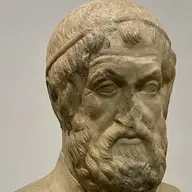
Sophocles

, Athens (Theatre of Dionysus)Creon speaking, in Sophocles’ play

In plain words, ours

Nothing is worse than disobedience. It wrecks cities, ruins homes and makes armies break and run.

But there is no evil worse than disobedience. This destroys cities; this overturns homes; this breaks the ranks of allied spears into headlong rout.

Sophocles, Antigone lines 670–675Translated by Richard Jebb (1891)Read the full passage (Sophocles, Antigone lines 670–675, opens scaife.perseus.org)

What was going on, our summary

In Sophocles' play, Creon has caught Antigone, a member of his own family, openly defying him, and says he will kill her. He argues that whoever the city puts in charge must be obeyed, in just and unjust things alike. His son Haemon then answers him.

Checked claim by claim against: the passage around the quote.

Why it matters

Creon's view here is one side of the play's contrast over civil disobedience: he demands obedience to the law above all else, right or wrong, while Antigone holds that state law is not absolute and can be broken in extreme cases.

Based on Wikipedia: Antigone (Sophocles play)

The contrasting views of Creon and Antigone with regard to laws higher than those of state inform their different conclusions about civil disobedience.

Creon demands obedience to the law above all else, right or wrong. He says that "there is nothing worse than disobedience to authority" (An. 671).

Antigone responds with the idea that state law is not absolute, and that it can be broken in civil disobedience in extreme cases

Wikipedia, Antigone (Sophocles play) (opens en.wikipedia.org), as of 2026-10-01. Text CC BY-SA 4.0. Our line is checked against these sentences only.

Related moments

In time order, with this one in its place. Each says why it is here.

  1. 447 BCEabout 6 years earlier Work begins on the Parthenon Also in Athens
  2. set in c. 447 BCEabout 6 years earlier Pericles counsels waiting for Time Also in Athens
  3. 446/445 BCEabout 5 years earlier Athens and Sparta agree a Thirty Years' Peace Also in Athens
  4. c. 441 BCEThis momentCreon on disobedience
  5. c. 441 BCEAbout the same year Antigone on love, not hate Same passageMore from Sophocles
  6. c. 441 BCEAbout the same year Haemon begs his father to bend Same passage
  7. c. 441 BCEAbout the same year Antigone defies Creon More from Sophocles
  8. c. 441 BCEAbout the same year Sophocles' Chorus on the wonder of man More from Sophocles
  9. set in 431/430 BCEabout 11 years later Pericles on Athenian democracy Also about democracy and government
  10. 430 BCE, written laterabout 11 years later Thucydides on Pericles Also about democracy and government

Just before and after

The text around the quote, word for word from the same translation.

Show the passageHide the passage

Creon: For since I caught her alone of all the city in open defiance, I will not make myself a liar to my city. I will kill her. So let her call on Zeus who protects kindred blood. If I am to foster my own kin to spurn order, surely I will do the same for outsiders. For whoever shows his excellence in the case of his own household will be found righteous in his city as well. But if anyone oversteps and does violence to the laws, or thinks to dictate to those in power, such a one will never win praise from me. No, whomever the city may appoint, that man must be obeyed in matters small and great and in matters just and unjust. And I would feel confident that such a man would be a fine ruler no less than a good and willing subject, and that beneath a hail of spears he would stand his ground where posted, a loyal and brave comrade in the battle line.

The quote: Creon: But there is no evil worse than disobedience. This destroys cities; this overturns homes; this breaks the ranks of allied spears into headlong rout.

Creon: But the lives of men who prosper upright, of these obedience has saved the greatest part. Therefore we must defend those who respect order, and in no way can we let a woman defeat us. It is better to fall from power, if it is fated, by a man’s hand, than that we be called weaker than women.

Chorus: To us, unless our years have stolen our wit, you seem to say what you say wisely.

Haemon: Father, the gods implant reason in men, the highest of all things that we call our own.

Sophocles, Antigone lines 655–683Translated by Richard Jebb (1891)Read the full passage (opens scaife.perseus.org)

When, and whose words

Date
c. 441 BCE. Antigone is usually dated to about 441 BCE from ancient notices; the exact year of its first staging is not recorded.
Whose words
Creon speaking, in Sophocles’ play.
How this post was checked
  • The plain-words line was read against the quote alone by a second, independent pass, which found it adds no claim the quote does not make (2026-10-03).
  • Each claim in the summary was checked by an independent pass against only the material it cites.
  • The quote itself is checked by the build: word for word, once, at the cited section of the stored translation.

See it among its momentsMore from SophoclesSee it in the feed