hstry

Antigone defies Creon

c. 441 BCE, Athens (Theatre of Dionysus). Antigone speaking, in Sophocles’ play.

Where and when

c. 441 BCEAthens (Theatre of Dionysus)

about 2,466 years ago

Explore
Sophocles, c. 497 – 406 BCE3000 BCE2900 BCE2800 BCE2700 BCE2600 BCE2500 BCE2400 BCE2300 BCE2200 BCE2100 BCE2000 BCE1900 BCE1800 BCE1700 BCE1600 BCE1500 BCE1400 BCE1300 BCE1200 BCE1100 BCE1000 BCE900 BCE800 BCE700 BCE600 BCE500 BCE400 BCE300 BCE200 BCE100 BCE1 CE100 CE200 CE300 CE400 CE500 CE600 CE700 CE800 CE900 CE1000 CE1100 CE1200 CE1300 CE1400 CE1500 CE1600 CE1700 CE1800 CE1900 CE2000 CEGreat Pyramid of Giza built, c. 2600 BCERome founded (traditional date), 753 BCELast western Roman emperor deposed, 476 CEGutenberg's printing press, c. 1440 CEColumbus reaches the Americas, 1492 CEFirst people on the Moon, 1969 CEToday, 2026

Swipe the line. Bars: entries. Dots: events.

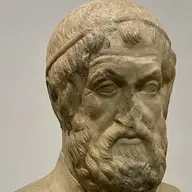
Sophocles

, Athens (Theatre of Dionysus)Antigone speaking, in Sophocles’ play

In plain words, ours

I didn't think your orders were strong enough for a human to override the gods' unwritten laws. Those laws are forever, and nobody knows where they began.

Nor did I think that your decrees were of such force, that a mortal could override the unwritten and unfailing statutes given us by the gods. For their life is not of today or yesterday, but for all time, and no man knows when they were first put forth.

Sophocles, Antigone lines 450–455Translated by Richard Jebb (1891)Read the full passage (Sophocles, Antigone lines 450–455, opens scaife.perseus.org)

What was going on, our summary

In Sophocles' play, Antigone has been caught giving her dead brother burial against a public order from Creon. Creon asks if she knew of the ban; she says yes, and that the order did not come from Zeus.

Checked claim by claim against: the passage around the quote.

Related moments

In time order, with this one in its place. Each says why it is here.

  1. 447 BCEabout 6 years earlier Work begins on the Parthenon Also in AthensAlso about the gods
  2. set in c. 447 BCEabout 6 years earlier Pericles counsels waiting for Time Also in Athens
  3. 446/445 BCEabout 5 years earlier Athens and Sparta agree a Thirty Years' Peace Also in Athens
  4. c. 441 BCEThis momentAntigone defies Creon
  5. c. 441 BCEAbout the same year Haemon on a city ruled by one man More from Sophocles
  6. c. 441 BCEAbout the same year Antigone on love, not hate Same passageMore from Sophocles
  7. c. 441 BCEAbout the same year Sophocles' Chorus on the wonder of man Same passageMore from Sophocles
  8. 431 BCEabout 10 years later The Chorus in Medea on a world reversed Also about justice and law
  9. 423 BCEabout 18 years later Aristophanes' Socrates on the gods Also about the gods
  10. 423 BCEabout 18 years later The Unjust Cause on making the worse cause win Also about justice and law

Just before and after

The text around the quote, word for word from the same translation.

Show the passageHide the passage

Guard: We then charged her with her past and present doings, but she made no denial of anything—at once to my joy and to my pain. For to have escaped from trouble one’s self gives the greatest joy, but it stings to lead friends to evil. Naturally, though, all such things are of less account to me than my own safety.

Creon: You, you with your face bent to the ground, do you admit, or deny that you did this?

Antigone: I declare it and make no denial.

Creon: To the Guard. You can take yourself wherever you please, free and clear of a heavy charge. Exit Guard.

To Antigone. You, however, tell me—not at length, but briefly—did you know that an edict had forbidden this?

Antigone: I knew it. How could I not? It was public.

Creon: And even so you dared overstep that law?

Antigone: Yes, since it was not Zeus that published me that edict, and since not of that kind are the laws which Justice who dwells with the gods below established among men.

The quote: Antigone: Nor did I think that your decrees were of such force, that a mortal could override the unwritten and unfailing statutes given us by the gods. For their life is not of today or yesterday, but for all time, and no man knows when they were first put forth.

Antigone: Not for fear of any man’s pride was I about to owe a penalty to the gods for breaking these. Die I must, that I knew well (how could I not?). That is true even without your edicts. But if I am to die before my time, I count that a gain. When anyone lives as I do, surrounded by evils, how can he not carry off gain by dying? So for me to meet this doom is a grief of no account. But if I had endured that my mother’s son should in death lie an unburied corpse, that would have grieved me. Yet for this, I am not grieved.

Sophocles, Antigone lines 430–465Translated by Richard Jebb (1891)Read the full passage (opens scaife.perseus.org)

When, and whose words

Date
c. 441 BCE. Antigone is usually dated to about 441 BCE from ancient notices; the exact year of its first staging is not recorded.
Whose words
Antigone speaking, in Sophocles’ play.
How this post was checked
  • The plain-words line was read against the quote alone by a second, independent pass, which found it adds no claim the quote does not make (2026-10-03).
  • Each claim in the summary was checked by an independent pass against only the material it cites.
  • The quote itself is checked by the build: word for word, once, at the cited section of the stored translation.

See it among its momentsMore from SophoclesSee it in the feed