hstry

Haemon on a city ruled by one man

c. 441 BCE, Athens (Theatre of Dionysus). Haemon speaking, in Sophocles’ play.

Where and when

c. 441 BCEAthens (Theatre of Dionysus)

about 2,466 years ago

Explore
Sophocles, c. 497 – 406 BCE3000 BCE2900 BCE2800 BCE2700 BCE2600 BCE2500 BCE2400 BCE2300 BCE2200 BCE2100 BCE2000 BCE1900 BCE1800 BCE1700 BCE1600 BCE1500 BCE1400 BCE1300 BCE1200 BCE1100 BCE1000 BCE900 BCE800 BCE700 BCE600 BCE500 BCE400 BCE300 BCE200 BCE100 BCE1 CE100 CE200 CE300 CE400 CE500 CE600 CE700 CE800 CE900 CE1000 CE1100 CE1200 CE1300 CE1400 CE1500 CE1600 CE1700 CE1800 CE1900 CE2000 CEGreat Pyramid of Giza built, c. 2600 BCERome founded (traditional date), 753 BCELast western Roman emperor deposed, 476 CEGutenberg's printing press, c. 1440 CEColumbus reaches the Americas, 1492 CEFirst people on the Moon, 1969 CEToday, 2026

Swipe the line. Bars: entries. Dots: events.

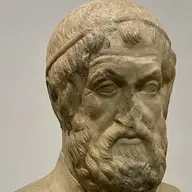
Sophocles

, Athens (Theatre of Dionysus)Haemon speaking, in Sophocles’ play

In plain words, ours

A city that belongs to just one man is not really a city.

That is no city, which belongs to one man.

Sophocles, Antigone line 737Translated by Richard Jebb (1891)Read the full passage (Sophocles, Antigone line 737, opens scaife.perseus.org)

What was going on, our summary

In Sophocles' play Antigone, King Creon is arguing with his son Haemon. Haemon says the people of Thebes deny the woman is wicked, and Creon asks whether Thebes should tell him how to rule.

Checked claim by claim against: the passage around the quote.

Related moments

In time order, with this one in its place. Each says why it is here.

  1. 447 BCEabout 6 years earlier Work begins on the Parthenon Also in Athens
  2. set in c. 447 BCEabout 6 years earlier Pericles counsels waiting for Time Also in Athens
  3. 446/445 BCEabout 5 years earlier Athens and Sparta agree a Thirty Years' Peace Also in Athens
  4. c. 441 BCEThis momentHaemon on a city ruled by one man
  5. c. 441 BCEAbout the same year Creon on disobedience Same passage
  6. c. 441 BCEAbout the same year Antigone on love, not hate More from Sophocles
  7. c. 441 BCEAbout the same year Haemon begs his father to bend Same passage
  8. c. 441 BCEAbout the same year Antigone defies Creon More from Sophocles
  9. c. 441 BCEAbout the same year Sophocles' Chorus on the wonder of man More from Sophocles
  10. set in 431/430 BCEabout 11 years later Pericles on Athenian democracy Also about democracy and government
  11. 430 BCE, written laterabout 11 years later Thucydides on Pericles Also about democracy and government
  12. 411 BCEabout 30 years later An oligarchy of Four Hundred seizes Athens Also about tyrants and the Thirty
  13. set in 404–403 BCEabout 37 years later The Thirty seize Athenians' lands Also about tyrants and the Thirty

Just before and after

The text around the quote, word for word from the same translation.

Show the passageHide the passage

Haemon: Otherwise—since most often it does not turn out that way—it is good to learn in addition from those who advise you well.

Chorus: My king, it is right, if he speaks something appropriate, that you should learn from him and that you, in turn, Haemon, should learn from your father. On both sides there have been wise words.

Creon: Men of my age—are we, then, to be schooled in wisdom by men of his?

Haemon: Not in anything that is not right. But if I am young, you should look to my conduct, not to my years.

Creon: Is it worthy conduct to honor disrupters?

Haemon: I could not urge anyone to show respect for the wicked.

Creon: And is she not in the grasp of that disease?

Haemon: All the people of this city of Thebes deny it.

Creon: Shall Thebes prescribe to me how I must rule?

Haemon: See, there, how you have spoken so much like a child.

Creon: Am I to rule this land by the will of another than myself?

The quote: Haemon: That is no city, which belongs to one man.

Creon: Does not the city by tradition belong to the man in power?

Haemon: You would make a fine monarch in a desert.

Creon: This boy seems to be fighting on the side of the woman.

Haemon: If you are a woman, for, to be sure, my concern is for you.

Creon: You traitor, attacking your father, accusing him!

Haemon: Because I see you making a mistake and committing injustice.

Creon: Am I making a mistake when I respect my own prerogatives?

Haemon: Yes. You do not respect them, when you trample on the gods’ honors.

Creon: Polluted creature, submitting to a woman!

Haemon: You will never catch me submitting to shamelessness.

Creon: You do.

Sophocles, Antigone lines 720–748Translated by Richard Jebb (1891)Read the full passage (opens scaife.perseus.org)

When, and whose words

Date
c. 441 BCE. Antigone is usually dated to about 441 BCE from ancient notices; the exact year of its first staging is not recorded.
Whose words
Haemon speaking, in Sophocles’ play.
How this post was checked
  • The plain-words line was read against the quote alone by a second, independent pass, which found it adds no claim the quote does not make (2026-10-03).
  • Each claim in the summary was checked by an independent pass against only the material it cites.
  • The quote itself is checked by the build: word for word, once, at the cited section of the stored translation.

See it among its momentsMore from SophoclesSee it in the feed