hstry

Pericles counsels waiting for Time

set in c. 447 BCE, Athens. As Plutarch tells it, centuries later.

Where and when

set in c. 447 BCEAthens

about 2,472 years ago

Explore
Pericles, c. 495 – 429 BCE3000 BCE2900 BCE2800 BCE2700 BCE2600 BCE2500 BCE2400 BCE2300 BCE2200 BCE2100 BCE2000 BCE1900 BCE1800 BCE1700 BCE1600 BCE1500 BCE1400 BCE1300 BCE1200 BCE1100 BCE1000 BCE900 BCE800 BCE700 BCE600 BCE500 BCE400 BCE300 BCE200 BCE100 BCE1 CE100 CE200 CE300 CE400 CE500 CE600 CE700 CE800 CE900 CE1000 CE1100 CE1200 CE1300 CE1400 CE1500 CE1600 CE1700 CE1800 CE1900 CE2000 CEGreat Pyramid of Giza built, c. 2600 BCERome founded (traditional date), 753 BCELast western Roman emperor deposed, 476 CEGutenberg's printing press, c. 1440 CEColumbus reaches the Americas, 1492 CEFirst people on the Moon, 1969 CEToday, 2026

Swipe the line. Bars: entries. Dots: events.

Pericles

, AthensAs Plutarch tells it, centuries later

In plain words, ours

If you won't listen to me, at least wait for the wisest adviser of all: time.

…he tried to restrain and dissuade him in the popular assembly, uttering then that well remembered saying, to wit, that if he would not listen to Pericles, he would yet do full well to wait for that wisest of all counsellors, Time.

Plutarch, Life of Pericles 18.2Translated by Bernadotte Perrin (1916)Read the full passage (Plutarch, Life of Pericles 18.2, opens scaife.perseus.org)

What was going on, our summary

As Plutarch tells it, centuries later, Pericles was known as a cautious general. Tolmides was about to raid Boeotia with a thousand volunteers. A few days after Pericles warned him, news came that Tolmides was dead after a defeat near Coroneia.

Checked claim by claim against: the passage around the quote.

Why it matters

The raid Pericles warned against ended in defeat at Coronea, after which Pericles was forced to concede the loss of Boeotia to recover the prisoners.

Based on Wikipedia: Pericles

The Athenians demanded their immediate surrender, but after the Battle of Coronea, Pericles was forced to concede the loss of Boeotia to recover the prisoners taken in that battle.

Wikipedia, Pericles (opens en.wikipedia.org), as of 2026-09-27. Text CC BY-SA 4.0. Our line is checked against these sentences only.

Related moments

In time order, with this one in its place. Each says why it is here.

  1. 447 BCEAbout the same year Work begins on the Parthenon Also in Athens
  2. set in c. 447 BCEThis momentPericles counsels waiting for Time
  3. 446/445 BCE1 year later Athens and Sparta agree a Thirty Years' Peace Also in Athens
  4. c. 441 BCEabout 6 years later Sophocles' Chorus on the wonder of man Also in Athens
  5. set in 432 BCEabout 15 years later Pericles urges Athens to guard the sea More from Pericles
  6. set in 432 BCEabout 15 years later Pericles warns Athens of its own blunders More from Pericles
  7. set in 431/430 BCEabout 17 years later Pericles on Athenian democracy More from Pericles

Just before and after

The text around the quote, word for word from the same translation.

Show the passageHide the passage

In his capacity as general, he was famous above all things for his saving caution; he neither undertook of his own accord a battle involving much uncertainty and peril, nor did he envy and imitate those who took great risks, enjoyed brilliant good-fortune, and so were admired as great generals; and he was for ever saying to his fellow-citizens that, so far as lay in his power, they would remain alive forever and be immortals. So when he saw that Tolmides, son of Tolmaeus, all on account of his previous good-fortune and of the exceeding great honor bestowed upon him for his wars, was getting ready, quite inopportunely, to make an incursion into Boeotia, and that he had persuaded the bravest and most ambitious men of military age to volunteer for the campaign,—as many as a thousand of them, aside from the rest of his forces,—

The quote: he tried to restrain and dissuade him in the popular assembly, uttering then that well remembered saying, to wit, that if he would not listen to Pericles, he would yet do full well to wait for that wisest of all counsellors, Time.

This saying brought him only moderate repute at the time; but a few days afterwards, when word was brought that Tolmides himself was dead after defeat in battle near Coroneia, and that many brave citizens were dead likewise, then it brought Pericles great repute as well as goodwill, for that he was a man of discretion and patriotism. Of all his expeditions, that to the Chersonesus was held in most loving remembrance, since it proved the salvation of the Hellenes who dwelt there.

Plutarch, Life of Pericles 18.1–19.1Translated by Bernadotte Perrin (1916)Read the full passage (opens scaife.perseus.org)

When, and whose words

Date
set in c. 447 BCE. Set before Tolmides' march into Boeotia, usually dated c. 447 BCE; Plutarch wrote over five centuries later.
Whose words
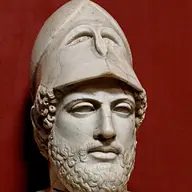
As Plutarch tells it, centuries later. Who was Pericles?
How this post was checked
  • The plain-words line was read against the quote alone by a second, independent pass, which found it adds no claim the quote does not make (2026-10-03).
  • Each claim in the summary was checked by an independent pass against only the material it cites.
  • The quote itself is checked by the build: word for word, once, at the cited section of the stored translation.

See it among its momentsMore from PericlesSee it in the feed