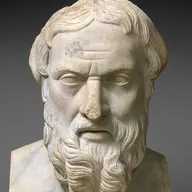
Herodotus
c. 484 – c. 425 BCE, Halicarnassus
c. 484 – c. 425 BCEHalicarnassus
about 2,479 years ago

Greek historian and geographer (c. 484–c. 425 BCE) from Halicarnassus who wrote the Histories, an account of the Greco-Persian Wars.
c. 484 – c. 425 BC) was a Greek historian and geographer from the Greek city of Halicarnassus (now Bodrum, Turkey)
He wrote the Histories, a detailed account of the Greco-Persian Wars, among other subjects such as the rise of the Achaemenid dynasty of Cyrus.
From Wikipedia, Herodotus (opens en.wikipedia.org), as of 2026-09-21.
Short and sourced: tap any line to see the sentences it rests on.
In short
The Roman orator Cicero gave him the title "The Father of History".
He has been described as "The Father of History", a title conferred on him by the ancient Roman orator Cicero.
From Wikipedia, Herodotus (opens en.wikipedia.org), as of 2026-09-21.
His Histories tell of the Greco-Persian Wars and battles such as Marathon, Thermopylae, Salamis and Plataea.
He wrote the Histories, a detailed account of the Greco-Persian Wars
The Histories primarily cover the lives of prominent kings and famous battles such as Marathon, Thermopylae, Artemisium, Salamis, Plataea, and Mycale.
From Wikipedia, Herodotus (opens en.wikipedia.org), as of 2026-09-21.
His work is the earliest Greek prose to have survived intact.
His work is the earliest Greek prose to have survived intact.
From Wikipedia, Herodotus (opens en.wikipedia.org), as of 2026-09-21.
It turns aside from the main story into culture, peoples and geography, and these side trips are an essential part of it.
His work deviates from the main topics to provide a cultural, ethnographical, geographical, and historiographical background that forms an essential part of the narrative
From Wikipedia, Herodotus (opens en.wikipedia.org), as of 2026-09-21.
Early life
By his own statement a native of Halicarnassus in Anatolia, then in the Persian Empire, he was a Persian subject; his birth there is generally put c. 485 BCE.
Herodotus was, according to his own statement at the beginning of his work, a native of Halicarnassus in Anatolia, and it is generally accepted that he was born there around 485 BC.
Halicarnassus was then within the Persian Empire, making Herodotus a Persian subject.
From Wikipedia, Herodotus (opens en.wikipedia.org), as of 2026-09-21.
Scholars traditionally rely on his own writing for his life, supplemented by much later sources such as the Suda, a 10th-century Byzantine encyclopaedia.
Scholars traditionally turn to Herodotus's own writing for reliable information about his life, supplemented with archaic yet much later sources, such as the Byzantine Suda, a 10th-century encyclopaedia
From Wikipedia, Herodotus (opens en.wikipedia.org), as of 2026-09-21.
The Suda says his family was influential and that he was related to Panyassis, an epic poet of the time.
The Suda says his family was influential, that he was the son of Lyxes and Dryo and the brother of Theodorus, and that he was also related to Panyassis – an epic poet of the time.
From Wikipedia, Herodotus (opens en.wikipedia.org), as of 2026-09-21.
The Suda also says he came home to lead the revolt that overthrew the despot of Halicarnassus. It is the only source for this, which casts doubt on it.
The Suda also states that Herodotus later returned home to lead the revolt that eventually overthrew the despot.
The Suda is the only source placing Herodotus as the heroic liberator of his birthplace, casting doubt upon the veracity of that romantic account.
From Wikipedia, Herodotus (opens en.wikipedia.org), as of 2026-09-21.
Travels and Athens
His eyewitness accounts suggest he travelled in Egypt with Athenians, probably after 454 BCE, and probably went on to Tyre and Babylon.
Herodotus's eyewitness accounts indicate that he traveled in Egypt in association with Athenians, probably sometime after 454 BC or possibly earlier
He probably traveled to Tyre next and then down the Euphrates to Babylon.
From Wikipedia, Herodotus (opens en.wikipedia.org), as of 2026-09-21.
Around 447 BCE he moved to Pericles' Athens, a city whose people and democratic institutions he openly admired.
sometime around 447 BC, migrated to Periclean Athens – a city whose people and democratic institutions he openly admired (V, 78).
From Wikipedia, Herodotus (opens en.wikipedia.org), as of 2026-09-21.
According to Plutarch, the Athenian assembly gave him a reward for his work; Plutarch, citing Diyllus, puts it at 10 talents.
According to Plutarch, Herodotus was granted a financial reward by the Athenian assembly in recognition of his work. Plutarch, using Diyllus as a source, says this was 10 talents.
From Wikipedia, Herodotus (opens en.wikipedia.org), as of 2026-09-21.
In 443 BCE or soon after, he moved to Thurii, in today's Calabria, as part of a colony sponsored by Athens.
In 443 BC or shortly afterwards, he migrated to Thurii, in modern Calabria, as part of an Athenian-sponsored colony.
From Wikipedia, Herodotus (opens en.wikipedia.org), as of 2026-09-21.
Nothing in the Histories can be dated after 430 BCE with certainty, and he is generally assumed to have died not long afterwards.
There is nothing in the Histories that can be dated to later than 430 BC with any certainty, and it is generally assumed that he died not long afterwards
From Wikipedia, Herodotus (opens en.wikipedia.org), as of 2026-09-21.
He may have died in Athens during an outbreak of plague, in Macedonia, or back in Thurii.
suggests that he returned to Athens, in which case it is possible that he died there during an outbreak of the plague.
It is also possible he died in Macedonia instead, after obtaining the patronage of the court there, or else he died back in Thurii.
From Wikipedia, Herodotus (opens en.wikipedia.org), as of 2026-09-21.
Reading it aloud
Authors of his day published by reciting at festivals. According to Lucian, he read the whole Histories at the Olympic Games in one sitting.
It was conventional in Herodotus's day for authors to "publish" their works by reciting them at popular festivals.
According to Lucian, Herodotus took his finished work straight from Anatolia to the Olympic Games and read the entire Histories to the assembled spectators in one sitting
From Wikipedia, Herodotus (opens en.wikipedia.org), as of 2026-09-21.
An ancient grammarian tells it differently: he would not start reading at Olympia until clouds gave him shade, and by then the crowd had gone.
According to a very different account by an ancient grammarian, Herodotus refused to begin reading his work at the festival of Olympia until some clouds offered him a bit of shade – by which time the assembly had dispersed.
From Wikipedia, Herodotus (opens en.wikipedia.org), as of 2026-09-21.
In a version in the Suda, a young Thucydides burst into tears at the reading, and Herodotus told his father the boy's soul yearned for knowledge.
there is another interesting variation on the story to be found in the Suda: that of Photius and Tzetzes, in which a young Thucydides happened to be in the assembly with his father, and burst into tears during the recital.
Herodotus observed prophetically to the boy's father: "Your son's soul yearns for knowledge."
From Wikipedia, Herodotus (opens en.wikipedia.org), as of 2026-09-21.
Marcellinus held that Herodotus was buried in Thucydides' tomb in Athens; the Suda says he was buried in Pella and in Thurii.
Eventually, Thucydides and Herodotus became close enough for both to be interred in Thucydides's tomb in Athens. Such at least was the opinion of Marcellinus in his Life of Thucydides.
According to the Suda, he was buried in Macedonian Pella and in the agora in Thurii.
From Wikipedia, Herodotus (opens en.wikipedia.org), as of 2026-09-21.
Critics
At the start of the Histories he says his aim is to keep human events from being erased by time and to preserve great deeds of Greeks and non-Greeks.
Herodotus announced the purpose and scope of his work at the beginning of his Histories
The purpose is to prevent the traces of human events from being erased by time, and to preserve the fame of the important and remarkable achievements produced by both Greeks and non-Greeks
From Wikipedia, Herodotus (opens en.wikipedia.org), as of 2026-09-21.
In his own time he was criticised for including legends and fanciful accounts. He replied that he reported what he could see and what he was told.
Herodotus was criticised in his times for his inclusion of "legends and fanciful accounts" in his work.
Herodotus retorted that he reported what he could see and what he was told.
From Wikipedia, Herodotus (opens en.wikipedia.org), as of 2026-09-21.
The historian Thucydides accused him of making up stories for entertainment and dismissed him as a story-teller.
The contemporaneous historian Thucydides, who covered the Peloponnesian War in his History of the Peloponnesian War, would separately accuse Herodotus of making up stories for entertainment.
Similarly, the Athenian historian Thucydides dismissed Herodotus as a story-teller.
From Wikipedia, Herodotus (opens en.wikipedia.org), as of 2026-09-21.
In The Acharnians (425 BCE), Aristophanes mocked him by blaming the Peloponnesian War on the abduction of some prostitutes.
In 425 BC, which is about the time that Herodotus is thought by many scholars to have died, the Athenian comic dramatist Aristophanes created The Acharnians, in which he blames the Peloponnesian War on the abduction of some prostitutes – a mocking reference to Herodotus
From Wikipedia, Herodotus (opens en.wikipedia.org), as of 2026-09-21.
Because of the many strange stories and folk-tales he reported, critics have called him "The Father of Lies".
It is on account of the many strange stories and the folk-tales he reported that his critics have branded him "The Father of Lies".
From Wikipedia, Herodotus (opens en.wikipedia.org), as of 2026-09-21.
He is generally considered a reliable source, but many historians today think his accounts are partly inaccurate, putting this down to exaggeration.
Though Herodotus is generally considered a reliable source of ancient history, many present-day historians believe that his accounts are at least partially inaccurate, attributing the observed inconsistencies in the Histories to exaggeration.
From Wikipedia, Herodotus (opens en.wikipedia.org), as of 2026-09-21.
Herodotus on hstry
- c. 430–425 BCEHerodotus on why he wrote his Histories
- c. 430–425 BCEHerodotus on every nation's own customs
- c. 430–425 BCEHerodotus says custom is lord of all
- c. 430–425 BCEHerodotus on telling versus believing
- c. 430–425 BCEHerodotus on Egypt's reversed customs
- c. 430–425 BCEHerodotus on Persian and Egyptian skulls
- c. 430–425 BCESolon tells Croesus man is chance
- c. 430–425 BCESolon on calling no one fortunate before death
- c. 430–425 BCECroesus on war and peace
- c. 430–425 BCEHerodotus on the Athenian charge at Marathon
- c. 430–425 BCEHerodotus on the last stand at Thermopylae
- c. 430–425 BCEThe Spartans' epitaph at Thermopylae
- c. 430–425 BCEXerxes weeps over his army
Related
People
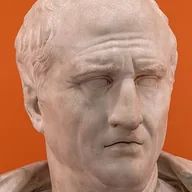 Cicero106 – 43 BCE. On this page
 Thucydidesc. 460 – c. 400 BCE. On this page
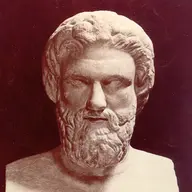 Aristophanesc. 446 – c. 386 BCE. On this page
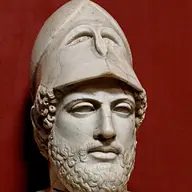 Periclesc. 495 – 429 BCE. Alive at the same time
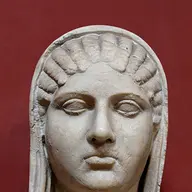 Aspasiac. 470 – after 428 BCE. Alive at the same time
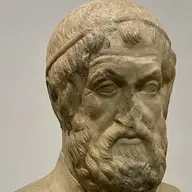 Sophoclesc. 497 – 406 BCE. Alive at the same time
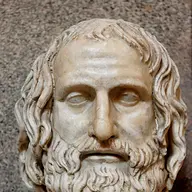 Euripidesc. 480 – c. 406 BCE. Alive at the same time
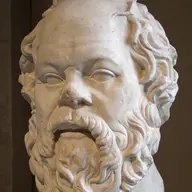 Socratesc. 470 – 399 BCE. Alive at the same time
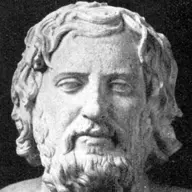 Xenophonc. 430 – c. 354 BCE. Alive at the same time
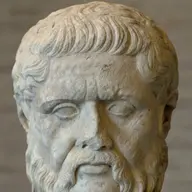 Platoc. 428 – 348 BCE. Alive at the same time
Places
During Herodotus's life
- 480 BCEThe Greek fleet beats the Persians at Salamis
- 479 BCEGreeks defeat the Persian army at Plataea
- 478 BCEAthens leads a new alliance, the Delian League
- c. 461 BCEEphialtes strips the old Areopagus council of power
- 447 BCEWork begins on the Parthenon
- 446/445 BCEAthens and Sparta agree a Thirty Years' Peace
- 431 BCEThebans attack Plataea and the war begins
- 431 BCESpartan army invades Attica
- 431/430 BCEAthens holds a public funeral for its first war dead
- 430 BCEPlague breaks out in Athens
- 429 BCEPericles dies
- 427 BCEAthens votes to kill Mytilene's men, then relents
- 425 BCESpartans surrender on Sphacteria
Periods
Every line here is ours, written from Wikipedia, Herodotus (opens en.wikipedia.org) (text CC BY-SA 4.0) and checked line by line against the sentences it cites. Where Wikipedia relies on Plutarch or another ancient writer, so do we, and we say so.