hstry

Solon on calling no one fortunate before death

c. 430–425 BCE, Sardis. Solon speaking, as Herodotus tells it.

Where and when

c. 430–425 BCESardis

about 2,452 years ago

Explore
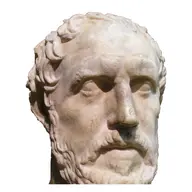
Herodotus, c. 484 – c. 425 BCE3000 BCE2900 BCE2800 BCE2700 BCE2600 BCE2500 BCE2400 BCE2300 BCE2200 BCE2100 BCE2000 BCE1900 BCE1800 BCE1700 BCE1600 BCE1500 BCE1400 BCE1300 BCE1200 BCE1100 BCE1000 BCE900 BCE800 BCE700 BCE600 BCE500 BCE400 BCE300 BCE200 BCE100 BCE1 CE100 CE200 CE300 CE400 CE500 CE600 CE700 CE800 CE900 CE1000 CE1100 CE1200 CE1300 CE1400 CE1500 CE1600 CE1700 CE1800 CE1900 CE2000 CEGreat Pyramid of Giza built, c. 2600 BCERome founded (traditional date), 753 BCELast western Roman emperor deposed, 476 CEGutenberg's printing press, c. 1440 CEColumbus reaches the Americas, 1492 CEFirst people on the Moon, 1969 CEToday, 2026sometime in these 5 years

Swipe the line. Bars: entries. Dots: events.

Herodotus

, SardisSolon speaking, as Herodotus tells it

In plain words, ours

Only someone whose life also ends well deserves to be called fortunate. Until they die, just call them lucky.

If besides all this he ends his life well, then he is the one whom you seek, the one worthy to be called fortunate. But refrain from calling him fortunate before he dies; call him lucky.

Herodotus, Histories 1.32.7Translated by A. D. Godley (1920)Read the full passage (Herodotus, Histories 1.32.7, opens scaife.perseus.org)

What was going on, our summary

As Herodotus tells it, Solon is at Sardis with a king who is very rich and rules many people. The king has asked him a question, and Solon says he cannot answer until he knows how the king's life ends.

Checked claim by claim against: the passage around the quote.

Related moments

In time order, with this one in its place. Each says why it is here.

  1. 430 BCEabout 3 years earlier Plague breaks out in Athens Same years
  2. 431/430 BCEabout 3 years earlier Athens holds a public funeral for its first war dead Same years
  3. 430 BCE, written laterabout 3 years earlier Thucydides on how the plague changed people Also about wealth, poverty and luck
  4. 429 BCEabout 2 years earlier Pericles dies Same years
  5. c. 429 BCEabout 2 years earlier Iocasta on living at random Also about wealth, poverty and luck
  6. 427 BCEAbout the same year Athens votes to kill Mytilene's men, then relents Same years
  7. c. 430–425 BCEThis momentSolon on calling no one fortunate before death
  8. c. 430–425 BCEDuring it Herodotus says custom is lord of all More from Herodotus
  9. c. 430–425 BCEDuring it Herodotus on every nation's own customs More from Herodotus
  10. c. 430–425 BCEDuring it Herodotus on why he wrote his Histories More from Herodotus
  11. c. 430–425 BCEDuring it Solon tells Croesus man is chance Same passage
  12. 425 BCEabout 2 years later Spartans surrender on Sphacteria Same years

Just before and after

The text around the quote, word for word from the same translation.

Show the passageHide the passage

To me you seem to be very rich and to be king of many people, but I cannot answer your question before I learn that you ended your life well. The very rich man is not more fortunate than the man who has only his daily needs, unless he chances to end his life with all well. Many very rich men are unfortunate, many of moderate means are lucky. The man who is very rich but unfortunate surpasses the lucky man in only two ways, while the lucky surpasses the rich but unfortunate in many. The rich man is more capable of fulfilling his appetites and of bearing a great disaster that falls upon him, and it is in these ways that he surpasses the other. The lucky man is not so able to support disaster or appetite as is the rich man, but his luck keeps these things away from him, and he is free from deformity and disease, has no experience of evils, and has fine children and good looks.

The quote: If besides all this he ends his life well, then he is the one whom you seek, the one worthy to be called fortunate. But refrain from calling him fortunate before he dies; call him lucky.

It is impossible for one who is only human to obtain all these things at the same time, just as no land is self-sufficient in what it produces. Each country has one thing but lacks another; whichever has the most is the best. Just so no human being is self-sufficient; each person has one thing but lacks another. Whoever passes through life with the most and then dies agreeably is the one who, in my opinion, O King, deserves to bear this name.

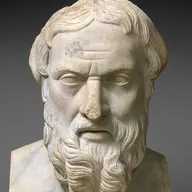
Herodotus, Histories 1.32.5–9Translated by A. D. Godley (1920)Read the full passage (opens scaife.perseus.org)

When, and whose words

Date
c. 430–425 BCE. When the Histories were being completed (c. 430–425 BCE); the scene, Solon visiting Croesus, is set in the 6th century BCE and may be legend.
Whose words
Solon speaking, as Herodotus tells it. Who was Herodotus?
How this post was checked
  • The plain-words line was read against the quote alone by a second, independent pass, which found it adds no claim the quote does not make (2026-10-03).
  • Each claim in the summary was checked by an independent pass against only the material it cites.
  • The quote itself is checked by the build: word for word, once, at the cited section of the stored translation.

See it among its momentsMore from HerodotusSee it in the feed