hstry

Iocasta on living at random

c. 429 BCE, Athens (Theatre of Dionysus). Iocasta speaking, in Sophocles’ play.

Where and when

c. 429 BCEAthens (Theatre of Dionysus)

about 2,454 years ago

Explore
Sophocles, c. 497 – 406 BCE3000 BCE2900 BCE2800 BCE2700 BCE2600 BCE2500 BCE2400 BCE2300 BCE2200 BCE2100 BCE2000 BCE1900 BCE1800 BCE1700 BCE1600 BCE1500 BCE1400 BCE1300 BCE1200 BCE1100 BCE1000 BCE900 BCE800 BCE700 BCE600 BCE500 BCE400 BCE300 BCE200 BCE100 BCE1 CE100 CE200 CE300 CE400 CE500 CE600 CE700 CE800 CE900 CE1000 CE1100 CE1200 CE1300 CE1400 CE1500 CE1600 CE1700 CE1800 CE1900 CE2000 CEGreat Pyramid of Giza built, c. 2600 BCERome founded (traditional date), 753 BCELast western Roman emperor deposed, 476 CEGutenberg's printing press, c. 1440 CEColumbus reaches the Americas, 1492 CEFirst people on the Moon, 1969 CEToday, 2026

Swipe the line. Bars: entries. Dots: events.

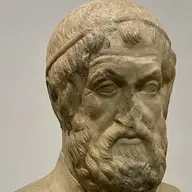
Sophocles

, Athens (Theatre of Dionysus)Iocasta speaking, in Sophocles’ play

In plain words, ours

Why should a person be afraid, if luck rules everything and nobody can see what is coming? Better to just live as it comes.

What should a mortal man fear, for whom the decrees of Fortune are supreme, and who has clear foresight of nothing? It is best to live at random, as one may.

Sophocles, Oedipus Tyrannus line 977Translated by Richard Jebb (1887)Read the full passage (Sophocles, Oedipus Tyrannus line 977, opens scaife.perseus.org)

What was going on, our summary

In Sophocles' play, a messenger brings news that Polybus, the father an oracle said Oedipus would kill, has died of sickness and old age. Oedipus is relieved but still fears the part of the oracle about his mother, and his wife Iocasta answers him.

Checked claim by claim against: the passage around the quote.

Related moments

In time order, with this one in its place. Each says why it is here.

  1. 431 BCEabout 2 years earlier Thebans attack Plataea and the war begins Same years
  2. 431 BCEabout 1.8999999999999773 years earlier Spartan army invades Attica Same years
  3. 430 BCE1 year earlier Plague breaks out in Athens Same years
  4. 431/430 BCE1 year earlier Athens holds a public funeral for its first war dead Same years
  5. set in 431/430 BCE1 year earlier Pericles on wealth and poverty Also about wealth, poverty and luck
  6. 430 BCE, written later1 year earlier Thucydides on the plague in Athens Also in Athens
  7. 430 BCE, written later1 year earlier Thucydides on how the plague changed people Also about wealth, poverty and luck
  8. 429 BCEAbout the same year Pericles dies Also in Athens
  9. c. 429 BCEThis momentIocasta on living at random
  10. set in 429 BCEAbout the same year Pericles on his deathbed Also in Athens
  11. c. 429 BCEAbout the same year The Chorus on calling no mortal happy More from Sophocles
  12. c. 429 BCEAbout the same year Oedipus demands to learn his birth Same passageMore from Sophocles
  13. c. 429 BCEAbout the same year Oedipus on his city's sickness More from Sophocles

Just before and after

The text around the quote, word for word from the same translation.

Show the passageHide the passage

Oedipus: By treachery, or from illness?

Messenger: A light tilt of the scale brings the aged to their rest.

Oedipus: Ah, he died, it seems, of sickness?

Messenger: Yes, and of the long years that he had lived.

Oedipus: Alas, alas! Why indeed, my wife, should one look to the hearth of the Pythian seer, or to the birds that scream above our heads, who declared that I was doomed to slay my father? But he is dead, and lies beneath the earth, and here I am, not having put my hand to any spear—unless, perhaps, he died out of longing for me: thus, indeed, I would be the cause of his death. But as the oracles stand, at least, Polybus has swept them with him to his rest in Hades. They are worth nothing.

Iocasta: Did I not long ago foretell this to you?

Oedipus: You did, but I was mislead by my fear.

Iocasta: Now no longer take any of those things to heart.

Oedipus: But surely I must fear my mother’s bed.

The quote: Iocasta: What should a mortal man fear, for whom the decrees of Fortune are supreme, and who has clear foresight of nothing? It is best to live at random, as one may.

Iocasta: But fear not that you will wed your mother. Many men before now have slept with their mothers in dreams. But he to whom these things are as though nothing bears his life most easily.

Oedipus: All these words of yours would have been well said, were my mother not alive. But as it is, since she lives, I must necessarily fear, though you do speak well.

Iocasta: Your father’s death is a great sign for us to take cheer.

Oedipus: Great, I know. But my fear is of her who lives.

Messenger: And who is the woman about whom you fear?

Oedipus: Merope, old man, the consort of Polybus.

Messenger: And what is it in her that moves your fear?

Sophocles, Oedipus Tyrannus lines 960–991Translated by Richard Jebb (1887)Read the full passage (opens scaife.perseus.org)

When, and whose words

Date
c. 429 BCE. The first staging of Oedipus Tyrannus is not recorded; it is estimated at about 429 BCE, often linked to the plague of Athens.
Whose words
Iocasta speaking, in Sophocles’ play.
How this post was checked
  • The plain-words line was read against the quote alone by a second, independent pass, which found it adds no claim the quote does not make (2026-10-03).
  • Each claim in the summary was checked by an independent pass against only the material it cites.
  • The quote itself is checked by the build: word for word, once, at the cited section of the stored translation.

See it among its momentsMore from SophoclesSee it in the feed