hstry

Oedipus on his city's sickness

c. 429 BCE, Athens (Theatre of Dionysus). Oedipus speaking, in Sophocles’ play.

Where and when

c. 429 BCEAthens (Theatre of Dionysus)

about 2,454 years ago

Explore
Sophocles, c. 497 – 406 BCE3000 BCE2900 BCE2800 BCE2700 BCE2600 BCE2500 BCE2400 BCE2300 BCE2200 BCE2100 BCE2000 BCE1900 BCE1800 BCE1700 BCE1600 BCE1500 BCE1400 BCE1300 BCE1200 BCE1100 BCE1000 BCE900 BCE800 BCE700 BCE600 BCE500 BCE400 BCE300 BCE200 BCE100 BCE1 CE100 CE200 CE300 CE400 CE500 CE600 CE700 CE800 CE900 CE1000 CE1100 CE1200 CE1300 CE1400 CE1500 CE1600 CE1700 CE1800 CE1900 CE2000 CEGreat Pyramid of Giza built, c. 2600 BCERome founded (traditional date), 753 BCELast western Roman emperor deposed, 476 CEGutenberg's printing press, c. 1440 CEColumbus reaches the Americas, 1492 CEFirst people on the Moon, 1969 CEToday, 2026

Swipe the line. Bars: entries. Dots: events.

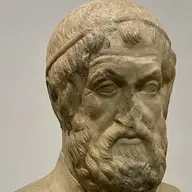
Sophocles

, Athens (Theatre of Dionysus)Oedipus speaking, in Sophocles’ play

In plain words, ours

You are all suffering, but none of you as much as I am. You each feel your own pain; I feel the city’s, my own and yours at once.

I know well that you all are sick, and though you are sick I know well that there is not one of you who is as sick as I. Your pain comes on each of you for himself alone, and for no other, but my soul is in pain at once for the city, for myself, and for you.

Sophocles, Oedipus Tyrannus lines 58–60Translated by Richard Jebb (1887)Read the full passage (Sophocles, Oedipus Tyrannus lines 58–60, opens scaife.perseus.org)

What was going on, our summary

In Sophocles' play, Oedipus rules a city in trouble, and its people have come begging him to save it. He says he has already sent Creon to Apollo's oracle to learn how to protect the city.

Checked claim by claim against: the passage around the quote.

Related moments

In time order, with this one in its place. Each says why it is here.

  1. 431 BCEabout 2 years earlier Thebans attack Plataea and the war begins Same years
  2. 431 BCEabout 1.8999999999999773 years earlier Spartan army invades Attica Same years
  3. 430 BCE1 year earlier Plague breaks out in Athens Same years
  4. 431/430 BCE1 year earlier Athens holds a public funeral for its first war dead Same years
  5. 430 BCE, written later1 year earlier Thucydides on the plague in Athens Also in Athens
  6. 429 BCEAbout the same year Pericles dies Also in Athens
  7. c. 429 BCEThis momentOedipus on his city's sickness
  8. set in 429 BCEAbout the same year Pericles on his deathbed Also in Athens
  9. c. 429 BCEAbout the same year The Chorus on calling no mortal happy More from Sophocles
  10. c. 429 BCEAbout the same year Oedipus demands to learn his birth More from Sophocles
  11. c. 429 BCEAbout the same year Iocasta on living at random More from Sophocles

Just before and after

The text around the quote, word for word from the same translation.

Show the passageHide the passage

Priest of Zeus: Now, Oedipus, king glorious in our eyes, we, your suppliants, beseech you to find some defence for us, whether you hear it from some divine omen, or learn of it from some mortal. For I see that the outcome of the councils of experienced men most often have effect. On, best of mortals, uplift our state! On, guard your fame, since now this land calls you savior on account of your former zeal. Let us not remember of your reign that we were first restored and then cast down: lift this state so that it falls no more! With good omen you provided us that past happiness: show yourself the same now too, since if you are to rule this land just as you do now, it is better to be lord of men than of a wasteland. Neither walled town nor ship is anything, if it is empty and no men dwell within.

Oedipus: My piteous children, I know quite well the desires with which you have come:

The quote: Oedipus: I know well that you all are sick, and though you are sick I know well that there is not one of you who is as sick as I. Your pain comes on each of you for himself alone, and for no other, but my soul is in pain at once for the city, for myself, and for you.

Oedipus: Thus you are not awakening me from sleep: no, be sure that I have wept many tears, wandered far and wide in my thought. I have made use of the only remedy which I could find after close consideration: I sent my relative Creon, Menoeceus’ son, to Apollo’s Pythian residence to learn what we might do or say to protect this city. And now, when the lapse of days is reckoned, I am troubled about what he is doing, for he has been away an unreasonably long time beyond what is fitting. But when he arrives, I would be no true man if did not perform all that the god reveals.

Sophocles, Oedipus Tyrannus lines 40–75Translated by Richard Jebb (1887)Read the full passage (opens scaife.perseus.org)

When, and whose words

Date
c. 429 BCE. The first staging of Oedipus Tyrannus is not recorded; it is estimated at about 429 BCE, often linked to the plague of Athens.
Whose words
Oedipus speaking, in Sophocles’ play.
How this post was checked
  • The plain-words line was read against the quote alone by a second, independent pass, which found it adds no claim the quote does not make (2026-10-03).
  • Each claim in the summary was checked by an independent pass against only the material it cites.
  • The quote itself is checked by the build: word for word, once, at the cited section of the stored translation.

See it among its momentsMore from SophoclesSee it in the feed