hstry

The Chorus on calling no mortal happy

c. 429 BCE, Athens (Theatre of Dionysus). The Chorus speaking, in Sophocles’ play.

Where and when

c. 429 BCEAthens (Theatre of Dionysus)

about 2,454 years ago

Explore
Sophocles, c. 497 – 406 BCE3000 BCE2900 BCE2800 BCE2700 BCE2600 BCE2500 BCE2400 BCE2300 BCE2200 BCE2100 BCE2000 BCE1900 BCE1800 BCE1700 BCE1600 BCE1500 BCE1400 BCE1300 BCE1200 BCE1100 BCE1000 BCE900 BCE800 BCE700 BCE600 BCE500 BCE400 BCE300 BCE200 BCE100 BCE1 CE100 CE200 CE300 CE400 CE500 CE600 CE700 CE800 CE900 CE1000 CE1100 CE1200 CE1300 CE1400 CE1500 CE1600 CE1700 CE1800 CE1900 CE2000 CEGreat Pyramid of Giza built, c. 2600 BCERome founded (traditional date), 753 BCELast western Roman emperor deposed, 476 CEGutenberg's printing press, c. 1440 CEColumbus reaches the Americas, 1492 CEFirst people on the Moon, 1969 CEToday, 2026

Swipe the line. Bars: entries. Dots: events.

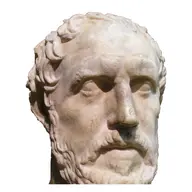
Sophocles

, Athens (Theatre of Dionysus)The Chorus speaking, in Sophocles’ play

In plain words, ours

Look how far he has fallen. So until someone’s last day has come and gone without disaster, do not call them happy.

See into what a stormy sea of troubles he has come! Therefore, while our eyes wait to see the final destined day, we must call no mortal happy until he has crossed life’s border free from pain.

Sophocles, Oedipus Tyrannus lines 1525–1530Translated by Richard Jebb (1887)Read the full passage (Sophocles, Oedipus Tyrannus lines 1525–1530, opens scaife.perseus.org)

What was going on, our summary

In Sophocles' play Oedipus Tyrannus, the Chorus speaks as Creon leads Oedipus, once envied by all of Thebes, into the house. Oedipus has asked to be sent out of the land and begged not to lose his children.

Checked claim by claim against: the passage around the quote.

Related moments

In time order, with this one in its place. Each says why it is here.

  1. 431 BCEabout 2 years earlier Thebans attack Plataea and the war begins Same years
  2. 431 BCEabout 1.8999999999999773 years earlier Spartan army invades Attica Same years
  3. 430 BCE1 year earlier Plague breaks out in Athens Same years
  4. 431/430 BCE1 year earlier Athens holds a public funeral for its first war dead Same years
  5. set in 431/430 BCE1 year earlier Pericles on wealth and poverty Also about wealth, poverty and luck
  6. 430 BCE, written later1 year earlier Thucydides on the plague in Athens Also in Athens
  7. 430 BCE, written later1 year earlier Thucydides on how the plague changed people Also about wealth, poverty and luck
  8. 429 BCEAbout the same year Pericles dies Also in Athens
  9. c. 429 BCEThis momentThe Chorus on calling no mortal happy
  10. set in 429 BCEAbout the same year Pericles on his deathbed Also in Athens
  11. c. 429 BCEAbout the same year Oedipus demands to learn his birth More from Sophocles
  12. c. 429 BCEAbout the same year Iocasta on living at random More from Sophocles
  13. c. 429 BCEAbout the same year Oedipus on his city's sickness More from Sophocles

Just before and after

The text around the quote, word for word from the same translation.

Show the passageHide the passage

Creon: Your grief has had a sufficient scope: move on into the house.

Oedipus: I must obey, though I do it in no way gladly.

Creon: Yes, for it is in season that all things are good.

Oedipus: Do you know on what terms I will go?

Creon: You will tell me, and then I will know when I have heard them.

Oedipus: See that you send me to dwell outside this land.

Creon: You ask for what the god must give.

Oedipus: But to the gods I have become most hateful.

Creon: Then you will quickly get your wish.

Oedipus: So you consent?

Creon: It is not my way to say idly what I do not mean.

Oedipus: Then it is time to lead me away.

Creon: Come, then, but let your children go.

Oedipus: No, do not take them from me!

Creon: Do not wish to be master in all things: the mastery which you did attain has not followed you through life.

Chorus: Residents of our native Thebes, behold, this is Oedipus, who knew the renowned riddle, and was a most mighty man. What citizen did not gaze on his fortune with envy?

The quote: Chorus: See into what a stormy sea of troubles he has come! Therefore, while our eyes wait to see the final destined day, we must call no mortal happy until he has crossed life’s border free from pain.
Sophocles, Oedipus Tyrannus lines 1515–1530Translated by Richard Jebb (1887)Read the full passage (opens scaife.perseus.org)

When, and whose words

Date
c. 429 BCE. The first staging of Oedipus Tyrannus is not recorded; it is estimated at about 429 BCE, often linked to the plague of Athens.
Whose words
The Chorus speaking, in Sophocles’ play.
How this post was checked
  • The plain-words line was read against the quote alone by a second, independent pass, which found it adds no claim the quote does not make (2026-10-03).
  • Each claim in the summary was checked by an independent pass against only the material it cites.
  • The quote itself is checked by the build: word for word, once, at the cited section of the stored translation.

See it among its momentsMore from SophoclesSee it in the feed