hstry

Herodotus says custom is lord of all

c. 430–425 BCE, Persia. His own words.

Where and when

c. 430–425 BCEPersia, off the map

about 2,452 years ago

Explore
Herodotus, c. 484 – c. 425 BCE3000 BCE2900 BCE2800 BCE2700 BCE2600 BCE2500 BCE2400 BCE2300 BCE2200 BCE2100 BCE2000 BCE1900 BCE1800 BCE1700 BCE1600 BCE1500 BCE1400 BCE1300 BCE1200 BCE1100 BCE1000 BCE900 BCE800 BCE700 BCE600 BCE500 BCE400 BCE300 BCE200 BCE100 BCE1 CE100 CE200 CE300 CE400 CE500 CE600 CE700 CE800 CE900 CE1000 CE1100 CE1200 CE1300 CE1400 CE1500 CE1600 CE1700 CE1800 CE1900 CE2000 CEGreat Pyramid of Giza built, c. 2600 BCERome founded (traditional date), 753 BCELast western Roman emperor deposed, 476 CEGutenberg's printing press, c. 1440 CEColumbus reaches the Americas, 1492 CEFirst people on the Moon, 1969 CEToday, 2026sometime in these 5 years

Swipe the line. Bars: entries. Dots: events.

In plain words, ours

A people who ate their dead parents were horrified at the idea of burning them. Beliefs run that deep. Custom rules everyone, I think.

Then Darius summoned those Indians who are called Callatiae, who eat their parents, and asked them (the Greeks being present and understanding through interpreters what was said) what would make them willing to burn their fathers at death. The Indians cried aloud, that he should not speak of so horrid an act. So firmly rooted are these beliefs; and it is, I think, rightly said in Pindar's poem that custom is lord of all.

Herodotus, Histories 3.38.4Translated by A. D. Godley (1920)Read the full passage (Herodotus, Histories 3.38.4, opens scaife.perseus.org)

What was going on, our summary

Herodotus has just said that Cambyses must have been insane to mock other peoples' religion and customs, since every people thinks its own customs are the best. As proof, he tells how King Darius asked some Greeks what price would make them eat their dead fathers, and they said no price would.

Checked claim by claim against: the passage around the quote.

Related moments

In time order, with this one in its place. Each says why it is here.

  1. 430 BCEabout 3 years earlier Plague breaks out in Athens Same years
  2. 431/430 BCEabout 3 years earlier Athens holds a public funeral for its first war dead Same years
  3. 429 BCEabout 2 years earlier Pericles dies Same years
  4. 427 BCEAbout the same year Athens votes to kill Mytilene's men, then relents Same years
  5. c. 430–425 BCEThis momentHerodotus says custom is lord of all
  6. c. 430–425 BCEDuring it Herodotus on every nation's own customs Same passageMore from Herodotus
  7. c. 430–425 BCEDuring it Herodotus on telling versus believing More from Herodotus
  8. c. 430–425 BCEDuring it Herodotus on why he wrote his Histories More from Herodotus
  9. 425 BCEabout 2 years later Spartans surrender on Sphacteria Same years
  10. 54 BCEabout 373 years later Caesar on Britons dyed with woad Also about customs and foreign ways

Just before and after

The text around the quote, word for word from the same translation.

Show the passageHide the passage

These also are like the images of Hephaestus, and are said to be his sons. I hold it then in every way proved that Cambyses was quite insane; or he would never have set himself to deride religion and custom. For if it were proposed to all nations to choose which seemed best of all customs, each, after examination, would place its own first; so well is each convinced that its own are by far the best. It is not therefore to be supposed that anyone, except a madman, would turn such things to ridicule. I will give this one proof among many from which it may be inferred that all men hold this belief about their customs. When Darius was king, he summoned the Greeks who were with him and asked them for what price they would eat their fathers' dead bodies. They answered that there was no price for which they would do it.

The quote: Then Darius summoned those Indians who are called Callatiae, who eat their parents, and asked them (the Greeks being present and understanding through interpreters what was said) what would make them willing to burn their fathers at death. The Indians cried aloud, that he should not speak of so horrid an act. So firmly rooted are these beliefs; and it is, I think, rightly said in Pindar's poem that custom is lord of all.

While Cambyses was attacking Egypt , the Lacedaemonians too were making war upon Samos and upon Aeaces' son Polycrates, who had revolted and won Samos . And first, dividing the city into three parts, he gave a share in the government to his brothers Pantagnotus and Syloson; but presently he put one of them to death, banished the younger, Syloson, and so made himself lord of all Samos ; then he made a treaty with Amasis king of Egypt , sending to him and receiving from him gifts.

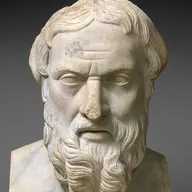
Herodotus, Histories 3.37.3–3.39.2Translated by A. D. Godley (1920)Read the full passage (opens scaife.perseus.org)

When, and whose words

Date
c. 430–425 BCE. When the Histories were being completed (c. 430–425 BCE); the story itself is set in the reign of Darius (522–486 BCE).
Whose words
His own words. Who was Herodotus?
How this post was checked
  • The plain-words line was read against the quote alone by a second, independent pass, which found it adds no claim the quote does not make (2026-10-03).
  • Each claim in the summary was checked by an independent pass against only the material it cites.
  • The quote itself is checked by the build: word for word, once, at the cited section of the stored translation.

See it among its momentsMore from HerodotusSee it in the feed