hstry

Caesar on Britons dyed with woad

54 BCE, Britain. His own words.

Where and when

54 BCEBritain

2,079 years ago

Explore
Julius Caesar, 100 – 44 BCE3000 BCE2900 BCE2800 BCE2700 BCE2600 BCE2500 BCE2400 BCE2300 BCE2200 BCE2100 BCE2000 BCE1900 BCE1800 BCE1700 BCE1600 BCE1500 BCE1400 BCE1300 BCE1200 BCE1100 BCE1000 BCE900 BCE800 BCE700 BCE600 BCE500 BCE400 BCE300 BCE200 BCE100 BCE1 CE100 CE200 CE300 CE400 CE500 CE600 CE700 CE800 CE900 CE1000 CE1100 CE1200 CE1300 CE1400 CE1500 CE1600 CE1700 CE1800 CE1900 CE2000 CEGreat Pyramid of Giza built, c. 2600 BCERome founded (traditional date), 753 BCELast western Roman emperor deposed, 476 CEGutenberg's printing press, c. 1440 CEColumbus reaches the Americas, 1492 CEFirst people on the Moon, 1969 CEToday, 2026

Swipe the line. Bars: entries. Dots: events.

In plain words, ours

The Britons all dye themselves blue with woad, which makes them look more frightening in battle. They wear their hair long.

All the Britains, indeed, dye themselves with woad, which occasions a bluish color, and thereby have a more terrible appearance in fight. They wear their hair long, and have every part of their body shaved except their head and upper lip.

Caesar, The Gallic War 5.14Translated by W. A. McDevitte and W. S. Bohn (1869)Read the full passage (Caesar, The Gallic War 5.14, opens scaife.perseus.org)

What was going on, our summary

On his second trip to Britain in 54 BCE, Caesar pauses his story to describe the island: its size, the people of Kent who live much like the Gauls, and inland people who live on milk and meat and dress in skins. Soon after, his cavalry clash with British horsemen and chariots.

Checked claim by claim against: Caesar crosses the sea to Britain, the passage around the quote.

Why it matters

About the event it belongs to: Caesar crosses the sea to Britain

Caesar's accounts are the earliest surviving significant eyewitness descriptions of Britain's people, culture and geography, effectively the start of the island's written history, or at least its protohistory.

Based on Wikipedia: Julius Caesar's invasions of Britain

Caesar included accounts of both invasions in his Commentarii de Bello Gallico, which contains the earliest surviving significant eyewitness descriptions of the island's people, culture and geography.

This is effectively the start of the written history, or at least the protohistory, of Great Britain.

Wikipedia, Julius Caesar's invasions of Britain (opens en.wikipedia.org), as of 2026-09-22. Text CC BY-SA 4.0. Our line is checked against these sentences only.

Related moments

In time order, with this one in its place. Each says why it is here.

  1. c. 430–425 BCEabout 373 years earlier Herodotus on every nation's own customs Also about customs and foreign ways
  2. 55–54 BCEDuring it Caesar crosses the sea to Britain The event behind itAlso in Britain
  3. 55 BCE1 year earlier Caesar's eagle-bearer leaps in Britain More from Julius Caesar
  4. 55 BCE1 year earlier Caesar on why he would cross to Britain More from Julius Caesar
  5. 54 BCEThis momentCaesar on Britons dyed with woad
  6. 52 BCE2 years later Vercingetorix surrenders to Caesar at Alesia Same years
  7. 52 BCE2 years later Caesar turns away the Mandubii at Alesia More from Julius Caesar
  8. 43 CE96 years later Claudius invades Britain Also in Britain
  9. c. 60–61 CEabout 113 years later Boudica leads a British revolt against Rome Also in Britain

Just before and after

The text around the quote, word for word from the same translation.

Show the passageHide the passage

We, in our inquiries about that matter, ascertained nothing, except that, by accurate measurements with water, we perceived the nights to be shorter there than on the continent. The length of this side, as their account states, is 700 miles. The third side is toward the north, to which portion of the island no land is opposite; but an angle of that side looks principally toward Germany . This side is considered to be 800 miles in length. Thus the whole island is [about] 2,000 miles in circumference. The most civilized of all these nations are they who inhabit Kent , which is entirely a maritime district, nor do they differ much from the Gallic customs. Most of the inland inhabitants do not sow corn, but live on milk and flesh, and are clad with skins.

The quote: All the Britains, indeed, dye themselves with woad, which occasions a bluish color, and thereby have a more terrible appearance in fight. They wear their hair long, and have every part of their body shaved except their head and upper lip.

Ten and even twelve have wives common to them, and particularly brothers among brothers, and parents among their children; but if there be any issue by these wives, they are reputed to be the children of those by whom respectively each was first espoused when a virgin. The horse and charioteers of the enemy contended vigorously in a skirmish with our cavalry on the march; yet so that our men were conquerors in all parts, and drove them to their woods and hills; but, having slain a great many, they pursued too eagerly, and lost some of their men.

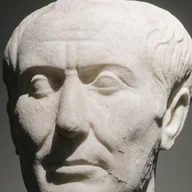
Caesar, The Gallic War 5.13–15Translated by W. A. McDevitte and W. S. Bohn (1869)Read the full passage (opens scaife.perseus.org)

When, and whose words

Date
54 BCE. From his account of his second expedition to Britain, 54 BCE; written up c. 52–51 BCE.
Whose words
His own words.
How this post was checked
  • The plain-words line was read against the quote alone by a second, independent pass, which found it adds no claim the quote does not make (2026-10-03).
  • Each claim in the summary was checked by an independent pass against only the material it cites.
  • The quote itself is checked by the build: word for word, once, at the cited section of the stored translation.

See it among its momentsMore from Julius CaesarSee it in the feed