hstry

Caesar turns away the Mandubii at Alesia

52 BCE, Alesia. His own words, writing of himself as 'Caesar'.

Where and when

52 BCEAlesia

2,077 years ago

Explore
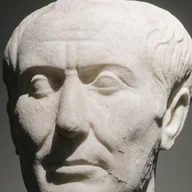
Julius Caesar, 100 – 44 BCE3000 BCE2900 BCE2800 BCE2700 BCE2600 BCE2500 BCE2400 BCE2300 BCE2200 BCE2100 BCE2000 BCE1900 BCE1800 BCE1700 BCE1600 BCE1500 BCE1400 BCE1300 BCE1200 BCE1100 BCE1000 BCE900 BCE800 BCE700 BCE600 BCE500 BCE400 BCE300 BCE200 BCE100 BCE1 CE100 CE200 CE300 CE400 CE500 CE600 CE700 CE800 CE900 CE1000 CE1100 CE1200 CE1300 CE1400 CE1500 CE1600 CE1700 CE1800 CE1900 CE2000 CEGreat Pyramid of Giza built, c. 2600 BCERome founded (traditional date), 753 BCELast western Roman emperor deposed, 476 CEGutenberg's printing press, c. 1440 CEColumbus reaches the Americas, 1492 CEFirst people on the Moon, 1969 CEToday, 2026

Swipe the line. Bars: entries. Dots: events.

Julius Caesar

, AlesiaHis own words, writing of himself as 'Caesar'

In plain words, ours

The townspeople were sent out with their wives and children. Weeping, they begged the soldiers to take them as slaves and feed them. I posted guards and refused them.

The Mandubii, who had admitted them into the town, are compelled to go forth with their wives and children. When these came to the Roman fortifications, weeping, they begged of the soldiers by every entreaty to receive them as slaves and relieve them with food. But Caesar, placing guards on the rampart, forbade them to be admitted.

Caesar, The Gallic War 7.78Translated by W. A. McDevitte and W. S. Bohn (1869)Read the full passage (Caesar, The Gallic War 7.78, opens scaife.perseus.org)

What was going on, our summary

Alesia, 52 BCE: Caesar has the Gallic leader Vercingetorix shut inside this hill town. The Gauls inside decide that everyone too old or sick to fight must leave, while a Gallic relief army arrives and camps on a hill nearby. Caesar tells it himself.

Checked claim by claim against: Vercingetorix surrenders to Caesar at Alesia, the passage around the quote.

Why it matters

About the event it belongs to: Vercingetorix surrenders to Caesar at Alesia

Alesia marked the end of Gallic independence in what is now France and Belgium. It is considered one of Caesar's greatest military achievements and a classic example of siege warfare.

Based on Wikipedia: Battle of Alesia

The Battle of Alesia marked the end of Gallic independence in the modern day territory of France and Belgium.

It was the last major engagement between Gauls and Romans, and is considered one of Caesar's greatest military achievements and a classic example of siege warfare and investment

Wikipedia, Battle of Alesia (opens en.wikipedia.org), as of 2026-08-29. Text CC BY-SA 4.0. Our line is checked against these sentences only.

Related moments

In time order, with this one in its place. Each says why it is here.

  1. 55–54 BCEabout 3 years earlier Caesar crosses the sea to Britain Also about war and empire
  2. 55 BCE3 years earlier Caesar on why he would cross to Britain More from Julius Caesar
  3. 54 BCE2 years earlier Caesar on Britons dyed with woad More from Julius Caesar
  4. 52 BCESame year Vercingetorix surrenders to Caesar at Alesia The event behind itAlso in AlesiaAlso about war and empire
  5. 52 BCEThis momentCaesar turns away the Mandubii at Alesia
  6. 52 BCESame year Caesar on the surrender of Vercingetorix More from Julius Caesar
  7. c. 50 BCEabout 2 years later Cato warns the Senate about Caesar, in Plutarch Same years
  8. 49 BCE3 years later Caesar crosses the Rubicon with his army Same years

Just before and after

The text around the quote, word for word from the same translation.

Show the passageHide the passage

For they never have carried on wars on any other terms. But if you know not these things which are going on in distant countries, look to the neighboring Gaul, which being reduced to the form of a province, stripped of its rights and laws, and subjected to Roman despotism, is oppressed by perpetual slavery." When different opinions were expressed, they determined that those who, owing to age or ill health, were unserviceable for war, should depart from the town, and that themselves should try every expedient before they had recourse to the advice of Critognatus: however, that they would rather adopt that design, if circumstances should compel them and their allies should delay, than accept any terms of a surrender or peace.

The quote: The Mandubii, who had admitted them into the town, are compelled to go forth with their wives and children. When these came to the Roman fortifications, weeping, they begged of the soldiers by every entreaty to receive them as slaves and relieve them with food. But Caesar, placing guards on the rampart, forbade them to be admitted.

In the mean time, Commius and the rest of the leaders, to whom the supreme command had been intrusted, came with all their forces to Alesia , and having occupied the entire hill, encamped not more than a mile from our fortifications. The following day, having led forth their cavalry from the camp, they fill all that plain, which, we have related, extended three miles in length, and drew out their infantry a little from that place, and post them on the higher ground. The town Alesia commanded a view of the whole plain.

Caesar, The Gallic War 7.77–79Translated by W. A. McDevitte and W. S. Bohn (1869)Read the full passage (opens scaife.perseus.org)

When, and whose words

Date
52 BCE. The siege of Alesia, 52 BCE; written up c. 52–51 BCE.
Whose words
His own words, writing of himself as 'Caesar'.
How this post was checked
  • The plain-words line was read against the quote alone by a second, independent pass, which found it adds no claim the quote does not make (2026-10-03).
  • Each claim in the summary was checked by an independent pass against only the material it cites.
  • The quote itself is checked by the build: word for word, once, at the cited section of the stored translation.

See it among its momentsMore from Julius CaesarSee it in the feed