hstry

Caesar on the surrender of Vercingetorix

52 BCE, Alesia. His own words, writing of himself as 'Caesar'.

Where and when

52 BCEAlesia

2,077 years ago

Explore
Julius Caesar, 100 – 44 BCE3000 BCE2900 BCE2800 BCE2700 BCE2600 BCE2500 BCE2400 BCE2300 BCE2200 BCE2100 BCE2000 BCE1900 BCE1800 BCE1700 BCE1600 BCE1500 BCE1400 BCE1300 BCE1200 BCE1100 BCE1000 BCE900 BCE800 BCE700 BCE600 BCE500 BCE400 BCE300 BCE200 BCE100 BCE1 CE100 CE200 CE300 CE400 CE500 CE600 CE700 CE800 CE900 CE1000 CE1100 CE1200 CE1300 CE1400 CE1500 CE1600 CE1700 CE1800 CE1900 CE2000 CEGreat Pyramid of Giza built, c. 2600 BCERome founded (traditional date), 753 BCELast western Roman emperor deposed, 476 CEGutenberg's printing press, c. 1440 CEColumbus reaches the Americas, 1492 CEFirst people on the Moon, 1969 CEToday, 2026

Swipe the line. Bars: entries. Dots: events.

Julius Caesar

, AlesiaHis own words, writing of himself as 'Caesar'

In plain words, ours

They sent envoys to me. I ordered their weapons and leaders handed over, sat in front of my camp, and they gave up Vercingetorix.

Embassadors are sent to Caesar on this subject. He orders their arms to be surrendered, and their chieftains delivered up. He seated himself at the head of the lines in front of the camp, the Gallic chieftains are brought before him. They surrender Vercingetorix, and lay down their arms.

Caesar, The Gallic War 7.89Translated by W. A. McDevitte and W. S. Bohn (1869)Read the full passage (Caesar, The Gallic War 7.89, opens scaife.perseus.org)

What was going on, our summary

Alesia, 52 BCE. Caesar's army has beaten off the Gauls, who flee their camp. Caesar writes that the next day Vercingetorix told his council he would let them hand him to the Romans, dead or alive, and envoys were sent to Caesar.

Checked claim by claim against: Vercingetorix surrenders to Caesar at Alesia, the passage around the quote.

Why it matters

About the event it belongs to: Vercingetorix surrenders to Caesar at Alesia

Alesia marked the end of Gallic independence in what is now France and Belgium. It is considered one of Caesar's greatest military achievements and a classic example of siege warfare.

Based on Wikipedia: Battle of Alesia

The Battle of Alesia marked the end of Gallic independence in the modern day territory of France and Belgium.

It was the last major engagement between Gauls and Romans, and is considered one of Caesar's greatest military achievements and a classic example of siege warfare and investment

Wikipedia, Battle of Alesia (opens en.wikipedia.org), as of 2026-08-29. Text CC BY-SA 4.0. Our line is checked against these sentences only.

Related moments

In time order, with this one in its place. Each says why it is here.

  1. 55–54 BCEabout 3 years earlier Caesar crosses the sea to Britain Also about war and empire
  2. 55 BCE3 years earlier Caesar on why he would cross to Britain More from Julius Caesar
  3. 54 BCE2 years earlier Caesar on Britons dyed with woad More from Julius Caesar
  4. 52 BCESame year Vercingetorix surrenders to Caesar at Alesia The event behind itAlso in AlesiaAlso about war and empire
  5. 52 BCEThis momentCaesar on the surrender of Vercingetorix
  6. 52 BCESame year Caesar turns away the Mandubii at Alesia More from Julius Caesar
  7. c. 50 BCEabout 2 years later Cato warns the Senate about Caesar, in Plutarch Same years
  8. 49 BCE3 years later Caesar crosses the Rubicon with his army Same years

Just before and after

The text around the quote, word for word from the same translation.

Show the passageHide the passage

A flight of the Gauls from their camp immediately ensues on hearing of this disaster, and had not the soldiers been wearied by sending frequent reinforcements, and the labor of the entire day, all the enemy's forces could have been destroyed. Immediately after midnight, the cavalry are sent out and overtake the rear, a great number are taken or cut to pieces, the rest by flight escape in different directions to their respective states. Vercingetorix, having convened a council the following day, declares, "That he had undertaken that war, not on account of his own exigences, but on account of the general freedom; and since he must yield to fortune, he offered himself to them for either purpose, whether they should wish to atone to the Romans by his death, or surrender him alive.

The quote: Embassadors are sent to Caesar on this subject. He orders their arms to be surrendered, and their chieftains delivered up. He seated himself at the head of the lines in front of the camp, the Gallic chieftains are brought before him. They surrender Vercingetorix, and lay down their arms.

Reserving the Aedui and Arverni, [to try] if he could gain over, through their influence, their respective states, he distributes one of the remaining captives to each soldier, throughout the entire army, as plunder. After making these arrangements, he marches into the [country of the] Aedui, and recovers that state. To this place embassadors are sent by the Arveni, who promise that they will execute his commands. He demands a great number of hostages.

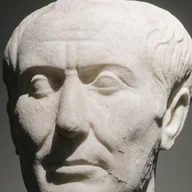
Caesar, The Gallic War 7.88–90Translated by W. A. McDevitte and W. S. Bohn (1869)Read the full passage (opens scaife.perseus.org)

When, and whose words

Date
52 BCE. The surrender at Alesia, 52 BCE; written up c. 52–51 BCE.
Whose words
His own words, writing of himself as 'Caesar'.
How this post was checked
  • The plain-words line was read against the quote alone by a second, independent pass, which found it adds no claim the quote does not make (2026-10-03).
  • Each claim in the summary was checked by an independent pass against only the material it cites.
  • The quote itself is checked by the build: word for word, once, at the cited section of the stored translation.

See it among its momentsMore from Julius CaesarSee it in the feed